Walking into your first TaeKwonDo class and hearing the instructor call out commands in Korean can feel overwhelming. But learning Korean martial arts terminology is one of the most rewarding parts of training — it connects you to centuries of tradition and helps you understand the art on a deeper level.
This glossary covers every Korean term you’ll hear at Global Martial Arts USA, from basic commands and counting to advanced kick and strike terminology. Bookmark this page and come back to it as you progress through the ranks.
Terms of Rank
Understanding rank titles is one of the first things you’ll learn. In Korean martial arts, how you address your instructors matters — it’s a sign of respect built into the culture of the dojang (training hall).
Kwan Jang Nim — Grandmaster (7th Dan and above). At GMA, our founder KwanJangNim Spillmann holds this title with over 50 years of martial arts experience and a 9th Degree Black Belt.
Sa Bum Nim — Master Instructor (4th to 6th Dan). These are senior instructors who have spent years mastering multiple aspects of the art.
Kyo Bum Nim — Instructor (2nd and 3rd Dan). Certified instructors who lead classes and guide students through curriculum.
Kyo Sa Nim — Training Instructor (1st Dan). High-ranking black belts who assist in teaching.
Sun Bae Nim — Senior Dan Holder (4th Dan and above).
Dan — Black Belt degree levels. A 1st Dan is a first-degree black belt, a 9th Dan is the highest achievable rank.
Gup — Color belt ranks, from Yellow Belt through Red Belt. These are the levels you progress through before reaching your first Dan.
Essential Commands
You’ll hear these commands in every class. They’re the backbone of Korean martial arts terminology and the first words most students memorize.
Chariot — Attention. Stand straight, feet together, eyes forward.
Kyong Ne — Bow. Always bow when entering and leaving the dojang, and when greeting your instructor.
Choonbi — Ready. Assume your ready stance.
Shijak — Start. Used to begin sparring or a drill.
Kooman — Stop.
Kallyo — Separate. Used during sparring when fighters clinch.
Kyesok — Continue.
Basic Korean Terms
These foundational terms appear throughout your training. Many of them combine with other words to form technique names — once you learn these building blocks, longer terms start making sense.
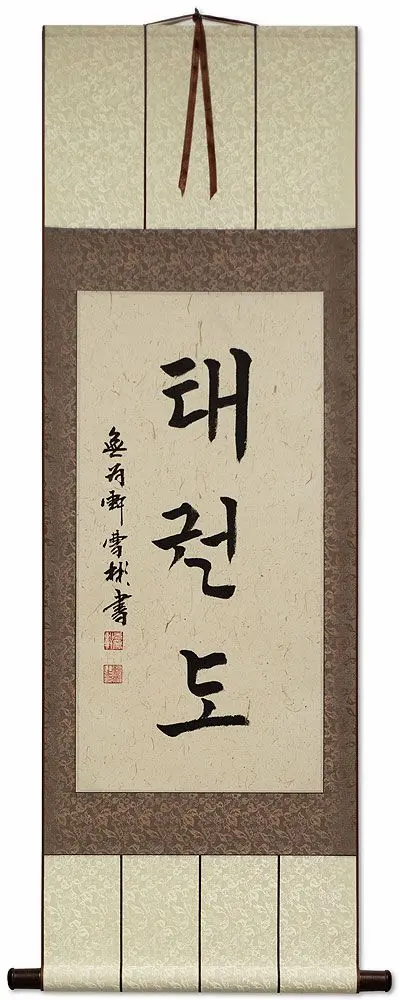
Tae — Foot. Kwon — Fist (or “to smash with the fist”). Do — Way. Together, TaeKwonDo literally means “the way of the foot and fist.”
Poomse — Pattern (also called forms). Choreographed sequences of techniques that teach balance, power, and flow.
Dojang — Training hall. Your martial arts school.
Dobok — Uniform. The traditional white training uniform worn in class.
Hoogo — Body armor. The protective chest guard used in sparring.
Oreun — Right. Wen — Left. You’ll hear these constantly when your instructor calls out which side to use.
Chung — Blue. Hong — Red. These designate the two competitors in tournament sparring.
Stances (Sogi)
Every technique in TaeKwonDo starts from a stance. A strong stance means a strong technique — there’s no shortcut. Sogi means “stance” in Korean, and you’ll see it as a suffix on every stance name below.
Ap Sogi — Walking Stance. A natural, forward-facing stance used for basic movement.
Ap Kobi — Long Stance (also called Front Stance). A deep, powerful stance for forward attacks.
Joochum Sogi — Horse Stance (Sitting Stance). Feet wide, knees bent, weight centered. One of the most important stances for building leg strength and stability.
Dwi Kobi — Back Stance. Weight shifts to the rear leg, allowing quick front-leg kicks.
Bom Sogi — Tiger Stance. A light, agile stance with most weight on the back leg.
Moa Sogi — Close Stance. Feet together, used for formal positions.
Koa Sogi — Cross Stance. One foot crosses behind the other.
Chariot Sogi — Attention Stance. Choonbi Sogi — Ready Stance.
Kicks (Chagi)
Kicks are the heart of TaeKwonDo. The Korean word Chagi means “kick,” and it appears as a suffix in every kicking technique. Once you know the directional prefixes, you can decode any kick name.
Ap Chagi — Front Kick. The most fundamental kick — straight forward, snapping the hip.
Dolliyo Chagi — Turning Kick (Roundhouse Kick). The most commonly used kick in sparring. Rotate your hip, whip the leg around.
Yop Chagi — Side Kick. A powerful linear kick driven by the hip. One of the strongest kicks in any martial art.
Dwi Chagi — Back Kick. Turn your back to the target and thrust straight behind you. Devastating power.
Naeryo Chagi — Axe Kick. Raise the leg high and bring it straight down onto the target.
Horyo Chagi — Reverse Turning Kick (Spin Hook Kick). A spinning kick that whips around with the heel.
Ap Horyo Chagi — Hook Kick. Swing the leg past the target, then snap it back with the heel.
An Chagi — Inner Crescent Kick. Bakat Chagi — Outer Crescent Kick. Sweeping kicks that travel in an arc.
Mirro Chagi — Push Kick. A defensive kick used to create distance.
Twimeo Chagi — Jumping Kick. Any kick performed while airborne.
Cha Jun Bal Chagi — Skipping Kick. A closing-distance kick where you skip forward before striking.
Blocks (Maki)
Maki means “block.” In TaeKwonDo, blocks aren’t just defensive — a strong block can redirect an opponent’s energy and set up your counter-attack.
Aree Maki — Lower Block (Leg Block). Sweeps downward to deflect low kicks and punches.
Momtong Maki — Middle Block (Body Block). Protects the midsection.
Olgool Maki — High Block (Face Block). The forearm rises above the head to deflect downward strikes.
Sohn Nal Maki — Knife Hand Block. An open-hand block using the edge of the hand — the classic “karate chop” motion, though in TaeKwonDo it’s a block, not a strike.
Hechyo Maki — Wedge Block. Both arms spread outward simultaneously to clear attacks from both sides.
Eotgesreo Maki — Cross Wrist Block. Wrists cross to create a strong, compact block.
Palmok Maki — Forearm Block. An Palmok Maki — Inner Forearm Block. Bakat Palmok Maki — Outer Forearm Block.
Ba Tang Sohn Maki — Palm Heel Block. Stanteel Maki — Mountain Block. Kawi Maki — Double Block.
Punches and Strikes (Jireugi and Chigi)
While TaeKwonDo is famous for its kicks, hand techniques are equally important. Jireugi means “punch” and Chigi means “strike” — the difference is that punches use a closed fist while strikes can use the elbow, knife hand, palm, or ridge hand.
Ap Jireugi — Front Punch. The most basic and most practiced hand technique.
Baro Jireugi — Reverse Punch. Rear hand punches forward — generates maximum power from hip rotation.
Bandi Jireugi — Obverse Punch. Lead hand punches forward.
Doong Chumok — Back Fist. A quick, whipping strike with the back of the knuckles.
Me Chumok — Hammer Fist. A downward strike using the bottom of the fist.
Palkup Chigi — Elbow Strike. One of the most powerful close-range strikes in any martial art.
Sohn Nal Chigi — Knife Hand Strike. The famous open-hand strike using the edge of the palm.
Sohn Nal Mok Chigi — Knife Hand Neck Strike. Same technique targeted at the neck.
Ba Tang Sohn Chigi — Palm Heel Strike. Mur Chigi — Knee Strike. Pyong Sohn Keut Chigi — Spear Hand Strike.
Combat and Sparring (Qurogee)
Qurogee means “sparring” — it’s where you put everything together against a live partner. Sparring is one of the best ways to develop timing, distance, and composure under pressure.
Jayo Qurogee — Free Sparring. Open-format sparring where both partners can attack and defend freely.
Macho Qurogee — Competition Sparring. Full-contact sparring under tournament rules with electronic scoring.
Hanbon Qurogee — One Step Sparring. A structured drill where one partner attacks with a single technique and the other defends and counters.
Eebon Qurogee — Two Step Sparring. Sebon Qurogee — Three Step Sparring. Progressive drills that build reaction time and technique chains.
Ho Sin Sul — Self Defense. Practical defense techniques against grabs, holds, and real-world attacks. GMA offers dedicated self defense classes that incorporate Ho Sin Sul principles.
Poomse / Tul — Pattern (Forms). Choreographed sequences that are the foundation of rank testing.
Taegeuk — The parent name for the first 8 WTF (World TaeKwonDo) patterns. Hyungs — The parent name for ITF 24 patterns.
Body Parts (Anatomy)
These terms combine with technique names to indicate targets. For example, Olgool Maki = Face (Olgool) + Block (Maki) = High Block.
Olgool — Face. Mok — Neck. Momtong — Body (torso). Palmok — Forearm. Palkup — Elbow. Sohn — Hand. Chumok — Fist. Mur — Knee. Aree — Legs.
Counting in Korean
You’ll count in Korean during every warm-up, every drill, and every form. This is usually the first Korean most students memorize.
Hana — One. Dool — Two. Set — Three. Net — Four. Dasot — Five.
Yasot — Six. Ilkop — Seven. Yodol — Eight. Ahop — Nine. Yol — Ten.
TaeKwonDo Teacher Levels
Beyond the basic rank titles, Korean martial arts has a rich vocabulary for different teaching and organizational roles. Here’s the complete hierarchy you may encounter at GMA or at TaeKwonDo events and tournaments.
Do Joo Nim — Founder of the art. Kwan Jang Nim — Grandmaster. Chung Sah Nim — Chief Instructor (Chief Master).
Sah Bum Nim — Master Instructor. Sah Boo Nim — A more intimate, respectful form meaning “teaching father.”
Kyo Sah Nim — Teacher. Sun Bae Nim — Senior Student. Hu Bae Nim — Junior Student.
Hak Saeng — Student. Suryun Saeng — Trainee. Jeja — Pupil.
Joo Sim — Referee. Bu Sim — Judge. Bae Sim — Juror. Kae Sim — Timekeeper. Ki Rohk — Recorder.
Ready to Get Started?
Your first class is free. Whether you’re a complete beginner or an experienced martial artist, we’d love to welcome you to the GMA family. Our instructors — led by Grandmaster Spillmann with over 50 years of experience — will guide you through every term, technique, and tradition.
Call us at (731) 324-3847 or book your free trial online.
Frequently Asked Questions
Do I need to learn Korean to practice TaeKwonDo?
No — you don’t need to be fluent. You’ll naturally pick up the most common commands and counting within your first few weeks of class. This glossary is here as a reference to help you learn at your own pace. Most students find that the Korean terms become second nature after a few months of regular training.
Why do martial arts classes use Korean terminology?
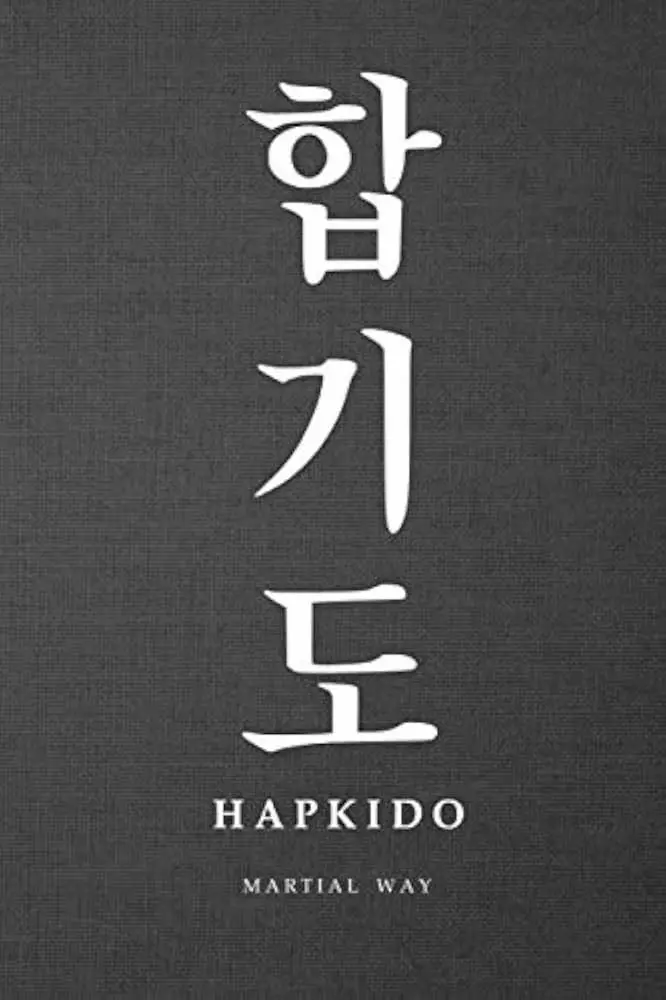
TaeKwonDo and HapKiDo are Korean martial arts, and using the original language preserves the art’s heritage and creates a universal vocabulary. A student from Gallatin, Tennessee can walk into a dojang anywhere in the world and understand the same commands. It’s also a sign of respect for the art’s origins.
What’s the difference between Dan and Gup ranks?
Gup ranks are the color belt levels — from White Belt through Red Belt — that students progress through before reaching Black Belt. Dan ranks are the Black Belt degree levels, starting at 1st Dan and going up to 9th Dan (the highest). At GMA, our founder KwanJangNim Spillmann holds a 9th Degree Black Belt in TaeKwonDo.