Category: Culture & History

Martial arts history, philosophy, Korean terminology, etiquette, and cultural traditions.

  • The GMA Community: Clubs, Family and Brotherhood

    The GMA Community: Clubs, Family and Brotherhood

    Global Martial Arts USA has been part of the Gallatin, TN community for over 50 years, and in that time the school has become something much more than a place to train. GMA is a community — a network of families, friendships, and shared purpose that extends well beyond the mat. Three community clubs form the backbone of that culture: the Guys Club, the Family Club, and the Ma’am’s Club. Together, they make sure every student and family member at GMA has a place where they belong.

    Here’s what makes the GMA community different from your average martial arts school — and why so many families consider it a second home.

    More Than a Martial Arts School

    Walk into GMA on any given evening and you’ll see something that sets it apart immediately. Parents aren’t sitting in the lobby scrolling their phones while their kids train. They’re on the mat themselves, or they’re in conversation with other families, or they’re helping organize the next community event. The culture here is participation, not observation.

    That culture didn’t happen by accident. Grandmaster K.O. Spillmann built GMA on the principle that martial arts training is about developing the whole person — not just physical skills. Respect, discipline, and service to others are woven into every class, every belt test, and every interaction between students. The community clubs are a natural extension of that philosophy, giving members structured ways to connect and support each other outside of regular training.

    GMA has been voted the top martial arts school in Sumner County, and the community is a big reason why. Students stay for decades. Families train across generations. That kind of loyalty comes from genuine relationships, not marketing.
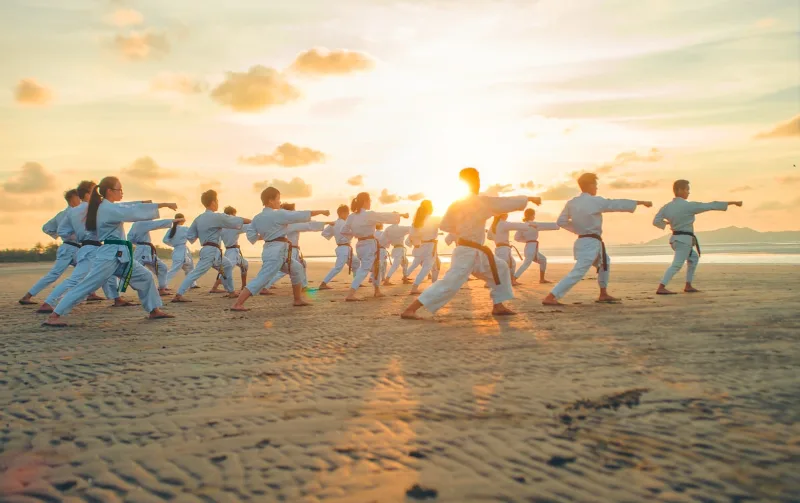
    Martial arts students gathered as a community group after training session

    The Guys Club

    The Guys Club is GMA’s brotherhood — a group for men and boys in the school who want connection and camaraderie beyond their regular TaeKwonDo or BJJ classes. Members build relationships through shared experiences both on and off the mat.

    The Guys Club creates a space where men can be open, supportive, and genuine with each other — something that’s surprisingly rare. Whether it’s a group outing, a service project, or simply grabbing food after an evening training session, the Guys Club reinforces the idea that martial arts training builds character through community, not just technique.

    The Ma’am’s Club

    The Ma’am’s Club brings together the women, moms, and grandmothers of GMA. It’s a supportive, non-judgmental space where members share advice, encouragement, and experiences — both related to martial arts and life in general.

    The club hosts planned events that give members a chance to relax, recharge, and connect outside the training environment. For many women at GMA, the Ma’am’s Club becomes a trusted support network. The daily encounters at the studio — waiting during kids’ classes, training in adult sessions, volunteering at events — evolve into real friendships. And those relationships make the entire GMA experience richer for everyone involved.

    GMA Ma'am's Club members training together outdoors in traditional martial arts uniforms

    The Family Club

    The Family Club reflects what GMA is at its core: a family school. This club brings entire families together for activities, events, and community service that strengthen bonds between parents, kids, and fellow GMA families.

    When families train together, they develop a shared vocabulary of effort, respect, and perseverance. The Family Club extends that dynamic into social settings — potlucks, outings, holiday events, and volunteer projects that keep families connected. Kids see their parents modeling the same values they learn in class. Parents get to know the families their children train alongside. It creates an accountability network that supports everyone’s growth.

    This is also what sets GMA apart for parents choosing a kids martial arts program. You’re not just signing your child up for kicks and punches — you’re joining a community that actively invests in your family’s wellbeing.

    GMA Family Club members enjoying a community event together

    A Community Built on Shared Values

    What ties all three clubs together is GMA’s foundational belief that martial arts training shapes every part of a person’s life. The Jidokwon philosophy — the School of Wisdom that guides GMA’s TaeKwonDo tradition — emphasizes wisdom, integrity, and service. Those values don’t stay on the mat. They show up in how members treat each other, how they serve the Gallatin community, and how they raise their families.

    GMA’s instructors model this daily. Many are family members themselves — multiple generations of the Spillmann family teach and train at the school, creating a living example of what a martial arts family looks like. When students see their instructors practicing the same values they preach, it builds a trust that keeps the community strong year after year.

    If you’re looking for a martial arts school that offers more than just technique — one where you’ll find genuine connection, mutual support, and a community that treats you like family — GMA has been building exactly that for over half a century.

    Ready to Get Started?

    Your first class is free. Whether you’re a complete beginner or an experienced martial artist, we’d love to welcome you to the GMA family.

    Call us at (731) 324-3847 or book your free trial online.
  • What is Jidokwon? The School of Wisdom Explained

    What is Jidokwon? The School of Wisdom Explained

    If you’ve trained in TaeKwonDo long enough, you’ve probably heard the word Jidokwon. But what does it mean, and why does it matter to your training? Jidokwon is one of the original nine martial arts schools (kwans) that shaped modern TaeKwonDo — and its philosophy is woven into the fabric of how we train at Global Martial Arts USA.

    Jidokwon translates directly from Korean: Ji (지) means Wisdom, Do (도) means Way, and Kwan (관) means School. Together, Jidokwon is “The School of Wisdom” — sometimes called the Wisdom School of TaeKwonDo.

    The Origins of Jidokwon

    Jidokwon is one of the nine original kwans established in Korea in the years following World War II and the end of Japanese occupation. These kwans were the founding schools that would eventually unify under the banner of TaeKwonDo as we know it today. Each kwan brought its own philosophy, training methods, and lineage to the art.

    The Jidokwon school distinguished itself through its emphasis on wisdom, perseverance, and the integration of mind and body. While other kwans focused primarily on physical technique or combat application, Jidokwon placed equal weight on the philosophical and spiritual development of the practitioner.

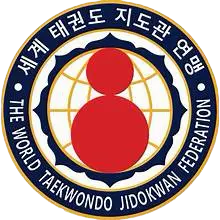
    Jidokwon TaeKwonDo symbol featuring the Daruma figure surrounded by lotus petals

    The Jidokwon Symbol Explained

    The Jidokwon emblem is rich with meaning. Every element — from the circles to the colors to the central figure — carries symbolic significance rooted in Eastern philosophy.

    The symbol is made up of three main circles, each whole with no beginning or end. The large outer circle represents the universe, holding all we know within its boundaries. The larger inner circle represents Earth. The smaller inner circle represents life on Earth. When placed together, these three circles show the interconnection between the cosmos, our planet, and all living beings.

    The colors of the emblem are significant: Red represents energy, power, courage, and attention. Gold stands for God, spirituality, and freedom. Blue symbolizes peace, calm, and friendship.

    At the center sits a representation of Bodhidharma, also known as Daruma or Tamo. The traditional Daruma figure is designed to be balanced — if knocked down, it rights itself automatically. This represents the core Jidokwon philosophy: “Seven times down, eight times up.” Get knocked down nine times, get up ten. Never give up. Never quit.

    The Palsungdo: Eight Solemn Ways

    The eight outer petals of the Jidokwon symbol are the Buddhist lotus flower, representing the Palsungdo — the Eight Solemn Ways (also known as the Eight-Fold Path). These petals trace back thousands of years to early symbols found in Northern India, later adapted by Buddhist artisans to represent the unfolding of the enlightened mind.

    The Eight Solemn Ways fall into three categories of discipline that guide every aspect of a Jidokwon practitioner’s life — not just their time on the mat.

    Lotus flower representing the Palsungdo Eight Solemn Ways in Jidokwon philosophy

    Ethical Discipline (Sila)

    Right Speech (Samma Vaca) — Practice being true and courteous in all communication. Aim to promote peace, harmony, and unity. If you have nothing of value to say, maintain a dignified silence.

    Right Action (Samma Kammo) — Act from a clear mind with wholesome conduct that helps others live a peaceful and prosperous life. The motive behind the action is more important than the deed itself.

    Right Livelihood (Samma Ajivo) — Participate in work, organizations, and communities that are compatible with Right Action, so that your efforts contribute to the greater good.

    Mental Discipline (Samadhi)

    Right Effort (Samma Vayamo) — The continuous will to achieve self-reliance. Prevent unwholesome states of mind from arising, remove those that already exist, develop good states of mind, and pursue even more of them.

    Right Awareness (Samma Sati) — The path of mental liberation. Don’t dwell in the past — study the world and aim to live in the present with full attention. The present moment offers the greatest opportunities. All that we are is the result of all that we have thought, been, and done.

    Right Concentration (Samma Samadhi) — Take charge of your thoughts. Focus the mind like a laser on the subject at hand, to the exclusion of all else, until you gain full comprehension. A complete unification where subject and object become one.

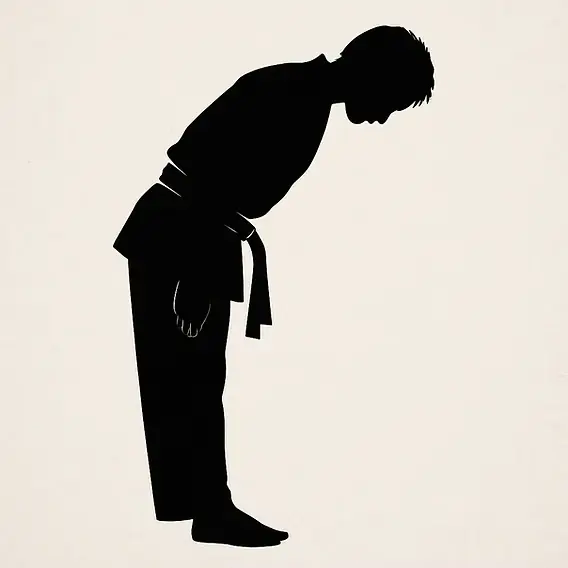
    Martial arts students bowing in the dojang demonstrating Jidokwon respect and discipline

    Intellectual Discipline (Panna)

    Right Thought (Samma Sankappo) — We become what we think. Fill your thoughts with subject matter that enhances the lives of all beings. Work to uncover and resolve emotional obstructions that prevent clear reasoning.

    Right Understanding (Samma Ditthi) — Strive for an intellectual grasp of truth. Observe the true nature of yourself and all things, without labels and preconceptions. Only when the mind is free from selfishness and self-destruction is this deep, penetrating insight possible.

    Jidokwon at Global Martial Arts USA

    At GMA, the Jidokwon philosophy isn’t just historical context — it’s a living part of how we train. Our founder, Grandmaster Spillmann, carries over 50 years of martial arts experience rooted in these traditions. The principles of perseverance, wisdom, ethical conduct, and mental discipline are woven into every class, from kids martial arts to advanced black belt training.

    When we teach students Korean terminology, when we explain the meaning behind the belt ranking system, when we emphasize respect and discipline in the dojang — we’re carrying forward the Jidokwon tradition of developing the whole person, not just the fighter.

    The Daruma figure at the center of the Jidokwon emblem captures it perfectly: no matter how many times you fall, you get back up. That’s the spirit we cultivate at GMA — in TaeKwonDo, in HapKiDo, in self defense, and in life.

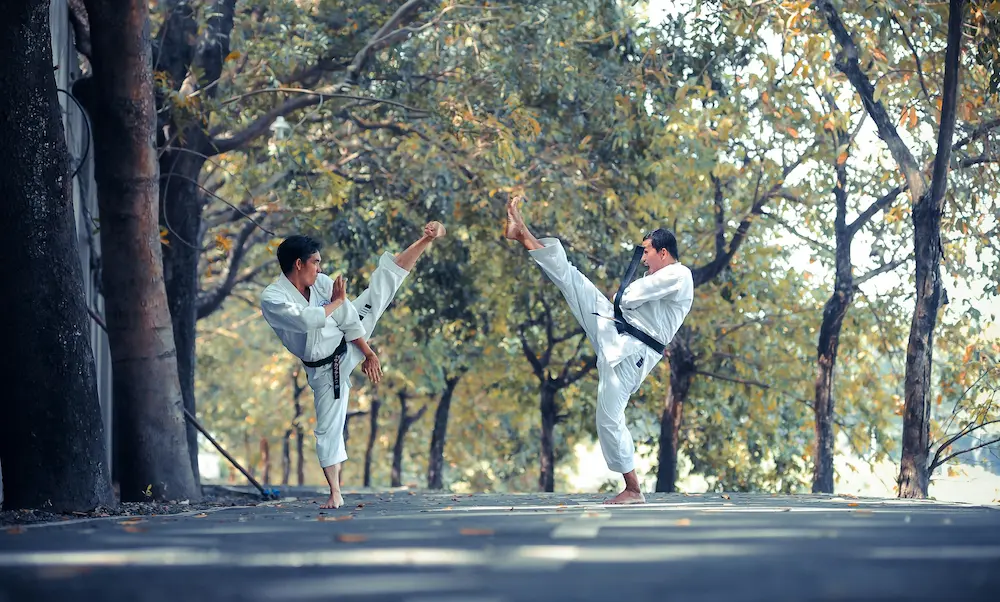
    Traditional TaeKwonDo black belt practitioners training outdoors in the Jidokwon tradition

    Ready to Get Started?

    Your first class is free. Whether you’re drawn to the physical discipline or the philosophical depth of the martial arts, we’d love to welcome you to the GMA family. Our instructors will guide you through every aspect of the art — technique, tradition, and the wisdom that makes it meaningful.

    Call us at (731) 324-3847 or book your free trial online.
    Frequently Asked Questions

    What does Jidokwon mean?

    Jidokwon translates from Korean as “The School of Wisdom.” Ji means wisdom, Do means way, and Kwan means school. It’s one of the nine original martial arts schools that helped create modern TaeKwonDo.

    What is the Jidokwon symbol?

    The Jidokwon emblem features three concentric circles (representing the universe, Earth, and life), surrounded by eight lotus petals (the Palsungdo or Eight Solemn Ways), with a Daruma (Bodhidharma) figure at the center symbolizing perseverance — the principle that no matter how many times you fall, you always get back up.

    How does Jidokwon philosophy apply to training?

    Jidokwon philosophy teaches that martial arts training develops the whole person — not just physical technique, but wisdom, ethical conduct, mental focus, and perseverance. At GMA, these principles are integrated into every class, from how students address their instructors to how they approach challenges both on and off the mat.

    Does GMA teach Buddhism or require meditation?

    No. While Jidokwon’s historical roots reference Buddhist philosophy (the lotus petals, the Daruma figure, the Eight Solemn Ways), Global Martial Arts USA is a Christian-based academy that teaches Christian values, etiquette, and manners. We focus on the tenets of GMA TaeKwonDo — perseverance, dedication, commitment, honor, integrity, self-control, indomitable spirit, loyalty, family values, and unity amongst members. We do not teach the spiritual or religious aspects of Jidokwon’s Buddhist origins. Spiritual practice is up to the individual practitioner. We welcome all people of all religions and all races. If you already have faith and believe in God, training will only bring you closer to your own beliefs. We believe in developing the whole person, and that path is yours to walk.