Ask ten schools for a list of beginner Wing Chun techniques and you’ll get ten different lists. That’s not disagreement about the art — it’s how Wing Chun is built. The system doesn’t hand you moves to collect. It hands you a structure, then the handful of shapes that structure produces, and the shapes only make sense once you know what they’re protecting.
So this isn’t a catalog. It’s what a first-year student actually works on, why each piece exists, and what has to be true before any of it functions on someone who’s moving.
Everything Starts With the Stance and the Centerline
Before a single hand technique means anything, two ideas have to be in place.
The first is the stance — Yee Jee Kim Yeung Ma, the character-two adduction stance. Feet roughly shoulder width, knees drawn slightly inward, weight settled, pelvis tucked. It feels strange for the first few months. What it’s doing is putting your skeleton where force travels through bone instead of muscle, so a smaller person can absorb and return pressure they have no business handling.
The second is the centerline: the vertical line down the middle of your body, where most of what can end a fight is located. Wing Chun’s argument is that you occupy your own centerline, attack theirs, and never trade that position. Every technique below answers the same question — how do I keep the center when someone is trying to take it?
Get these two wrong and the hand techniques become arm-waving. Our guide to what Wing Chun is covers the principles underneath them.
The Core Wing Chun Hand Techniques
Three hand shapes carry most of the first year. They’re introduced in Sil Lum Tao, the first form, and they show up in every drill after it.
Tan Sao — the Receiving Hand
Palm up, forearm angled forward, elbow about a fist’s width off your centerline. Tan Sao receives an incoming arm and deflects it off your center without meeting force head-on. New students watch the hand; the hand is not the technique. The elbow position is — it decides whether the structure holds when someone leans into it.
Bong Sao — the Wing Arm
Elbow raised above the wrist, forearm angled across the centerline, making the wing shape the name describes. Bong Sao is a rotation, not a block — what you turn into when pressure arrives on an angle Tan Sao can’t take. It’s meant to be transitional. A Bong Sao you sit in is a Bong Sao that gets collapsed.
Fook Sao — the Controlling Hand
Elbow in, wrist relaxed, forearm resting on top of the opponent’s bridge. Fook Sao keeps contact and controls the inside line while you feel for the opening. It’s the least dramatic of the three and teaches the most, because it’s where you learn that contact is information rather than a stalemate.
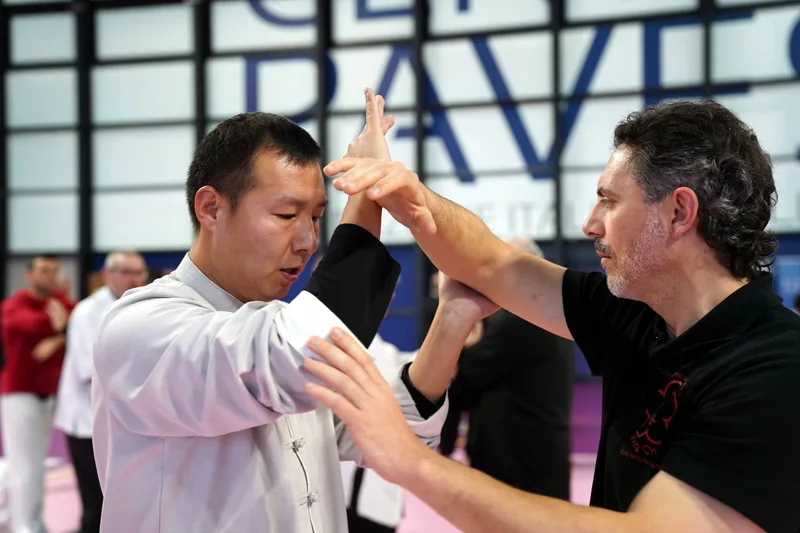
Two trapping techniques arrive early alongside them: Pak Sao, a short slapping deflection across the center that clears a path, and Lap Sao, a pulling hand that jerks the opponent’s arm off-line to open them up. Both are simple, and both take a year to make fast enough to matter.
The Chain Punch: Wing Chun’s Signature Strike
The chain punch — Lin Wan Kuen — is the technique most people recognize even if they’ve never trained. A vertical fist driven down the centerline, elbow tracking behind the knuckles, then the other hand, then the first again, in a string that doesn’t wind up and doesn’t stop.
Its logic is geometry. A straight line is shorter than an arc, so a punch down the middle arrives before a hook thrown from outside — even if the hook is stronger. Wing Chun trades power per strike for volume and speed, and keeps the non-punching hand on the centerline so the motion covers while it strikes.
What beginners get wrong: adding shoulder. Power comes from the elbow driving forward and the stance behind it. Loading up the shoulder telegraphs the punch, pulls you off your structure, and costs you the second and third strike — the ones that were supposed to do the work.
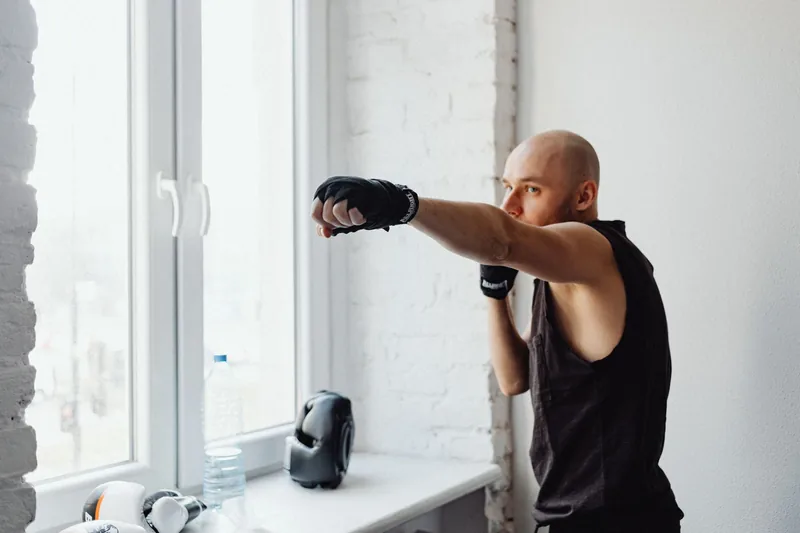
Palm strikes, finger strikes, and driving elbows fill out the striking side. Beginners spend most of their time on the straight punch anyway, because the punch is where the structure gets tested.
Kicks and Footwork Beginners Actually Use
Wing Chun kicks stay low — front and side kicks to the shin, knee, or thigh, usually thrown from a position where you’re already in contact at the arms. There’s no head kicking. A kick above the waist takes your foot off the ground longer than the art considers acceptable at close range.
Footwork is where beginners quietly lose the most ground. Two pieces matter early: Biu Ma, the advancing step that closes distance without losing structure, and the turning stance that pivots you off the line of attack while your hands stay on the center. Neither is flashy. Both are why a technique that works standing still also works when someone walks you backward — the job of the second form, Chum Kiu. Our breakdown of the six Wing Chun forms covers that progression.
Chi Sao: Where the Techniques Stop Being Choreography
You can drill Tan Sao a thousand times in the air and still get flattened by a stranger. Chi Sao — sticky hands — is the bridge, and it’s the training method that makes Wing Chun what it is.
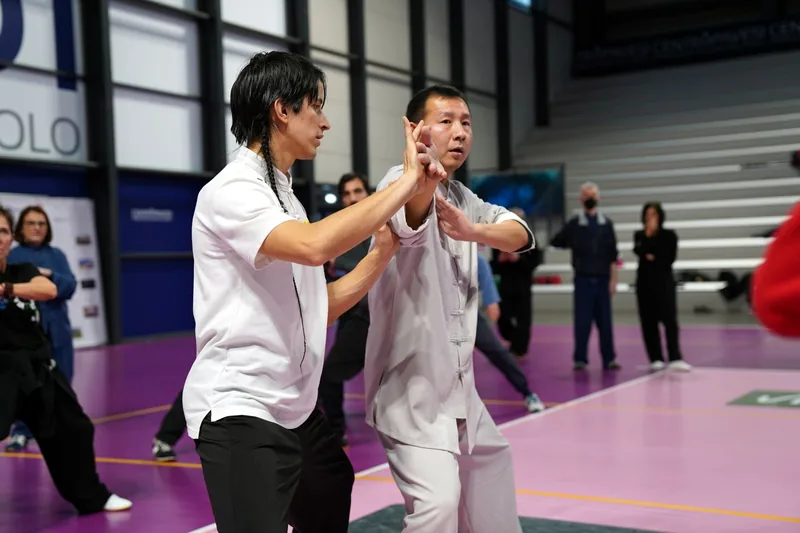
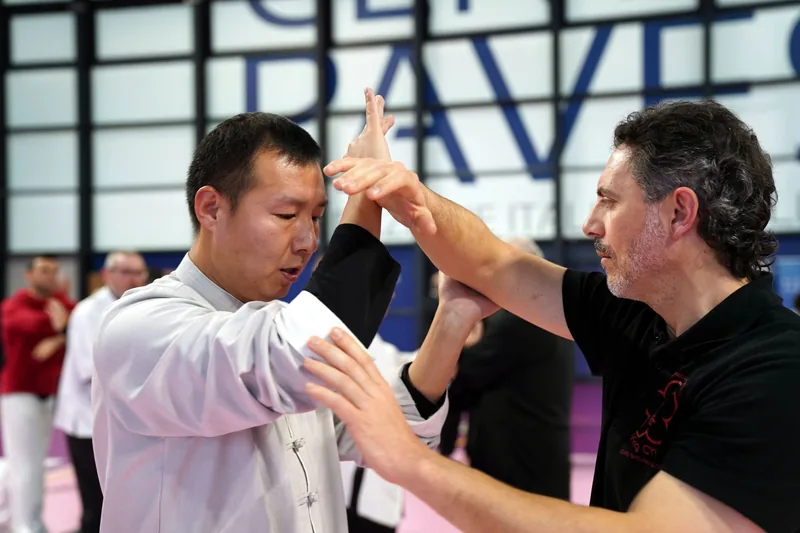
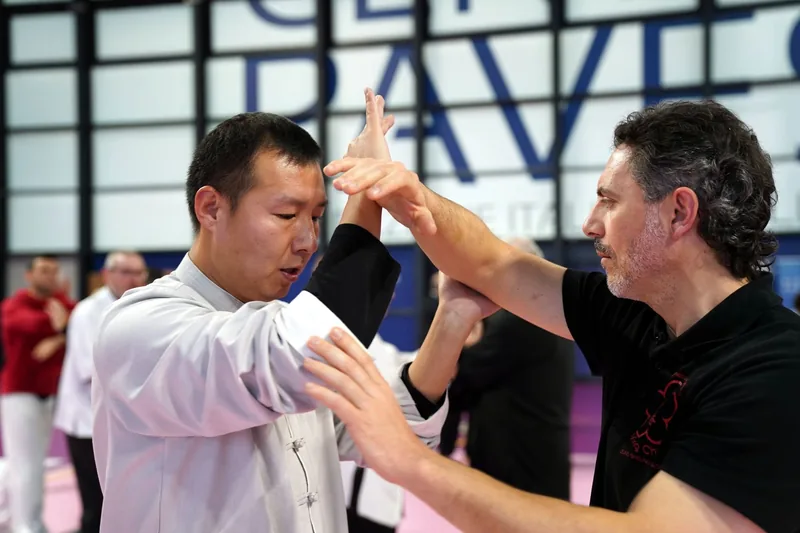
Two people make contact at the forearms and stay there, rolling through the hand shapes while each looks for a gap. Because the arms never separate, you stop watching for openings and start feeling them — pressure disappears from one side and your arm goes there before your eyes have processed anything. That tactile reflex is what the hand shapes were building toward all along.
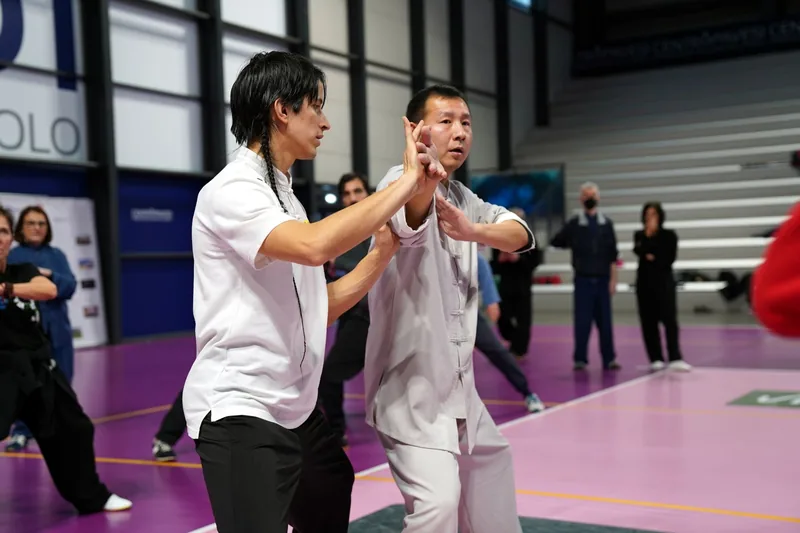
Most students start basic single-hand Chi Sao within a few months. It’s also the honest checkpoint: a technique that falls apart the moment a partner applies real pressure wasn’t a technique yet. Later, the wooden dummy does the same job against a structure that never tires and never lets a bad angle slide.
What Wing Chun Techniques Do and Don’t Cover
Wing Chun handles the close-range standing exchange — the arm’s-length, hands-already-touching distance where a lot of real confrontations end up — better than almost anything else, and it produces usable skill faster than most traditional systems. It also doesn’t address a fight that hits the ground or cover long-range striking, and no serious instructor claims otherwise. Students who want the grappling half can explore our dedicated BJJ program at GMA Team; the two systems cover almost perfectly opposite ground.
Learning Wing Chun Techniques in Gallatin, TN
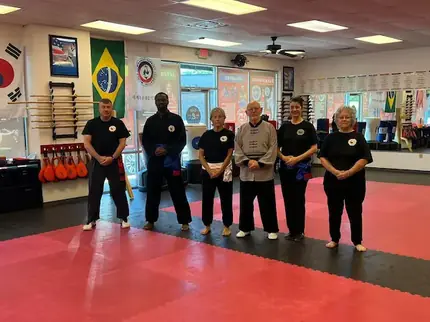
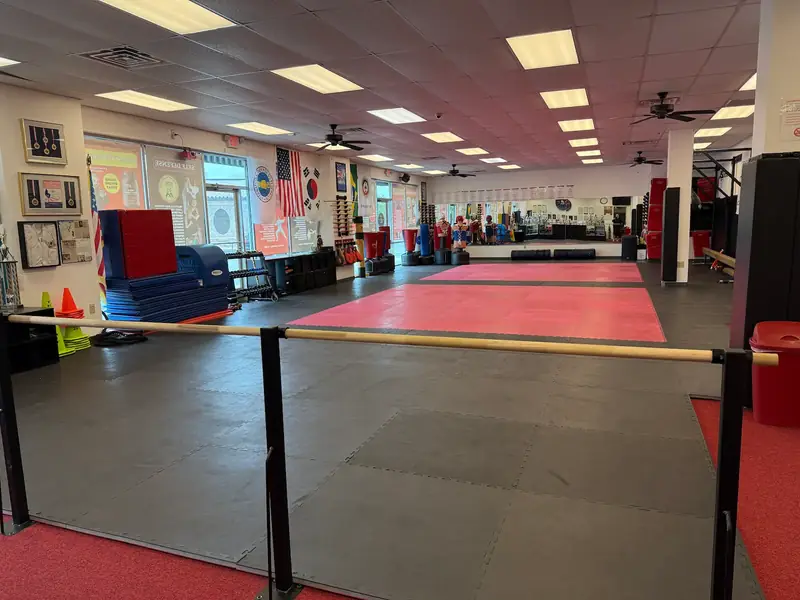
At Global Martial Arts USA in Gallatin, TN, Wing Chun is taught within the Golden Talon Kung Fu system founded by Grandmaster W. Vardeman — a curriculum blending Wing Chun with Tai Chi, Bagua Zhang, and material from Northern and Southern Chinese traditions. Beginners work stance, hand techniques, and footwork alongside Chi Sao and self-defense application from early on, so the drills always have something to answer to.
GMA has taught martial arts in Sumner County for over 50 years and has been voted the county’s top school. Students train across eight disciplines under one roof, so the gaps in any single art get covered rather than left open. Our piece on Ip Man and the Wing Chun legacy traces how these techniques reached the West at all.
Class times are on our schedule, and you can read more about our Wing Chun program — though the fastest way to understand Tan Sao is to hold one while someone leans on your elbow.
Ready to Get Started?
Your first class is free. Whether you’re a complete beginner or an experienced martial artist, we’d love to welcome you to the GMA family.
Call us at (731) 324-3847 or book your free trial online.
Frequently Asked Questions
What are the basic Wing Chun techniques for beginners?
The Yee Jee Kim Yeung Ma stance and centerline theory, then three hand shapes — Tan Sao, Bong Sao, and Fook Sao — plus the chain punch, the Pak Sao and Lap Sao traps, and low front and side kicks. Most arrive inside the first form, Sil Lum Tao.
How long does it take to learn Wing Chun techniques?
You can perform the basic shapes within a few months. Making them work is the longer job — one to two years before your structure holds under real pressure, three to five before the techniques are reliable against a resisting opponent.
Do Wing Chun techniques work in a real fight?
At close range, against a larger opponent, and when trained with live partner pressure rather than solo drilling — yes. Its limits are just as real: no ground fighting, no long-range striking. Students wanting full coverage typically cross-train in a grappling art.