Blog

  • Best Martial Art for Self Defense: A Comparison

    Best Martial Art for Self Defense: A Comparison

    Choosing the best martial art for self defense depends on what kind of threat you’re preparing for — and how you want to respond when it happens. A street confrontation looks nothing like a controlled sparring match, and the style that wins tournaments isn’t always the one that keeps you safest walking to your car at night. At Global Martial Arts USA in Gallatin, TN, we’ve spent over 50 years training students across multiple disciplines, and we’ve seen firsthand which skills translate to real-world safety.

    This guide compares the most effective martial arts for self defense, breaks down what each one does best, and explains why a multi-discipline approach gives you the strongest foundation for personal protection.

    What Makes a Martial Art Effective for Self Defense?

    Before comparing styles, it helps to know what actually matters in a self defense situation. Real confrontations are fast, chaotic, and unpredictable. They happen in parking lots, hallways, and crowded spaces — not on padded mats with a referee standing by.

    The most effective self defense arts share a few traits. They teach you to control distance — knowing when to close the gap and when to create space. They train reactions under pressure so your body responds before your conscious mind catches up. They cover multiple ranges of combat: standing strikes, clinch work, and what to do if you end up on the ground. And they emphasize awareness and de-escalation alongside physical technique, because the best fight outcome is always the one you avoid entirely.

    At GMA, our self defense program is built on this principle. We don’t teach a single style in isolation — we draw from the disciplines below to give students tools for every scenario.

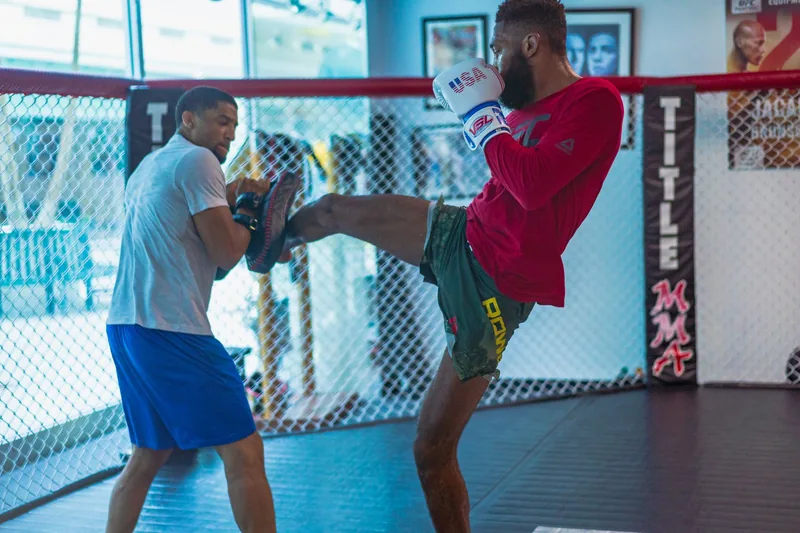
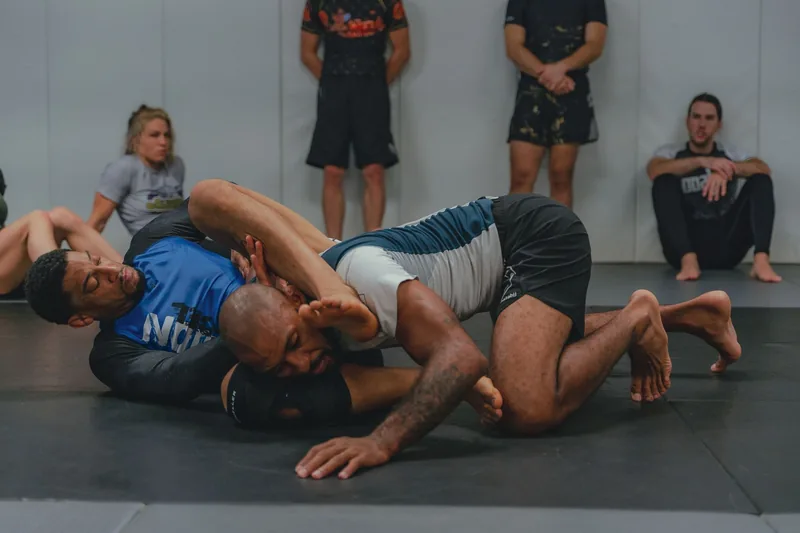
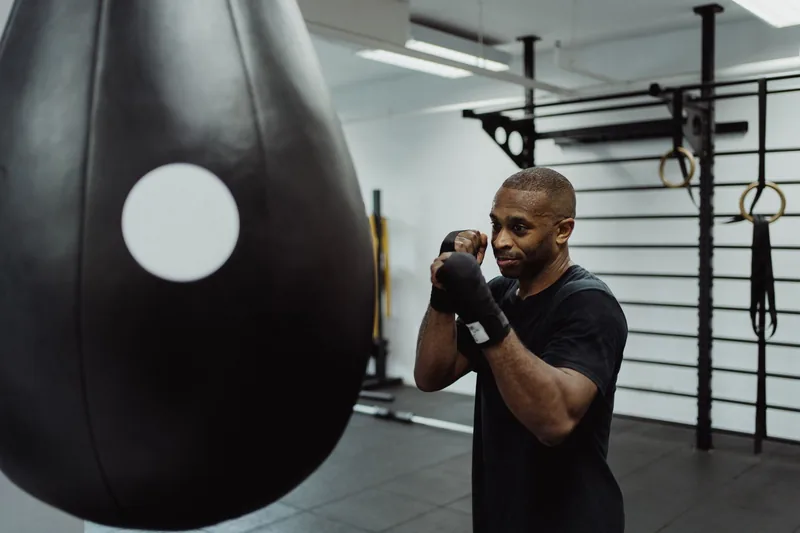
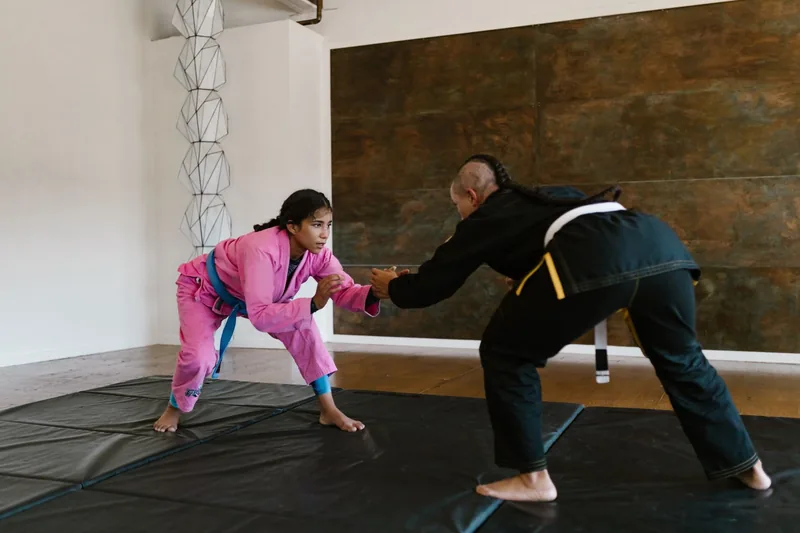
    Martial arts training class practicing self defense techniques

    Brazilian Jiu Jitsu: Ground Control and Submissions

    Brazilian Jiu Jitsu (BJJ) is widely considered one of the best martial arts for self defense on the ground. Most real fights end up in a clinch or on the floor within seconds, and BJJ teaches you how to control an opponent from there — using leverage and technique instead of brute strength.

    BJJ practitioners learn to neutralize larger, stronger attackers through positional control, chokes, and joint locks. If someone takes you down or pins you against a wall, BJJ gives you a systematic way to escape, reverse position, and either submit the attacker or create space to get back on your feet.

    GMA’s BJJ program operates under the direct lineage of Rocian Gracie Jr., an IBJJF-certified Black Belt. Our curriculum covers both gi and no-gi grappling, with a strong emphasis on the self defense applications that the Gracie family originally designed the art around. For students who want to go deeper, explore our dedicated BJJ program at GMA Team.

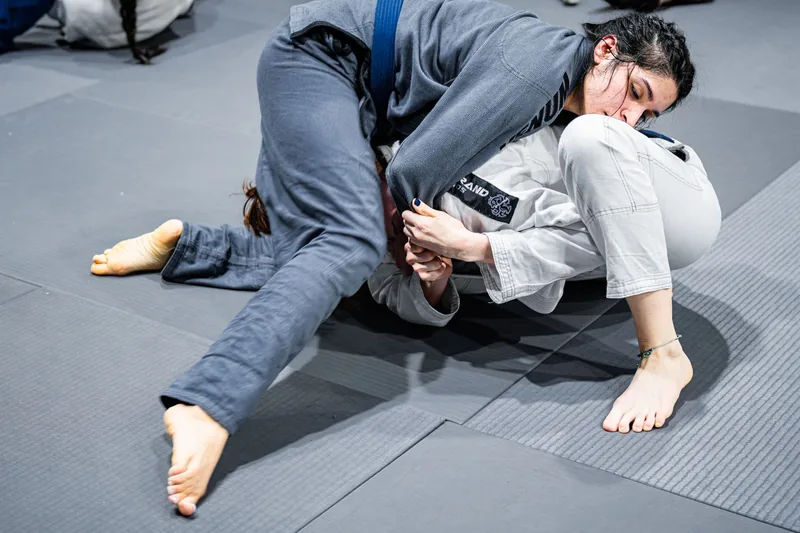
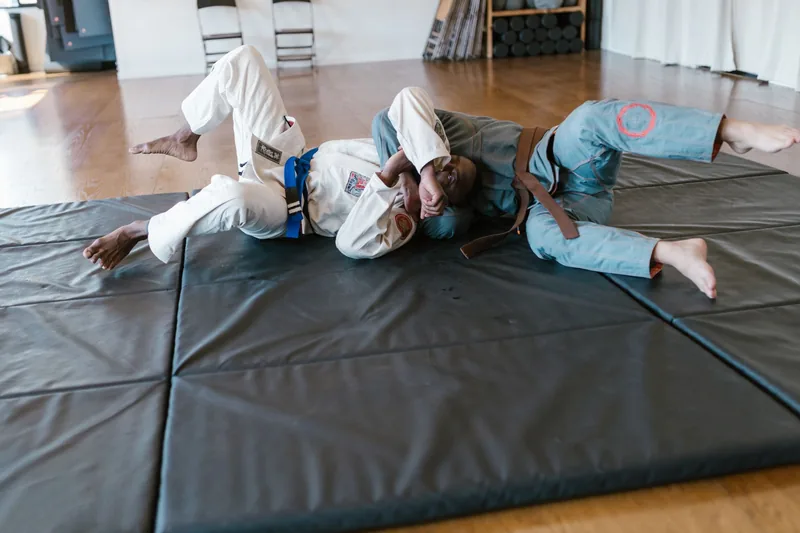
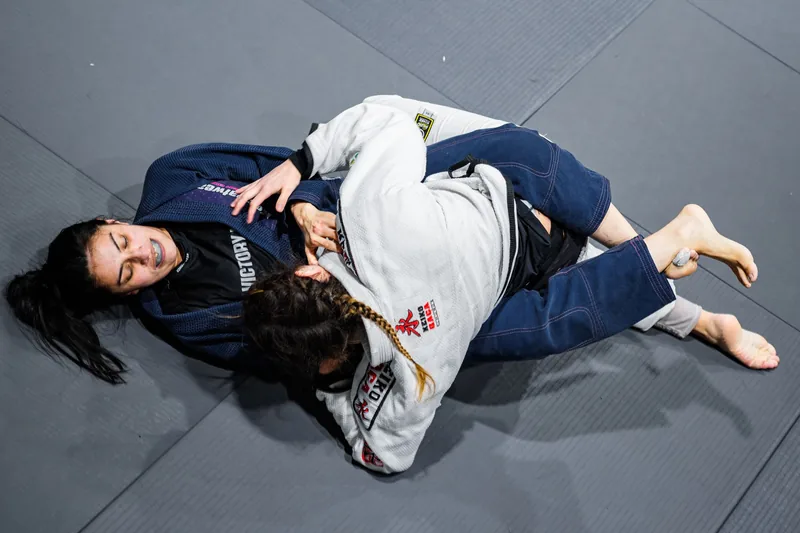
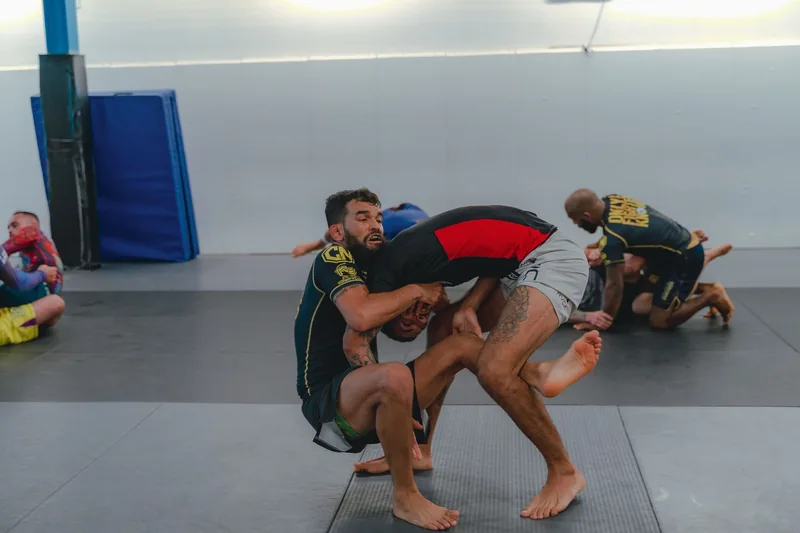
    Brazilian Jiu Jitsu grappling exchange showing close-range ground control for self defense

    TaeKwonDo: Striking Power and Distance Management

    If BJJ owns the ground, TaeKwonDo owns the space between you and a threat. TaeKwonDo builds explosive kicking power, fast hand strikes, and the ability to manage distance — keeping an attacker outside of grabbing range while you decide whether to disengage or respond.

    TaeKwonDo practitioners develop speed, timing, and the cardiovascular conditioning to sustain effort under stress. The art also trains mental discipline and the ability to stay calm when adrenaline spikes — a skill that matters as much as any technique in a real confrontation.

    At GMA, our TaeKwonDo program is led by KwanJangNim K.O. Spillmann, a 9th Degree Black Belt with over 50 years of teaching experience. The program blends traditional forms and sparring with practical self defense knowledge that students can apply outside the dojang.

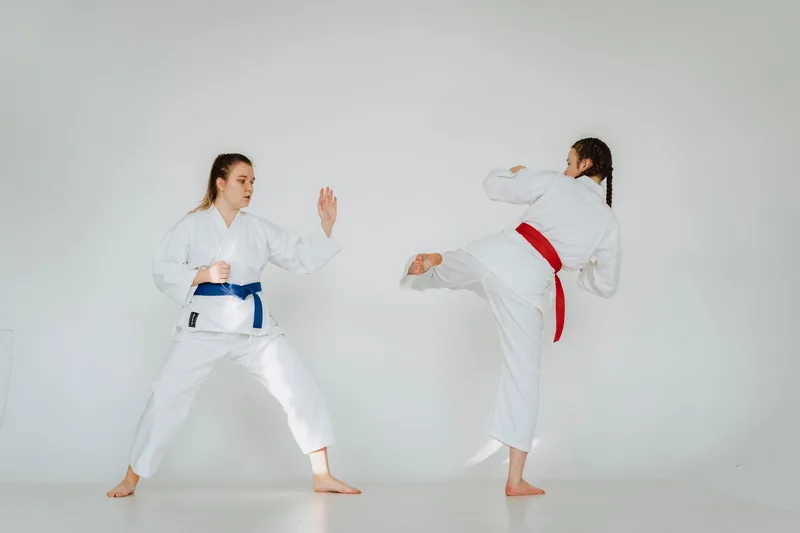
    TaeKwonDo kick demonstrating striking power and distance management for self defense

    HapKiDo: Joint Locks, Throws, and Close-Range Control

    HapKiDo fills the gap between striking and grappling. It specializes in joint manipulation, wrist locks, throws, and redirection — techniques designed to control an aggressor without needing to go to the ground or throw heavy strikes.

    This makes HapKiDo particularly effective for situations where de-escalation has failed but you need a measured response. Law enforcement and security professionals have trained in HapKiDo for decades because it offers control without excessive force. If someone grabs your arm, pushes you, or gets in your face, HapKiDo gives you options to redirect their energy and neutralize the threat.

    GMA’s HapKiDo curriculum emphasizes real-world application — practicing defenses against common grabs, pushes, and holds that students actually encounter. Combined with TaeKwonDo striking, it creates a standing self defense skill set that covers most threat scenarios before a fight ever reaches the ground.

    Wing Chun: Close-Quarters Combat

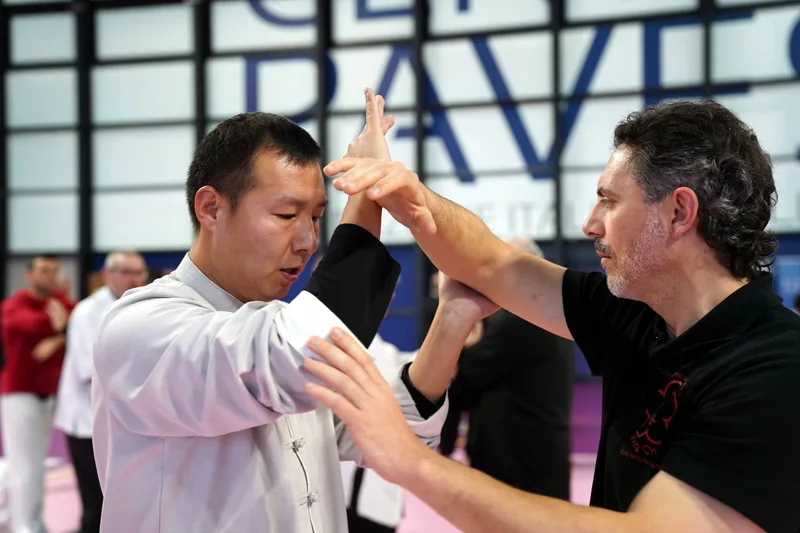
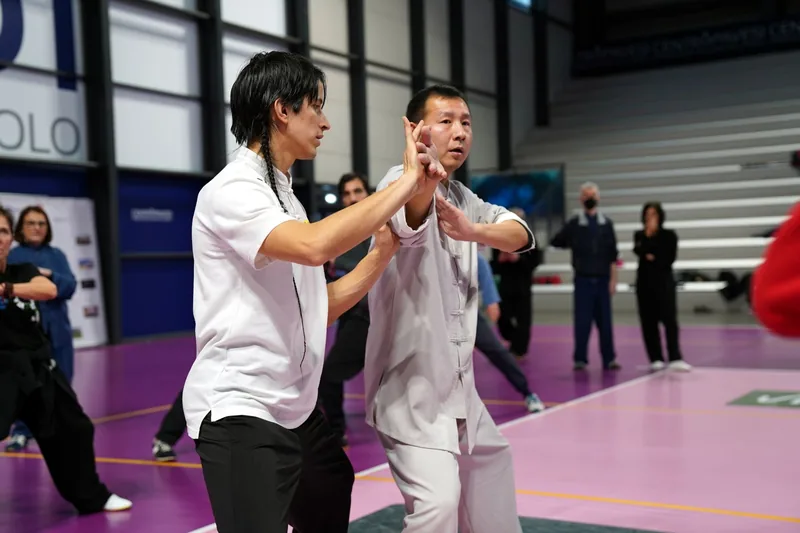
    When distance collapses and you’re face-to-face with an attacker, Wing Chun provides fast, efficient striking and trapping techniques built for tight spaces. Developed for close-range combat, Wing Chun uses simultaneous attack and defense — blocking and striking in the same motion — which makes it effective when you don’t have room to throw full-power kicks or wide punches.

    Wing Chun’s centerline theory teaches practitioners to protect their most vulnerable targets while attacking along the shortest path to the opponent. For self defense in confined environments like elevators, stairwells, or between parked cars, this approach is hard to beat.

    Why Multi-Discipline Training Is the Real Answer

    Here’s the truth that experienced martial artists and self defense instructors agree on: no single style covers everything. A striker who’s never trained on the ground is vulnerable to a tackle. A grappler who can’t manage distance may get hurt before the clinch. A joint-lock specialist needs a plan for when the attacker throws punches from outside their range.

    That’s why GMA’s approach combines multiple disciplines into a cohesive self defense system. Our students train TaeKwonDo for striking and distance, HapKiDo for joint locks and control, Brazilian Jiu Jitsu for ground defense, and Wing Chun for close-quarters responses. This multi-art foundation — refined across 50+ years of instruction — prepares students for the unpredictable nature of real-world threats.

    Our full class lineup lets you train across these disciplines on a single schedule, under one roof. Whether you start with one art and expand or train multiple styles from day one, you’re building the kind of well-rounded skill set that no single discipline can provide alone.

    Ready to Get Started?

    Your first class is free. Whether you’re a complete beginner or an experienced martial artist, we’d love to welcome you to the GMA family.

    Call us at (731) 324-3847 or book your free trial online.

    Frequently Asked Questions

    What is the single best martial art for self defense?

    There is no single best style because real threats are unpredictable. Brazilian Jiu Jitsu is widely regarded as the most effective ground-fighting art, TaeKwonDo excels at striking and distance management, and HapKiDo specializes in joint locks and control. The most prepared self defense practitioners train across multiple disciplines to cover all ranges of combat.

    How long does it take to learn self defense?

    You can learn foundational awareness skills and basic physical responses in your first few classes. Building reliable technique under pressure typically takes three to six months of consistent training. At GMA, our self defense curriculum is designed to give students practical skills they can use from the very beginning while building toward deeper proficiency over time.

    Is martial arts training safe for beginners?

    Yes. Reputable schools like GMA structure beginner classes with safety as the top priority. Techniques are taught progressively, sparring is supervised, and instructors match training intensity to each student’s experience level. GMA is Safe Sport Certified and has been voted the top martial arts school in Sumner County.

  • Tai Chi for Seniors: Balance, Health & Gentle Movement

    Tai Chi for Seniors: Balance, Health & Gentle Movement

    Tai chi for seniors has quietly become one of the most recommended exercises in modern healthcare — and for good reason. The slow, deliberate movements build balance, strengthen stabilizing muscles, and calm the nervous system without putting stress on aging joints. At Global Martial Arts USA in Gallatin, TN, we’ve guided students in their 60s, 70s, and 80s through their first steps in tai chi for more than 50 years. You don’t need to be flexible. You don’t need to be strong. You just need to be willing to show up.

    This guide covers what tai chi offers older adults, the specific health benefits backed by research, what a first class looks like, and simple ways to begin — whether you’re standing steady or need to start from a chair.

    Why Tai Chi Is Ideal for Seniors

    Most exercise programs ask the body to do more — lift heavier, move faster, push harder. Tai chi asks the opposite. The challenge is internal: slow the mind, relax unnecessary tension, and move with precision. That difference is exactly what makes it so well suited to older adults. There’s no impact on the knees, no strain on the shoulders, and no competitive pressure to keep up with anyone. The movements meet you at your current ability and gently expand what that ability is.

    Tai chi is also inherently functional. Every movement trains the same skills seniors rely on every day — shifting weight safely, turning without losing balance, coordinating breath with effort, and recovering when something unexpected throws you off center. Over weeks and months of practice, those skills become reflexive. A misstep on uneven pavement becomes a minor wobble instead of a fall.

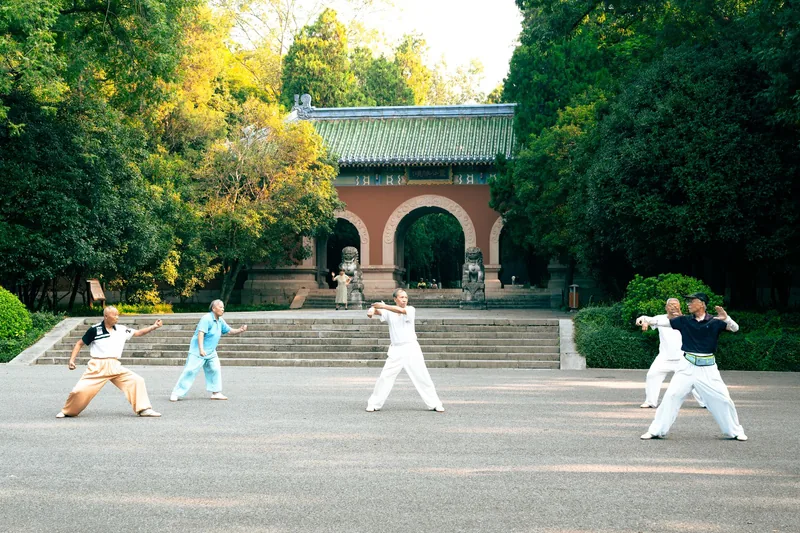
    Senior adults practicing gentle tai chi movements outdoors in a group

    Health Benefits of Tai Chi for Seniors

    The research on tai chi and aging is unusually strong for a low-impact practice. A 2017 review published in JAMA Internal Medicine found that tai chi reduced fall risk in older adults by up to 50 percent, outperforming conventional balance training and stretching programs. The CDC and the National Council on Aging now list tai chi among their top recommended fall-prevention interventions.

    Beyond balance, older adults who practice tai chi regularly show measurable improvements in blood pressure, cardiovascular health, bone density, sleep quality, and symptoms of anxiety and depression. Several studies have also documented cognitive benefits — improved memory, faster processing speed, and better executive function — likely tied to the combination of physical movement, breathing, and mental focus the practice demands. For seniors managing conditions like arthritis, Parkinson’s disease, or recovery from a stroke, tai chi often fits into a rehabilitation plan when higher-impact exercise is off the table.

    These benefits aren’t reserved for people who start young. Studies consistently find that older adults who begin tai chi in their 60s, 70s, or 80s experience the same gains as younger practitioners — sometimes faster, because the contrast between sedentary aging and gentle consistent movement is so pronounced. Our guide to tai chi for beginners walks through what the first months of practice look like for anyone new to the art.

    Senior adult practicing tai chi for improved balance and fall prevention

    Chair Tai Chi and Standing Tai Chi — Both Work

    One of the most practical features of tai chi for seniors is that the same movements can be performed standing or seated. Students who have strong balance and good mobility typically practice standing, learning the traditional Yang Style forms that have been taught for generations. Students recovering from surgery, managing chronic pain, or dealing with significant balance challenges can perform modified versions of every movement from a sturdy chair.

    Chair tai chi isn’t a watered-down version of the real practice — it’s the same arm movements, the same breathing, the same mental focus, just with the lower body stabilized. Many seniors begin seated, build their core strength and coordination over weeks or months, and gradually transition to standing practice. Others prefer seated work permanently, and still experience the cardiovascular, cognitive, and mood benefits the art is known for.

    At GMA, our instructors regularly adapt movements on the fly based on what a student brings into class that day. A flare-up of arthritis, a recent knee surgery, a bad night’s sleep — none of those need to stop your practice. Tai chi adapts around the body you have today.

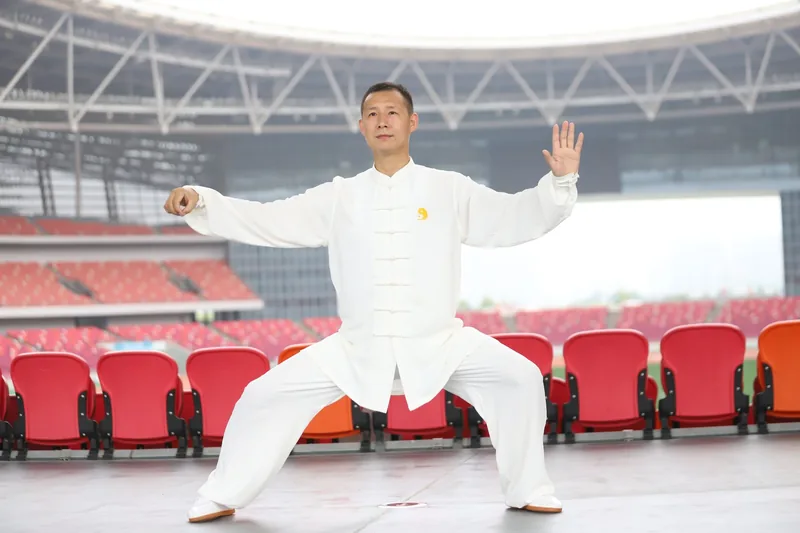
    Older tai chi practitioner demonstrating gentle foundational form with proper stance

    What to Expect in Your First Class

    Walking into a martial arts school for the first time can feel intimidating at any age, but our tai chi program was designed with first-timers in mind. A typical class begins with gentle warm-up movements — slow neck rolls, shoulder circles, easy weight shifts — followed by breathing exercises that settle the mind and prepare the body for focused movement. The room is quiet. No loud music, no shouted counts, no one sprinting past you.

    From there, the instructor introduces foundational movements one at a time. You’ll practice weight shifts, stepping patterns, and arm movements at a pace your body can absorb. Classes usually run 45 to 60 minutes. Most seniors leave feeling looser and calmer than when they arrived — and many report better sleep that night. Wear comfortable, loose clothing and flat-soled shoes. No uniform, no equipment, no prior experience required.

    GMA has been voted the top martial arts school in Sumner County, and our tai chi program is taught by instructors with decades of experience in both the health and martial applications of the art. That background matters for seniors — understanding why a movement works makes it easier to practice with intention rather than just copying shapes.

    How to Start Tai Chi Safely

    If you’re considering tai chi and have any chronic health conditions, a quick conversation with your doctor is a good first step. Tai chi is one of the safest forms of exercise available, but a provider who knows your history can flag anything specific to watch. Once you have the green light, the single best thing you can do is show up to a class. Videos and books can supplement your learning, but tai chi is a physical skill that requires real-time feedback from a qualified instructor — and for seniors in particular, that feedback on posture and weight distribution is what prevents minor issues from becoming bigger ones.

    Look for a school that teaches tai chi as a complete system — breathing, martial applications, and philosophical principles alongside the movements themselves. At Global Martial Arts USA, we teach tai chi alongside TaeKwonDo, HapKiDo, and our other disciplines, with a dedicated tai chi program that welcomes students of every age and fitness level. You can view our class schedule and drop in for a free trial any time.

    Ready to Get Started?

    Your first class is free. Whether you’re a complete beginner or an experienced martial artist, we’d love to welcome you to the GMA family.

    Call us at (731) 324-3847 or book your free trial online.

    Frequently Asked Questions

    Is tai chi safe for seniors with arthritis or joint pain?

    Yes. Tai chi is one of the few exercises specifically recommended by the Arthritis Foundation because its slow, low-impact movements strengthen the muscles around painful joints without aggravating them. Many seniors with arthritis report reduced stiffness and less daily pain after a few months of consistent practice.

    Can I do tai chi if I use a cane or walker?

    Absolutely. Chair-based tai chi provides the full benefit of the practice — breathing, coordination, cognitive engagement, and upper body movement — without requiring standing balance. As strength and confidence build, many seniors transition to standing practice with support, and some eventually move to full standing forms.

    How often should seniors practice tai chi to see benefits?

    Research consistently shows measurable balance and health improvements with two to three classes per week, each lasting 45 to 60 minutes. Many of our students attend twice weekly and practice short routines at home between classes to reinforce what they’ve learned.

  • Tai Chi for Beginners: Complete Getting Started Guide

    Tai Chi for Beginners: Complete Getting Started Guide

    Tai chi for beginners can feel like stepping into a completely different world. The slow, flowing movements look nothing like what most people picture when they think of martial arts — but that quiet power is exactly what makes tai chi one of the most effective practices for building balance, reducing stress, and improving long-term health. At Global Martial Arts USA in Gallatin, TN, we’ve taught tai chi to students of every age and fitness level for over 50 years. Whether you’re 25 or 75, you don’t need any experience to start.

    This guide covers everything a beginner needs to know — what tai chi actually is, what your first class looks like, the foundational movements you’ll learn, and the health benefits backed by research. By the end, you’ll have a clear picture of what to expect and how to take your first step.

    What Is Tai Chi and Where Does It Come From?

    Tai chi (sometimes written as taiji) is a Chinese martial art that dates back several centuries. It was originally developed as a combat system, but over time evolved into a practice that blends self-defense techniques with deep breathing, meditation, and slow, deliberate movement. Every posture in tai chi has a martial application — the graceful arm sweep that looks like a dance move is actually a block, redirect, or strike performed at reduced speed.

    The style most commonly taught to beginners is Yang Style Tai Chi, known for its smooth, expansive movements and accessible pace. At GMA, our program is rooted in Yang Style because it offers the best entry point for new students while still teaching authentic martial principles. The movements are performed standing, with soft knees and relaxed shoulders, creating a low-impact workout that strengthens your body from the inside out.

    Group of beginners practicing tai chi movements together outdoors

    What to Expect in Your First Tai Chi Class

    Walking into any martial arts class for the first time can feel intimidating, but tai chi is one of the most welcoming environments you’ll find. There’s no sparring, no high kicks, and no pressure to keep up with advanced students. A typical beginner class at GMA starts with a brief warm-up — gentle stretches, breathing exercises, and basic stance work to get your body aligned and your mind focused.

    From there, the instructor introduces foundational movements one at a time. You’ll practice weight shifts, stepping patterns, and arm movements at a pace that allows your body to absorb each position naturally. Classes typically run 45 to 60 minutes, and most beginners report feeling more relaxed and centered afterward — even on their very first day.

    You don’t need special equipment to start. Wear comfortable, loose-fitting clothing and flat-soled shoes (or go barefoot if the studio allows it). There’s no uniform requirement for beginners, though many students eventually train in traditional martial arts attire. If you’re curious about the terminology you’ll hear, our martial arts terminology glossary covers many of the terms used across disciplines at GMA.

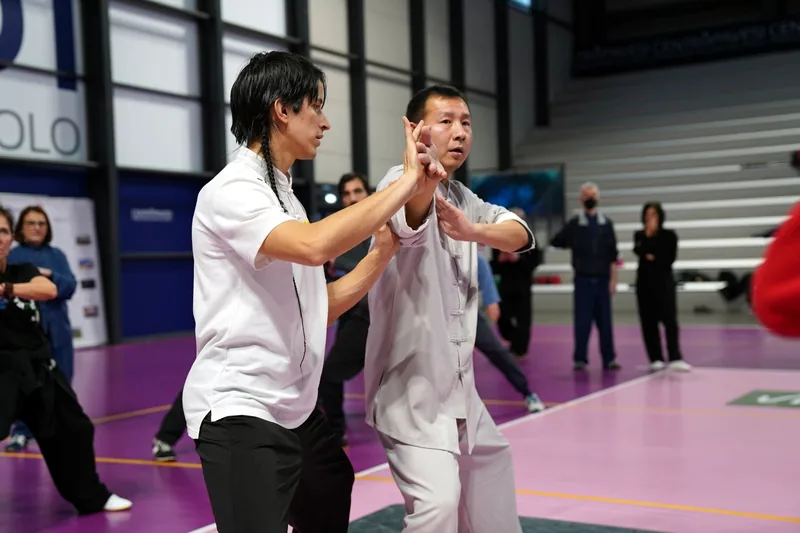
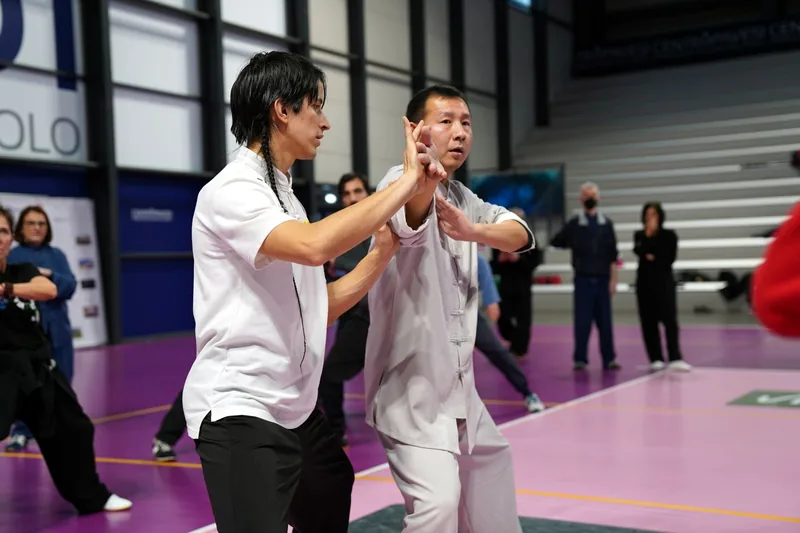
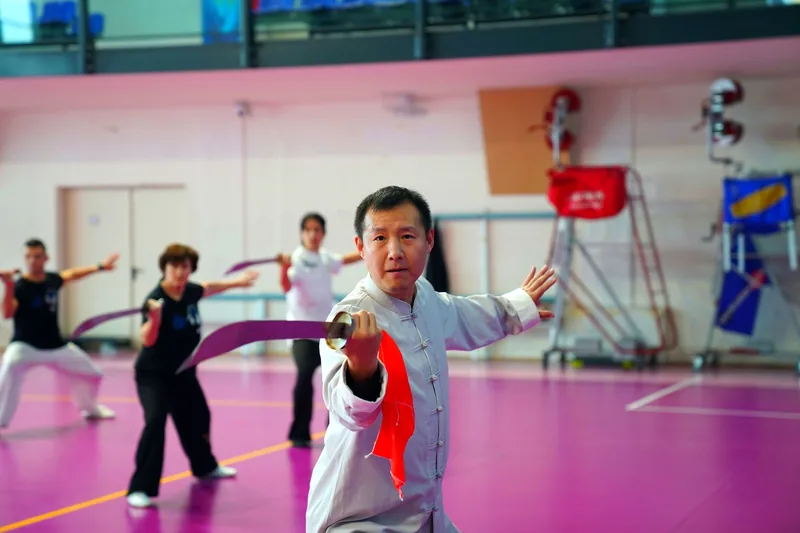
    Tai chi practitioner demonstrating foundational form with proper stance

    Foundational Tai Chi Movements Every Beginner Should Know

    Tai chi forms are sequences of connected movements performed in a specific order. The most widely practiced beginner sequence is the 24 Form (also called the Beijing Form or Simplified Form), which condenses the longer traditional forms into a manageable set of movements that teach all the core principles.

    A few foundational movements you’ll encounter early in your training:

    Commencement — the opening posture. You stand with feet shoulder-width apart, slowly raise your arms to shoulder height with relaxed wrists, then lower them back down. This simple movement teaches you to coordinate breath with motion and find your center of gravity.

    Parting the Wild Horse’s Mane — a stepping movement where your arms separate in opposite directions as you shift your weight forward. This teaches you to move your entire body as one connected unit, with power rooted in the legs and expressed through the hands.

    Wave Hands Like Clouds — a side-stepping movement where your hands pass across your body in alternating arcs. It develops coordination, balance, and the ability to stay grounded while moving laterally.

    None of these movements require strength, speed, or flexibility beyond what a healthy adult can manage. The challenge in tai chi is internal — learning to relax muscles you didn’t know were tense, coordinating your breathing with your movement, and developing the body awareness to feel where your weight is at any given moment.

    Senior adult practicing tai chi for improved balance and health benefits

    Health Benefits of Tai Chi for Beginners

    Research consistently supports what tai chi practitioners have known for centuries. A 2019 meta-analysis published in the British Journal of Sports Medicine found that tai chi significantly improves balance, reduces fall risk in older adults, lowers blood pressure, and decreases symptoms of anxiety and depression. The practice also shows promise for managing chronic pain conditions, including arthritis and fibromyalgia.

    For beginners specifically, the benefits often show up faster than expected. Within the first few weeks of regular practice, most students notice improved posture, better sleep quality, and a calmer response to daily stress. Because tai chi is low-impact and self-paced, it’s accessible to people recovering from injuries, managing chronic conditions, or simply looking for a sustainable exercise practice that won’t break down their joints over time.

    GMA’s tai chi program in Gallatin, TN is taught by instructors with decades of experience in both the health and martial applications of the art. That dual perspective matters — understanding why each movement exists helps students practice with intention rather than just copying shapes. Our school has been voted the top martial arts school in Sumner County, and our tai chi classes reflect the same standard of instruction that defines every program we offer.

    How to Start Your Tai Chi Practice

    The single best thing a beginner can do is show up to a class. Videos and books can supplement your learning, but tai chi is a physical skill that requires real-time feedback from a qualified instructor. Small adjustments to your posture, weight distribution, and hand position make the difference between a movement that works and one that’s just an empty gesture.
    When choosing a school, look for instructors with verifiable credentials and a curriculum that teaches tai chi as a complete system — not just the physical movements, but the breathing methods, martial applications, and philosophical principles that give the art its depth. At Global Martial Arts USA, we teach tai chi alongside TaeKwonDo, Brazilian Jiu Jitsu, HapKiDo, and other disciplines, giving students the option to explore multiple martial arts under one roof.

    You don’t need to be flexible. You don’t need to be young. You don’t need any prior martial arts experience. Tai chi meets you exactly where you are and builds from there — one slow, intentional movement at a time.

    Ready to Get Started?

    Your first class is free. Whether you’re a complete beginner or an experienced martial artist, we’d love to welcome you to the GMA family.

    Call us at (731) 324-3847 or book your free trial online.

    Frequently Asked Questions

    Can I learn tai chi at home as a beginner?

    You can practice movements you’ve already learned in class, but starting at home without instruction makes it easy to develop habits that are difficult to correct later. A qualified instructor provides the real-time feedback that video tutorials cannot. Once you’ve built a foundation in class, home practice becomes a powerful supplement to your training.
    How long does it take to learn the basic tai chi form?

    Most beginners can learn the 24 Form movements within three to six months of consistent weekly practice. Learning the physical sequence is the first step — refining your breathing, relaxation, and internal awareness is a lifelong process that deepens with every session.

    Is tai chi a real martial art?

    Yes. Tai chi was developed as a combat system, and every movement in the form has a martial application. The slow practice method trains body mechanics, timing, and sensitivity that translate directly to self-defense. At GMA, our instructors teach both the health and martial sides of tai chi so students understand the full depth of what they’re practicing.

  • Gracie Family: The History of Jiu Jitsu

    Gracie Family: The History of Jiu Jitsu

    Few families have shaped a martial art the way the Gracies shaped Brazilian Jiu Jitsu. The Gracie Jiu Jitsu history stretches back more than a century — from a Japanese judoka stepping off a ship in Belém, Brazil, to the most watched fighting tournament on the planet. What started as a survival skill taught to one Brazilian teenager became the foundation of modern mixed martial arts. At Global Martial Arts USA in Gallatin, TN, our BJJ program carries a direct, personal Gracie lineage — we are a Rocian Gracie Brazilian Jiu Jitsu branch academy, connecting every student on our mat to the family that created the art.

    This is the story of how one family turned grappling into a global phenomenon — starting with a young man named Carlos Gracie and a Japanese master named Mitsuyo Maeda.

    Mitsuyo Maeda: The Japanese Roots of Gracie Jiu Jitsu

    The Gracie story begins not in Brazil, but in Japan. Mitsuyo Maeda was a judoka and student of Jigoro Kano, the founder of Judo. Maeda left Japan in 1904 to demonstrate his art around the world, eventually settling in Belém, Brazil around 1917. There, he befriended Gastão Gracie, a local businessman and political figure who helped Maeda establish himself in the community.

    In return, Maeda offered to teach his fighting system — a blend of Kodokan Judo ground techniques and real-world combat grappling — to Gastão’s eldest son, Carlos Gracie. That decision changed martial arts history.

    Carlos Gracie: The Patriarch Who Built the Art

    Carlos Gracie was born on September 14, 1902 in Belém do Pará, Brazil, the firstborn son of Gastão Gracie. Small for his age but fiercely energetic, Carlos was the kind of boy who would today be called hyperactive. His father took him to Maeda in the hope that Jiu Jitsu would channel that energy. It did — and far more.

    Carlos trained under Maeda for roughly three years, absorbing the principles of leverage, positional control, and submissions that would become the DNA of Gracie Jiu Jitsu. In 1921, financial hardship forced the Gracie family to move from Belém to Rio de Janeiro, and Carlos never saw his master again. But by then, the seed had been planted.

    In Rio, Carlos reconnected with a friend from Belém who had also trained briefly with Maeda and was now working with the Special Police. Through that connection, Carlos began pressure-testing his Jiu Jitsu in no-holds-barred fights inside police walls. When he had saved enough money, he opened his own academy at Rua Marques de Abrantes 106 in 1925 — the first Gracie academy, and the cradle of Brazilian Jiu Jitsu.

    His first newspaper advertisement is legendary in BJJ circles. Translated from Portuguese, it read: “If you want your face punched and bruised, your butt kicked, and your arms broken, contact Carlos Gracie at the following address…”

    Carlos then did what no one else had done: he taught his younger brothers everything Maeda had taught him. Oswaldo, Gastão Jr., George, and Helio all learned the art directly from Carlos. He was called “Pai Branco” — White Father — by the family, both for his habit of always wearing white and because he was the head of the clan, the fatherly figure who held it all together.

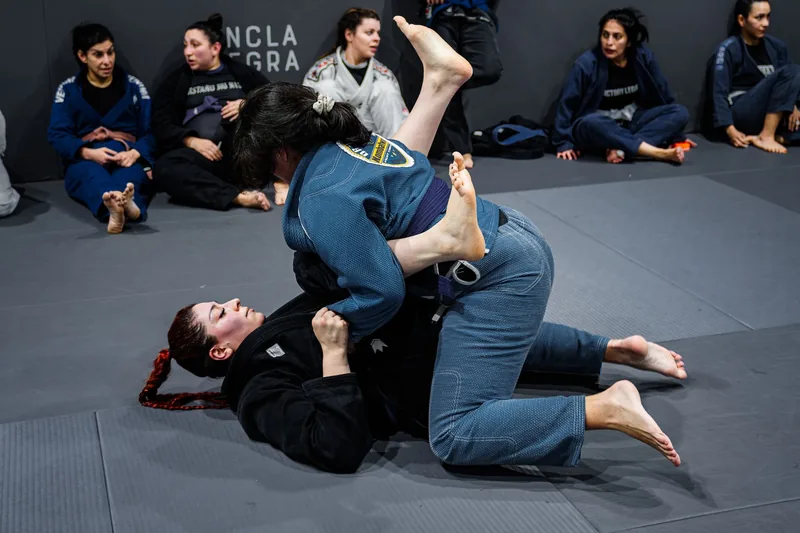
    Brazilian Jiu Jitsu practitioners grappling during training, demonstrating the ground techniques developed by the Gracie family

    It’s worth addressing something directly: some later narratives credit Helio Gracie as the sole founder of Brazilian Jiu Jitsu. The historical record — and the account held by the Carlos-Gracie side of the family — is that Carlos was Maeda’s direct student, opened the first academy, and taught Helio and their other brothers everything they knew. Helio’s important contributions came later, and we’ll cover them next. But the art began with Carlos.

    Helio Gracie: Leverage, Adaptation, and the Kimura Fight

    Of all Carlos’s brothers, Helio Gracie became one of the most influential teachers the family ever produced. Born in 1913, Helio was physically small and frail as a child. Doctors restricted his physical activity, so he spent years watching his older brothers train before stepping onto the mat himself. When he finally did, he discovered that many techniques required a strength and athleticism he simply did not have.

    Rather than accepting those limitations, Helio adapted. Building on what Carlos had taught him, he refined throws, sweeps, and submissions to rely even more heavily on leverage, timing, and body mechanics. A larger opponent’s weight became an advantage to exploit rather than a wall to overcome. These refinements strengthened the defining principle of the art — that a smaller, technically skilled grappler can consistently defeat a bigger, stronger opponent.

    Helio proved the system worked through challenge matches, taking on fighters from every discipline. His most famous bout — a three-hour, forty-five-minute fight against Masahiko Kimura in 1951 — became legendary even in defeat. Kimura himself reportedly said that Helio was the toughest opponent he ever faced. The shoulder lock Kimura used to win that match is still called “the kimura” in BJJ academies worldwide. Helio continued teaching and refining the art until his death in 2009 at the age of 95.

    BJJ practitioners training in gi uniforms at a martial arts academy, continuing the Gracie Jiu Jitsu tradition

    The 12 Commandments of Carlos Gracie

    Throughout his life, Carlos Gracie studied human behavior, nutrition, and discipline as intensely as he studied the mat. He eventually codified his philosophy into what are known today as the 12 Commandments of Carlos Gracie — a code that students still read, memorize, and live by in authentic Gracie academies around the world:

    1. Be so strong that nothing can disturb your peace of mind.
    2. Speak to everyone of happiness, health, and prosperity.
    3. Give all your friends the feeling that they are valuable.
    4. Always look at events from a positive point of view, and turn positivity into a reality in life.
    5. Think always of the best, work solely for the best, and expect always the best.
    6. Always be as enthusiastic about the success of others as you are about your own.
    7. Forget about past mistakes and concentrate your energies on the victories ahead.
    8. Always keep your fellow men joyful and have a pleasant attitude to all who address you.
    9. Spend all the time you need in perfecting yourself, but leave no time to criticize others.
    10. Become too big to feel unrest, too noble to feel anger, too strong to feel fear, and too happy to tumble in adversity.
    11. Always have a positive opinion about yourself and tell it to the world, not through words of vanity but through benevolence.
    12. Have the strong belief that the world is beside you if you keep true to what is best within you.

    Carlos also developed the Gracie Diet, a nutritional system built on years of self-experimentation that the family still uses to this day. He fathered 21 children, 11 of whom he awarded the black belt in Jiu Jitsu. He died on October 7, 1994, at the age of 92 — the patriarch who built an art, a family, and a philosophy that has now outlived him by more than three decades.

    Royce Gracie and the Birth of the UFC

    By the late 1980s, the Gracie family had migrated to the United States. Rorion Gracie — Helio’s son — opened a garage academy in Southern California and began spreading Gracie Jiu Jitsu to American students. But the family’s biggest impact on global martial arts was still ahead.

    In 1993, Rorion co-created the Ultimate Fighting Championship — a no-holds-barred tournament designed to answer the question every martial artist had debated for decades: which fighting style actually works? The format was simple and brutal: eight fighters from different disciplines, single-elimination bracket, minimal rules. No weight classes. No time limits. No judges’ decisions.

    The Gracies chose Royce — not the biggest or strongest family member, but the one whose average build would best demonstrate BJJ’s effectiveness. At six feet, one inch and 176 pounds, Royce was smaller than every opponent he faced. It didn’t matter. He submitted Art Jimmerson (boxing), Ken Shamrock (shootfighting), and Gerard Gordeau (savate) in a single night to win UFC 1. He went on to win UFC 2 and UFC 4, cementing Gracie Jiu Jitsu as the most effective fighting system on the planet.

    Royce Gracie became the first inductee into the UFC Hall of Fame in 2003. His victories didn’t just launch the UFC — they fundamentally changed how fighters train. Within a decade, every serious MMA competitor was training BJJ. The art that Carlos built in Rio had become mandatory knowledge for combat athletes worldwide.

    GMA Jiu Jitsu student winning at a Brazilian Jiu Jitsu competition
    Mixed martial arts grappling during competition, showing the ground fighting techniques Royce Gracie made famous in the UFC

    The Gracie Legacy in Modern BJJ

    Today, the Gracie family tree includes hundreds of practitioners across multiple generations. Rickson Gracie, often called the greatest fighter the family ever produced, compiled a record that remains the stuff of legend. Roger Gracie dominated world championship competition ten times over. Kyra Gracie brought women’s BJJ into the spotlight. Carlos Gracie Jr. founded the International Brazilian Jiu Jitsu Federation (IBJJF) in 1994, creating the competitive structure that governs the sport worldwide today.

    But the Gracie legacy is not just about famous names or tournament records. It lives in the principles passed down through every legitimate BJJ lineage: technique over strength, patience over aggression, and the understanding that position before submission is the path to victory. When you train at an academy with authentic Gracie lineage, you’re learning the same core principles Carlos developed a century ago — refined and pressure-tested across generations of competition.

    Our Direct Line to the Gracie Family

    This is where most martial arts schools would end the article with a generic “we have Gracie lineage” claim. Ours isn’t generic.

    Global Martial Arts USA is a Rocian Gracie Brazilian Jiu Jitsu (RGBJJ) branch academy. Our head instructor, Professor Konrad Spillmann, received his black belt from Master Rocian Gracie Jr. on December 12, 2001 — and the connection runs far deeper than a belt certificate.

    Rocian Gracie Jr. is a 6th-degree black belt, the son of Rocian Gracie Sr., and the grandson of Carlos Gracie — the founder of the art. That’s a direct, unbroken line: Maeda to Carlos to Rocian Sr. to Rocian Jr. to our mat in Gallatin. Master Rocian Jr. and Professor Spillmann grew up together and have worked together for more than thirty years. They are, in every sense that matters, brothers.

    Professor Konrad Spillmann and Master Rocian Gracie Jr. — over 30 years of brotherhood in Brazilian Jiu Jitsu

    That brotherhood is documented in a way few lineage claims ever are: Master Rocian named his own son Conrado after Professor Spillmann. In Gracie culture, that kind of naming is not a casual gesture — it’s a public declaration of family.

    What does this mean for you as a student? Every technique we teach comes from the Rocian Gracie Jr. method — the same structured, self-defense-focused curriculum taught directly by Master Rocian Jr. and passed down from his grandfather. Our BJJ program is taught by Professor Spillmann along with his sons and grandsons, making GMA not just a lineage academy but a generational one. Whether you’re working through the BJJ belt ranking system for the first time or sharpening your competition game, you’re training in a system with more than a century of unbroken instruction behind it.

    Rocian Gracie Jr. and Professor Konrad Spillmann with Brazilian Jiu Jitsu students at Global Martial Arts USA

    For students looking to go deeper into dedicated grappling and competition, explore our competition-focused BJJ program at GMA Team.

    Ready to Get Started?

    Your first class is free. Whether you’re a complete beginner or an experienced martial artist, we’d love to welcome you to the GMA family — and to the direct lineage of the family that built the art.

    Call us at (731) 324-3847 or book your free trial online.

    Frequently Asked Questions

    Who really founded Brazilian Jiu Jitsu?

    Carlos Gracie founded Brazilian Jiu Jitsu. He was Mitsuyo Maeda’s direct student starting in 1917, opened the first Gracie academy in Rio de Janeiro in 1925, and personally taught his younger brothers — including Helio — the art he had learned. Helio later made important refinements to the system, emphasizing leverage to accommodate his smaller body, but the foundation and the original transmission came from Carlos.

    Why did Royce Gracie win the first UFC?

    Royce Gracie won UFC 1 in 1993 by submitting all three of his opponents using Gracie Jiu Jitsu ground techniques. His opponents — a boxer, a shootfighter, and a savate specialist — had no answer for his grappling. Royce’s smaller size made the victories even more convincing, proving that technique and leverage could overcome raw power.

    Does GMA have Gracie lineage?

    Yes — direct lineage. Global Martial Arts USA is an official Rocian Gracie Brazilian Jiu Jitsu branch academy. Our head instructor, Professor Konrad Spillmann, received his black belt from Master Rocian Gracie Jr. on December 12, 2001. Master Rocian Jr. is the grandson of Carlos Gracie, the founder of the art. This gives every student at GMA a direct, unbroken line back to the family that created Brazilian Jiu Jitsu.

    Who is Rocian Gracie Jr.?

    Rocian Gracie Jr. is a 6th-degree Brazilian Jiu Jitsu black belt, the son of Rocian Gracie Sr., and the grandson of Carlos Gracie. He is known for a structured, self-defense-focused methodology taught at his academies in Brazil and through his network of affiliate branch schools worldwide. Global Martial Arts USA in Gallatin, TN is one of those branch academies.

  • BJJ Belt Ranking System Explained: White to Black Belt

    BJJ Belt Ranking System Explained: White to Black Belt

    If you’ve ever watched a Brazilian Jiu Jitsu class, you’ve noticed the rainbow of belts on the mat. The BJJ grading system is one of the most respected ranking structures in martial arts — and one of the slowest. Unlike disciplines where a black belt can be earned in three to four years, BJJ demands a decade or more of consistent training. Each belt represents real, tested skill. At Global Martial Arts USA in Gallatin, TN, our IBJJF-certified instructors guide students through every stage of this journey, from their first day as a white belt to the mastery that comes with years on the mat.

    This guide breaks down every belt in the BJJ ranking system — what each color means, how long promotions typically take, what the IBJJF requirements are, and how stripes and degrees work at the advanced levels.

    How the BJJ Grading System Works

    The BJJ belt system follows standards set by the International Brazilian Jiu-Jitsu Federation (IBJJF), the sport’s primary governing body. Unlike many traditional martial arts that use formal testing with set techniques, BJJ promotions are largely at the professor’s discretion. Your instructor evaluates your technical knowledge, sparring ability, competition results, time on the mat, and overall development as a practitioner.

    Each belt below black belt can carry up to four stripes — small strips of tape wrapped around the belt’s black bar. Stripes mark incremental progress within a rank and give students visible milestones between promotions. Not every school uses stripes the same way, but the four-stripe system is the IBJJF standard.

    At GMA, our BJJ program follows the Gracie lineage and IBJJF guidelines. Promotions are earned through consistent training, demonstrated skill, and character development — there are no pay-to-promote shortcuts.

    IBJJF graduation system chart showing BJJ belt ranking requirements and minimum time at each belt

    White Belt: Where Every BJJ Journey Begins

    The white belt is your starting point. There are no prerequisites, no minimum age for kids programs, and no experience required. Every world champion, every coral belt, every legend in the sport started right here.

    As a white belt, you’ll focus on fundamental positions, basic submissions, escapes, and the core principles of leverage and body mechanics that make BJJ effective regardless of size or strength. You’ll learn to survive, then to defend, then to attack. The IBJJF has no minimum time requirement at white belt — promotion to blue belt depends entirely on your professor’s assessment of your readiness.

    Most students spend one to two years at white belt. The biggest challenge at this stage isn’t physical — it’s mental. Learning to be comfortable in uncomfortable positions, accepting that higher belts will submit you regularly, and showing up consistently despite the steep learning curve are what separate white belts who earn their blue from those who quit.

    Blue Belt: Building Your Game

    Blue belt is where your personal style starts to take shape. You’ve survived the fundamentals and now you’re developing go-to techniques, chaining movements together, and starting to control the pace of rolls with less experienced partners.

    The IBJJF requires that practitioners be at least 16 years old to receive a blue belt and must remain at blue belt for a minimum of two years before promotion to purple. In practice, many students spend two to four years at blue. This is also where the highest dropout rate in BJJ occurs — the initial excitement has faded, the belt feels like a plateau, and the road ahead looks long. The students who push through this phase develop the discipline and resilience that define the art.

    Blue belts at GMA train alongside our upper belts and begin developing the problem-solving mindset that separates BJJ from other martial arts. You’re no longer just learning techniques — you’re learning when and why to use them.

    Brazilian Jiu Jitsu class with practitioners in gi uniforms on the mat

    Purple Belt: The Transition to Advanced Jiu Jitsu

    Purple belt is the bridge between intermediate and advanced. At this level, you’ve accumulated thousands of hours on the mat and your technique library is deep. You can handle most situations from most positions, and you’ve started developing a game that plays to your body type and strengths.

    The IBJJF requires purple belts to be at least 16 years old and to have spent a minimum of 18 months at purple before being eligible for brown belt. Most purple belts train at this rank for two to three years. Many purple belts also begin helping instruct lower-ranked students — teaching solidifies your own understanding and is considered part of the growth process in BJJ culture.

    Purple belt is where people start to take notice. Your rolls with higher belts become competitive, your submissions are precise, and your defense is strong enough that even brown and black belts have to work for their positions.

    Brown Belt: Refining Mastery

    Brown belt is the final step before black. The technical gap between a skilled purple belt and a brown belt might not look dramatic to an outside observer, but the difference is in the details — timing, pressure, transitions, and the ability to impose your game on anyone at any level.

    The IBJJF requires a minimum of one year at brown belt before promotion to black, with a minimum age of 18. Most practitioners spend one to two years at brown belt. At this stage, the focus shifts from learning new techniques to refining everything you know and eliminating gaps in your game.

    Brown belts are often described as “black belts in training.” The knowledge is there — the remaining work is polish, consistency, and the kind of deep understanding that only comes from years of repetition under pressure.

    Two BJJ practitioners grappling during jiu jitsu training class

    Black Belt and Beyond: Degrees, Coral Belts, and Red Belts

    Earning a BJJ black belt is a milestone that takes most practitioners eight to twelve years of consistent training. The IBJJF requires candidates to be at least 19 years old. But the black belt isn’t the finish line — it’s widely considered the beginning of a deeper understanding of the art.

    After black belt, practitioners earn degrees rather than stripes. The IBJJF awards the first three degrees at three-year intervals, degrees four through six at five-year intervals, and degree seven requires seven additional years. At seventh degree, the belt itself changes — the traditional black belt becomes a coral belt with alternating red and black bars, recognizing a lifetime of contribution to the art. Eighth degree is also a coral belt. The ninth and tenth degrees carry a red belt, reserved for the pioneers and grandmasters who shaped BJJ into what it is today.

    At GMA, our BJJ program operates under IBJJF-certified instruction with direct Gracie lineage. That means every promotion our students earn carries the credibility of the sport’s highest governing body — the same organization that oversees world championships. Our head instructor holds an IBJJF BJJ Black Belt, bringing competition-tested knowledge to every class. For students ready to dive deeper into competition-level training, explore our dedicated BJJ program at GMA Team.

    Youth Belt Rankings: The Kids BJJ System

    Children under 16 follow a separate ranking system with more belt colors and smaller increments of progression. The youth system moves through white, then grey (starting at age 4), yellow (age 7), orange (age 10), and green (age 13). Each color group includes three variations — a color-white belt, solid color, and color-black belt — giving young students frequent milestones to work toward.

    When a practitioner turns 16, they transition into the adult system. A green belt with strong skills might receive a blue or purple belt upon transition, depending on their professor’s evaluation. Our kids martial arts program at GMA uses this structured progression to keep young grapplers motivated while building the fundamentals they’ll carry into the adult ranks.

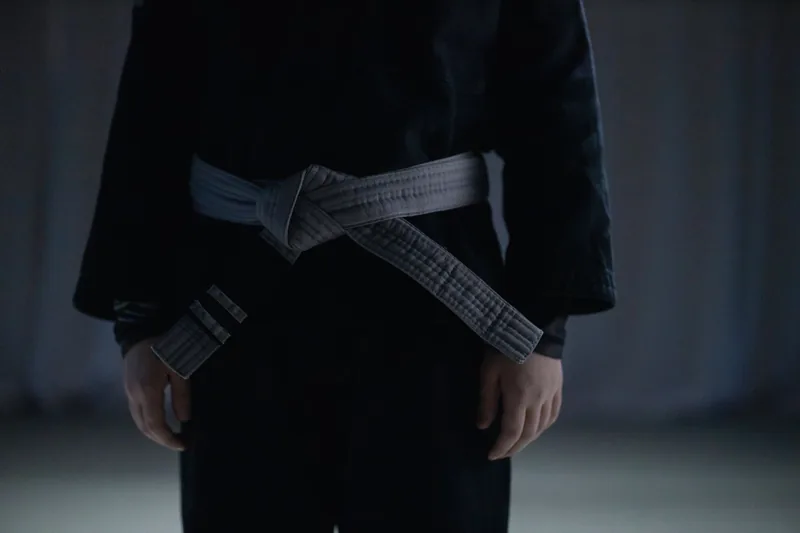
    Close-up of a BJJ belt showing the ranking stripe system

    What Makes BJJ Belt Promotions Different

    The BJJ grading system stands apart from most martial arts for one key reason: there are no formal tests at most schools. You don’t memorize a set of techniques and demonstrate them on command. Instead, your professor watches you train — day after day, month after month — and promotes you when your overall game, attitude, and mat time reflect the next level.

    This approach keeps the belts honest. A BJJ blue belt from any reputable school can defend themselves on the ground against most untrained opponents. A purple belt can handle most martial artists who don’t train grappling. A black belt has spent a decade or more pressure-testing every technique against resisting partners. There’s no shortcut, and that’s the point.

    If you’re considering starting BJJ in Gallatin, TN, know that the journey is long but the rewards compound at every stage. The confidence, problem-solving ability, physical fitness, and community you build along the way are worth far more than the color around your waist. And if you’re interested in how belt systems work across other martial arts, our guide to the martial arts belt ranking system covers TaeKwonDo, HapKiDo, and more.

    The Importance of IBJJF Registered Instructors in Brazilian Jiu Jitsu

    In Brazilian Jiu Jitsu, the credentials of your instructor play a significant role in shaping your training experience and progression. While some schools rely on affiliations with popular instructors to boost their marketing, having a BJJ instructor registered with the International Brazilian Jiu Jitsu Federation (IBJJF) is far more beneficial for students. This distinction ensures that the instruction you receive meets the sport’s highest standards and provides a structured path for advancement.

    Why Choose an IBJJF Registered Instructor?

    The IBJJF is the most recognized governing body in Brazilian Jiu Jitsu. It sets the standards for belt promotions, competition rules, and the overall quality of instruction. An instructor registered with the IBJJF has met specific criteria — including the appropriate belt rank and certification — ensuring they are qualified to teach and promote students within the framework of the sport.

    Some BJJ schools affiliate with a popular instructor who lends their name for marketing purposes without being directly involved in day-to-day training. While this can attract students, it doesn’t guarantee the same level of oversight and quality that comes with IBJJF registration. The legitimacy of belt promotions, consistency in teaching techniques, and adherence to recognized standards may all be compromised in those situations.

    Benefits of Training Under an IBJJF Registered Instructor

    Quality and Consistency: IBJJF registered instructors follow a curriculum that aligns with the organization’s standards, ensuring students receive consistent, high-quality instruction across all levels.

    Legitimate Belt Promotions: The IBJJF has stringent criteria for belt advancements, which means students earn their belts through proven skill and dedication — not subjective or inconsistent evaluation.

    Access to IBJJF Competitions: Training under an IBJJF registered instructor allows students to compete in IBJJF-sanctioned tournaments, the most prestigious in the BJJ community. This opens opportunities to test your skills on a global stage.

    IBJJF Registered Academies vs. Affiliated Academies

    An IBJJF registered academy follows a strict set of guidelines — all instructors are properly certified and students are promoted based on established IBJJF standards. This guarantees accountability and consistency that is often lacking in affiliated academies. Students in an IBJJF registered academy can be confident that their training is recognized globally and that their progress will be honored wherever they go.

    In contrast, an academy affiliated with a popular instructor might benefit from the marketing appeal of a well-known name, but this doesn’t necessarily translate into quality training. Day-to-day instruction may be left to less experienced instructors, and promotions might be awarded based on subjective criteria rather than a standardized process. This can lead to discrepancies in skill levels among students and a lack of credibility in the broader BJJ community.

    At Global Martial Arts USA, our BJJ program operates under IBJJF-certified instruction with direct Gracie lineage — giving every student the confidence that their training and promotions carry the highest level of credibility in the sport.

    Ready to Get Started?

    Your first class is free. Whether you’re a complete beginner or an experienced martial artist, we’d love to welcome you to the GMA family.

    Call us at (731) 324-3847 or book your free trial online.

    Frequently Asked Questions

    How long does it take to get a black belt in BJJ?

    Most practitioners earn their BJJ black belt in eight to twelve years of consistent training. The IBJJF sets minimum time requirements at each belt — two years at blue, 18 months at purple, and one year at brown — but actual promotion timelines depend on training frequency, skill development, and your professor’s assessment. There are no shortcuts in a legitimate BJJ program.

    What are the stripes on a BJJ belt?

    Stripes are small pieces of tape wrapped around the black bar of your belt. Each belt from white through brown can carry up to four stripes, marking incremental progress within that rank. They give students visible milestones between belt promotions, though not all schools use stripes the same way. After black belt, the markings are called degrees and follow IBJJF time-in-rank requirements.

    Is the BJJ belt system the same at every school?

    The belt colors and general progression are standardized by the IBJJF, but individual schools may vary in how strictly they follow minimum time requirements and how they evaluate readiness for promotion. Schools affiliated with the IBJJF or with direct lineage to the Gracie family tend to follow the most consistent standards. At GMA, our IBJJF-certified instruction ensures promotions carry recognized credibility.

    Why does it matter if my BJJ instructor is IBJJF registered?

    An IBJJF registered instructor has met specific certification requirements set by the sport’s primary governing body. This means your belt promotions are legitimate and recognized globally, your training follows standardized quality benchmarks, and you’re eligible to compete in IBJJF-sanctioned tournaments. Schools that only affiliate with a popular name without IBJJF registration may lack the same level of accountability and consistency in promotions.

  • Law Enforcement Self Defense Programs at GMA

    Law Enforcement Self Defense Programs at GMA

    Law enforcement officers face physical confrontations that most people never will. The ability to control a situation, restrain a subject safely, and protect yourself under extreme stress isn’t optional — it’s a professional requirement. At Global Martial Arts USA in Gallatin, TN, we offer law enforcement self defense training that draws on over 50 years of martial arts experience and real-world application. Our seminars and programs are designed specifically for officers, first responders, and military personnel who need practical, pressure-tested skills.

    Here’s what makes martial arts training essential for law enforcement — and how GMA’s approach prepares officers for the situations they actually encounter on duty.

    Why Law Enforcement Needs Specialized Self Defense Training

    Standard academy defensive tactics courses provide a foundation, but they rarely offer enough ongoing training to build the muscle memory officers need under real stress. Studies consistently show that officers who train regularly in martial arts use force more effectively, de-escalate more successfully, and suffer fewer injuries on the job.

    The difference between a trained officer and an untrained one often comes down to confidence in close-quarters situations. When you know how to control a resisting subject with joint locks, takedowns, and positional control, you’re less likely to escalate to higher levels of force. That’s better for the officer, better for the subject, and better for the department.

    GMA’s instructors have trained law enforcement, military personnel, and professional fighters. That experience means our curriculum addresses the specific challenges officers face: working in confined spaces, controlling subjects without causing unnecessary injury, retaining your weapon during a struggle, and transitioning between verbal commands and physical control when de-escalation fails.

    Law enforcement officer practicing defensive control tactics during training

    What GMA’s Law Enforcement Program Covers

    Our law enforcement self defense training integrates techniques from multiple martial arts disciplines, each chosen for its practical application in the field.

    Standing control and takedowns. From HapKiDo, officers learn joint locks, wrist controls, and pressure point techniques that allow them to restrain a non-compliant subject with minimal force. These techniques work even when an officer is dealing with a larger, stronger individual — leverage and technique overcome size advantages.

    Ground control and recovery. Brazilian Jiu Jitsu training gives officers the ability to maintain control on the ground, transition to handcuffing positions, and get back to their feet safely if taken down. Ground fighting is where many officer assaults become dangerous — BJJ training directly addresses that vulnerability.

    Striking for distance and escape. TaeKwonDo and HapKiDo striking techniques teach officers to create distance when needed and deliver effective strikes to stop an immediate threat. The goal isn’t prolonged combat — it’s creating enough space to transition to a control hold, deploy tools, or call for backup.

    Weapon retention and defense. Our self defense program includes weapon retention drills that prepare officers for attempts to grab their sidearm, Taser, or other equipment. These scenarios are drilled under stress so the responses become automatic.

    Martial arts instructor demonstrating joint lock restraint technique for self defense

    The Benefits of Ongoing Martial Arts Training for Officers

    A single seminar helps, but consistent training is what builds the skills that save lives. Officers who train martial arts regularly at GMA report several benefits that extend beyond the physical techniques themselves.

    Reduced use-of-force incidents. Officers with hand-to-hand confidence are less likely to jump to higher force options. They can match the level of resistance proportionally, which reduces complaints, injuries, and liability.

    Better stress management. Law enforcement is one of the highest-stress professions in the country. Regular martial arts training provides a physical outlet that reduces accumulated stress, improves sleep quality, and builds mental resilience. The discipline and focus that martial arts cultivates carries directly into high-pressure job performance.

    Improved physical fitness. Martial arts training keeps officers in the functional fitness required for the job — cardiovascular endurance, grip strength, core stability, and flexibility. Unlike gym routines that isolate muscle groups, martial arts builds the integrated movement patterns that matter during a physical encounter.

    Team cohesion. When officers from the same department train together, they build trust and learn to work as a unit in physical confrontations. That training bond translates directly to better coordination on the street.

    First responders training tactical self defense techniques together as a team

    Seminars and Ongoing Training Options

    GMA offers flexible training formats to accommodate the demanding schedules of law enforcement and first responder professionals. Our seminars can be tailored to specific department needs — whether that’s a half-day workshop on ground control, a weapon retention refresher, or a multi-session program covering the full spectrum of defensive tactics.

    Officers are also welcome to join our regular class schedule. Many law enforcement professionals in the Gallatin and Sumner County area train alongside civilian students in our BJJ, HapKiDo, and self defense classes. The mixed training environment is valuable — officers get to practice techniques against a wide variety of body types, skill levels, and resistance levels.

    Grandmaster K.O. Spillmann, a 9th Degree TaeKwonDo Black Belt and IBJJF-certified BJJ Black Belt, has spent decades working with experienced fighters, law enforcement, the U.S. Military, and foreign military units. That depth of experience means our law enforcement curriculum isn’t theoretical — it’s built on what actually works under pressure, refined over 50+ years of real-world application.

    If your department is looking for defensive tactics training, or if you’re an individual officer who wants to sharpen your skills, practical self defense knowledge starts with the right training partner. GMA has been that partner for law enforcement in Middle Tennessee for decades.

    Ready to Get Started?

    Your first class is free. Whether you’re a complete beginner or an experienced martial artist, we’d love to welcome you to the GMA family.

    Call us at (731) 324-3847 or book your free trial online.

    Frequently Asked Questions

    Do officers need prior martial arts experience to attend GMA’s law enforcement training?

    No prior experience is required. Our law enforcement programs are designed to be accessible to officers at any skill level. We start with fundamentals and build from there, so whether you’ve never trained before or you’re a seasoned martial artist, the curriculum meets you where you are.

    Can GMA customize training for our department’s specific needs?

    Yes. We tailor seminars to focus on the scenarios and techniques most relevant to your department. Whether you need ground control refreshers, weapon retention drills, or a comprehensive defensive tactics program, we’ll build a curriculum that fits your team’s priorities and schedule.

  • The GMA Community: Clubs, Family and Brotherhood

    The GMA Community: Clubs, Family and Brotherhood

    Global Martial Arts USA has been part of the Gallatin, TN community for over 50 years, and in that time the school has become something much more than a place to train. GMA is a community — a network of families, friendships, and shared purpose that extends well beyond the mat. Three community clubs form the backbone of that culture: the Guys Club, the Family Club, and the Ma’am’s Club. Together, they make sure every student and family member at GMA has a place where they belong.

    Here’s what makes the GMA community different from your average martial arts school — and why so many families consider it a second home.

    More Than a Martial Arts School

    Walk into GMA on any given evening and you’ll see something that sets it apart immediately. Parents aren’t sitting in the lobby scrolling their phones while their kids train. They’re on the mat themselves, or they’re in conversation with other families, or they’re helping organize the next community event. The culture here is participation, not observation.

    That culture didn’t happen by accident. Grandmaster K.O. Spillmann built GMA on the principle that martial arts training is about developing the whole person — not just physical skills. Respect, discipline, and service to others are woven into every class, every belt test, and every interaction between students. The community clubs are a natural extension of that philosophy, giving members structured ways to connect and support each other outside of regular training.

    GMA has been voted the top martial arts school in Sumner County, and the community is a big reason why. Students stay for decades. Families train across generations. That kind of loyalty comes from genuine relationships, not marketing.

    Martial arts students gathered as a community group after training session

    The Guys Club

    The Guys Club is GMA’s brotherhood — a group for men and boys in the school who want connection and camaraderie beyond their regular TaeKwonDo or BJJ classes. Members build relationships through shared experiences both on and off the mat.

    The Guys Club creates a space where men can be open, supportive, and genuine with each other — something that’s surprisingly rare. Whether it’s a group outing, a service project, or simply grabbing food after an evening training session, the Guys Club reinforces the idea that martial arts training builds character through community, not just technique.

    The Ma’am’s Club

    The Ma’am’s Club brings together the women, moms, and grandmothers of GMA. It’s a supportive, non-judgmental space where members share advice, encouragement, and experiences — both related to martial arts and life in general.

    The club hosts planned events that give members a chance to relax, recharge, and connect outside the training environment. For many women at GMA, the Ma’am’s Club becomes a trusted support network. The daily encounters at the studio — waiting during kids’ classes, training in adult sessions, volunteering at events — evolve into real friendships. And those relationships make the entire GMA experience richer for everyone involved.

    GMA Ma'am's Club members training together outdoors in traditional martial arts uniforms

    The Family Club

    The Family Club reflects what GMA is at its core: a family school. This club brings entire families together for activities, events, and community service that strengthen bonds between parents, kids, and fellow GMA families.

    When families train together, they develop a shared vocabulary of effort, respect, and perseverance. The Family Club extends that dynamic into social settings — potlucks, outings, holiday events, and volunteer projects that keep families connected. Kids see their parents modeling the same values they learn in class. Parents get to know the families their children train alongside. It creates an accountability network that supports everyone’s growth.

    This is also what sets GMA apart for parents choosing a kids martial arts program. You’re not just signing your child up for kicks and punches — you’re joining a community that actively invests in your family’s wellbeing.

    GMA Family Club members enjoying a community event together

    A Community Built on Shared Values

    What ties all three clubs together is GMA’s foundational belief that martial arts training shapes every part of a person’s life. The Jidokwon philosophy — the School of Wisdom that guides GMA’s TaeKwonDo tradition — emphasizes wisdom, integrity, and service. Those values don’t stay on the mat. They show up in how members treat each other, how they serve the Gallatin community, and how they raise their families.

    GMA’s instructors model this daily. Many are family members themselves — multiple generations of the Spillmann family teach and train at the school, creating a living example of what a martial arts family looks like. When students see their instructors practicing the same values they preach, it builds a trust that keeps the community strong year after year.

    If you’re looking for a martial arts school that offers more than just technique — one where you’ll find genuine connection, mutual support, and a community that treats you like family — GMA has been building exactly that for over half a century.

    Ready to Get Started?

    Your first class is free. Whether you’re a complete beginner or an experienced martial artist, we’d love to welcome you to the GMA family.

    Call us at (731) 324-3847 or book your free trial online.

  • Benefits of Martial Arts for Kids and Adults

    Benefits of Martial Arts for Kids and Adults

    The benefits of martial arts for kids and adults go far beyond learning kicks and punches. At Global Martial Arts USA in Gallatin, TN, we’ve spent over 50 years watching students of every age transform — physically, mentally, and socially — through consistent training. Whether your child is building confidence for the first time or you’re an adult looking for a fitness routine that actually sticks, martial arts delivers results that carry into every part of life.

    Here’s what families at GMA experience when they step onto the mat together — and why martial arts remains one of the best activities for kids and adults alike.

    Physical Benefits of Martial Arts Training

    Martial arts training builds functional fitness that translates directly to everyday movement. For kids, that means improved coordination, balance, and motor skills during critical developmental years. For adults, it means full-body conditioning that challenges your cardiovascular system, builds lean muscle, and improves flexibility — all without the monotony of a standard gym routine.

    Every class at GMA involves dynamic warm-ups, technique drills, and partner work that keeps your body guessing. Our TaeKwonDo program develops explosive kicking power and agility. Brazilian Jiu Jitsu builds grip strength, core stability, and full-body endurance through grappling. And our Tai Chi classes offer a gentler path for anyone focused on balance, joint health, and stress reduction.

    The variety matters. Students who train across multiple disciplines — which GMA’s multi-art curriculum encourages — develop well-rounded physical abilities instead of overloading the same muscle groups week after week.

    Kids practicing martial arts kicks together during a youth training class

    Benefits of Martial Arts for Kids: Confidence, Discipline, and Focus

    Parents consistently tell us that martial arts changed their child in ways they didn’t expect. The physical skills are visible, but the deeper shifts — better focus at school, fewer meltdowns at home, a willingness to try hard things — those are the benefits that matter most.

    Our kids martial arts program is built around age-appropriate challenges. Each belt rank requires students to learn new techniques, memorize forms, and demonstrate them in front of their peers and instructors. That process builds real confidence — the kind that comes from earning something difficult, not from participation trophies.

    Discipline in martial arts isn’t about punishment. It’s about structure: showing up on time, bowing when you enter the dojang, listening to your instructor, and practicing even when it’s hard. Kids internalize these habits, and parents see the ripple effects at home and in the classroom. Our instructors, led by Grandmaster K.O. Spillmann with over 50 years of teaching experience, know how to push kids just enough to grow without overwhelming them.

    Young martial arts student focused during belt rank training session

    Adult Benefits: Stress Relief, Community, and Self Defense Skills

    Adults who start martial arts often come in looking for fitness and leave with something much bigger. Training is one of the most effective stress outlets available — there’s something about hitting pads, drilling techniques, and pushing through a tough round that resets your entire nervous system.

    Beyond the physical release, adult students at GMA find a community they didn’t know they were missing. Training partners become friends. The shared experience of struggling through a new technique or preparing for a belt test creates bonds that don’t happen on a treadmill. GMA’s community clubs — including the Guys Club, Ma’am’s Club, and Family Club — extend that connection beyond the mat with social events and mutual support.

    And then there’s the practical side: knowing how to protect yourself. Our self defense program teaches real-world skills drawn from multiple disciplines — striking from TaeKwonDo, joint locks from HapKiDo, and ground control from BJJ. That knowledge builds a quiet confidence that changes how you carry yourself every day.

    Adult students training self defense techniques in a martial arts class

    Why Families Train Together at GMA

    One of the most rewarding things we see at GMA is families training side by side. Parents take an adult class while their kids attend a youth session in the next room. Some families share the mat during open training or special events. The belt ranking system gives everyone in the family a shared language of progress and achievement.

    Training together creates a bond that’s hard to replicate with other activities. Kids see their parents working hard, struggling with new techniques, and earning their own rank — and that modeling is more powerful than any lecture about perseverance. Parents, in turn, gain firsthand understanding of what their kids are learning, which makes it easier to reinforce those lessons at home.

    At GMA, voted the top martial arts school in Sumner County, the family atmosphere isn’t a marketing line — it’s the foundation of how we operate. Many of our instructors are family members themselves, and that culture of mutual respect and support shapes every class we teach.

    Ready to Get Started?

    Your first class is free. Whether you’re a complete beginner or an experienced martial artist, we’d love to welcome you to the GMA family.

    Call us at (731) 324-3847 or book your free trial online.

    Frequently Asked Questions

    What age can kids start martial arts at GMA?

    GMA accepts students as young as three years old in our Little Lions program. Each age group trains with peers at their developmental level, so younger children build coordination and listening skills through movement-based games before progressing to formal technique training. Our instructors are Safe Sport Certified and experienced with all age groups.

    Can parents and kids take classes at the same time?

    Yes. GMA’s schedule is designed so adult and youth classes often run in parallel. Parents can train in a TaeKwonDo, BJJ, or self defense class while their kids attend a youth session. Some families also train together during open mat sessions and special events throughout the year.

    Is martial arts safe for kids?

    Martial arts is one of the safest organized sports for children when taught by qualified instructors. At GMA, our Safe Sport Certified staff prioritize proper technique, age-appropriate contact levels, and a respectful training environment. Injury rates in martial arts are consistently lower than in football, basketball, and soccer.

  • Practical Self Defense Knowledge for Everyday Life

    Practical Self Defense Knowledge for Everyday Life

    Knowing practical self defense isn’t about learning to fight — it’s about learning to stay safe. Most dangerous situations can be avoided entirely with the right awareness, habits, and mindset. At Global Martial Arts USA in Gallatin, TN, we teach our students that real self defense starts long before a physical confrontation ever happens. This guide covers the core knowledge every person should carry with them, whether you’re walking to your car at night, traveling alone, or simply going about your daily routine.

    Below, you’ll learn the awareness principles, boundary-setting skills, physical basics, and environmental strategies that make up a well-rounded approach to personal safety.

    Situational Awareness: Your First Line of Practical Self Defense

    Situational awareness is the foundation of everything we teach in our self defense classes. It means paying active attention to your surroundings — who is nearby, what the exits are, and whether anything feels off. Attackers look for easy targets: people distracted by their phones, wearing headphones in both ears, or walking without purpose.

    Build these habits into your daily life. When you enter a room, restaurant, or parking garage, scan for exits. Keep your head up and make brief eye contact with people around you — this signals that you’re alert and aware. Avoid walking with your face buried in your phone, especially in unfamiliar or poorly lit areas. These small adjustments don’t require any training at all, but they dramatically reduce your risk.

    At GMA, we call this “reading the room before the room reads you.” Our instructors, backed by over 50 years of martial arts experience, emphasize that the best fight is the one you never have to be in.

    Person walking confidently on a sidewalk practicing situational awareness for self defense

    Setting Boundaries and De-Escalation

    Most confrontations don’t start with a punch — they start with a conversation. Someone approaches you aggressively, invades your personal space, or tries to provoke a reaction. Knowing how to set a firm verbal boundary is one of the most valuable self defense skills you can develop.

    Use a clear, assertive voice. Face the person, keep your hands up in a non-threatening but ready position (palms out, roughly chest height), and use direct language: “Back up,” “I don’t want any trouble,” or simply “Stop.” This does two things — it establishes that you’re not an easy target, and it creates witnesses if anyone is nearby.

    De-escalation isn’t weakness. Walking away from a heated argument, crossing the street to avoid a suspicious person, or leaving a venue when tensions rise — these are smart decisions, not cowardly ones. The students in our HapKiDo program learn this principle early: control the situation before it controls you.

    Physical Basics Everyone Should Know

    If avoidance and de-escalation fail, you need a small set of reliable physical responses. You don’t need a black belt to protect yourself. You need a few techniques practiced enough that they become instinctive under stress.

    Create distance. Your first goal in any physical encounter is to create space between you and the threat. Push away, step back, and look for an escape route. Running is always a valid self defense strategy.

    Break a grab. If someone grabs your wrist, pull sharply toward the gap between their thumb and fingers — the weakest point of any grip. Combine this with a loud shout to startle the attacker and attract attention.

    Strike to escape. If you must strike, target areas that create maximum effect with minimum skill: an open-palm strike to the nose, a knee to the groin, or a stomp to the top of the foot. These aren’t about winning a fight — they’re about creating a window to get away safely.

    Protect your head. Keep your chin down, hands up, and elbows tight. If you’re knocked to the ground, curl into a protective position, cover your head, and get back to your feet as quickly as possible.

    Woman practicing self defense elbow strike technique during martial arts training class

    Safety Strategies for Common Scenarios

    Practical self defense means thinking ahead about the situations you encounter regularly. Here are strategies for some of the most common ones.

    Parking lots and garages. Have your keys in hand before you leave the building. Check the back seat before getting in. Park near lights and high-traffic areas when possible. If someone is loitering near your car, don’t approach — go back inside and ask for an escort or call for help.

    Walking alone. Stay on well-lit, populated routes. Walk with purpose and confidence. If you feel followed, cross the street or change direction. Step into a store, restaurant, or any open business. Trust your instincts — if something feels wrong, act on that feeling.

    Rideshares and taxis. Verify the driver’s name, car model, and license plate before getting in. Share your trip details with a friend or family member. Sit in the back seat on the passenger side for the easiest exit.

    At home. Keep doors locked, even when you’re inside. Don’t open the door to unexpected visitors without verifying who they are. If you arrive home and something looks wrong — a door ajar, a broken window — don’t go in. Call 911 from a neighbor’s house or your car.

    Why Training Makes the Difference

    Reading about self defense is a good start, but it’s no substitute for hands-on practice. Under stress, your body defaults to what it has rehearsed. That’s why students who train regularly at GMA respond faster, think more clearly, and carry themselves with a confidence that discourages trouble in the first place.

    Martial arts instructor teaching self defense techniques to students in a training class

    Our self defense curriculum draws from multiple disciplines — TaeKwonDo for powerful striking, HapKiDo for joint locks and control, and Brazilian Jiu Jitsu for ground defense. This multi-discipline approach, refined over 50+ years by our instructors, gives students a well-rounded skill set that works in real situations, not just in the dojang.

    Whether you’re a current student looking to sharpen your awareness or someone considering martial arts training for the first time, the principles in this guide are ones you can start applying today. And if you want to take your skills further, our belt ranking system provides a clear path of progression that builds confidence at every level.

    Ready to Get Started?

    Your first class is free. Whether you’re a complete beginner or an experienced martial artist, we’d love to welcome you to the GMA family.

    Call us at (731) 324-3847 or book your free trial online.

    Frequently Asked Questions

    What is the most important self defense skill for everyday life?

    Situational awareness. Being alert to your surroundings, identifying exits, and recognizing potential threats before they escalate is far more effective than any physical technique. Most dangerous situations can be avoided entirely when you stay aware and trust your instincts.

    Do I need martial arts training to defend myself?

    You don’t need a black belt to stay safe. The awareness habits, boundary-setting skills, and basic physical responses covered in this guide are available to everyone. However, regular training builds muscle memory and confidence that make these skills more effective under real stress. Even a few months of consistent practice can make a significant difference.

    What martial arts style is best for practical self defense?

    There’s no single best style — each discipline covers different scenarios. TaeKwonDo builds striking power and distance management, HapKiDo teaches joint locks and control techniques, and Brazilian Jiu Jitsu covers ground defense. At GMA, our self defense program combines elements from multiple arts so students develop a well-rounded skill set that works in real situations.

  • What is Jidokwon? The School of Wisdom Explained

    What is Jidokwon? The School of Wisdom Explained

    If you’ve trained in TaeKwonDo long enough, you’ve probably heard the word Jidokwon. But what does it mean, and why does it matter to your training? Jidokwon is one of the original nine martial arts schools (kwans) that shaped modern TaeKwonDo — and its philosophy is woven into the fabric of how we train at Global Martial Arts USA.

    Jidokwon translates directly from Korean: Ji (지) means Wisdom, Do (도) means Way, and Kwan (관) means School. Together, Jidokwon is “The School of Wisdom” — sometimes called the Wisdom School of TaeKwonDo.

    The Origins of Jidokwon

    Jidokwon is one of the nine original kwans established in Korea in the years following World War II and the end of Japanese occupation. These kwans were the founding schools that would eventually unify under the banner of TaeKwonDo as we know it today. Each kwan brought its own philosophy, training methods, and lineage to the art.

    The Jidokwon school distinguished itself through its emphasis on wisdom, perseverance, and the integration of mind and body. While other kwans focused primarily on physical technique or combat application, Jidokwon placed equal weight on the philosophical and spiritual development of the practitioner.

    Jidokwon TaeKwonDo symbol featuring the Daruma figure surrounded by lotus petals

    The Jidokwon Symbol Explained

    The Jidokwon emblem is rich with meaning. Every element — from the circles to the colors to the central figure — carries symbolic significance rooted in Eastern philosophy.

    The symbol is made up of three main circles, each whole with no beginning or end. The large outer circle represents the universe, holding all we know within its boundaries. The larger inner circle represents Earth. The smaller inner circle represents life on Earth. When placed together, these three circles show the interconnection between the cosmos, our planet, and all living beings.

    The colors of the emblem are significant: Red represents energy, power, courage, and attention. Gold stands for God, spirituality, and freedom. Blue symbolizes peace, calm, and friendship.

    At the center sits a representation of Bodhidharma, also known as Daruma or Tamo. The traditional Daruma figure is designed to be balanced — if knocked down, it rights itself automatically. This represents the core Jidokwon philosophy: “Seven times down, eight times up.” Get knocked down nine times, get up ten. Never give up. Never quit.

    The Palsungdo: Eight Solemn Ways

    The eight outer petals of the Jidokwon symbol are the Buddhist lotus flower, representing the Palsungdo — the Eight Solemn Ways (also known as the Eight-Fold Path). These petals trace back thousands of years to early symbols found in Northern India, later adapted by Buddhist artisans to represent the unfolding of the enlightened mind.

    The Eight Solemn Ways fall into three categories of discipline that guide every aspect of a Jidokwon practitioner’s life — not just their time on the mat.

    Lotus flower representing the Palsungdo Eight Solemn Ways in Jidokwon philosophy

    Ethical Discipline (Sila)

    Right Speech (Samma Vaca) — Practice being true and courteous in all communication. Aim to promote peace, harmony, and unity. If you have nothing of value to say, maintain a dignified silence.

    Right Action (Samma Kammo) — Act from a clear mind with wholesome conduct that helps others live a peaceful and prosperous life. The motive behind the action is more important than the deed itself.

    Right Livelihood (Samma Ajivo) — Participate in work, organizations, and communities that are compatible with Right Action, so that your efforts contribute to the greater good.

    Mental Discipline (Samadhi)

    Right Effort (Samma Vayamo) — The continuous will to achieve self-reliance. Prevent unwholesome states of mind from arising, remove those that already exist, develop good states of mind, and pursue even more of them.

    Right Awareness (Samma Sati) — The path of mental liberation. Don’t dwell in the past — study the world and aim to live in the present with full attention. The present moment offers the greatest opportunities. All that we are is the result of all that we have thought, been, and done.

    Right Concentration (Samma Samadhi) — Take charge of your thoughts. Focus the mind like a laser on the subject at hand, to the exclusion of all else, until you gain full comprehension. A complete unification where subject and object become one.

    Martial arts students bowing in the dojang demonstrating Jidokwon respect and discipline

    Intellectual Discipline (Panna)

    Right Thought (Samma Sankappo) — We become what we think. Fill your thoughts with subject matter that enhances the lives of all beings. Work to uncover and resolve emotional obstructions that prevent clear reasoning.

    Right Understanding (Samma Ditthi) — Strive for an intellectual grasp of truth. Observe the true nature of yourself and all things, without labels and preconceptions. Only when the mind is free from selfishness and self-destruction is this deep, penetrating insight possible.

    Jidokwon at Global Martial Arts USA

    At GMA, the Jidokwon philosophy isn’t just historical context — it’s a living part of how we train. Our founder, Grandmaster Spillmann, carries over 50 years of martial arts experience rooted in these traditions. The principles of perseverance, wisdom, ethical conduct, and mental discipline are woven into every class, from kids martial arts to advanced black belt training.

    When we teach students Korean terminology, when we explain the meaning behind the belt ranking system, when we emphasize respect and discipline in the dojang — we’re carrying forward the Jidokwon tradition of developing the whole person, not just the fighter.

    The Daruma figure at the center of the Jidokwon emblem captures it perfectly: no matter how many times you fall, you get back up. That’s the spirit we cultivate at GMA — in TaeKwonDo, in HapKiDo, in self defense, and in life.

    Traditional TaeKwonDo black belt practitioners training outdoors in the Jidokwon tradition

    Ready to Get Started?

    Your first class is free. Whether you’re drawn to the physical discipline or the philosophical depth of the martial arts, we’d love to welcome you to the GMA family. Our instructors will guide you through every aspect of the art — technique, tradition, and the wisdom that makes it meaningful.

    Call us at (731) 324-3847 or book your free trial online.

    Frequently Asked Questions

    What does Jidokwon mean?

    Jidokwon translates from Korean as “The School of Wisdom.” Ji means wisdom, Do means way, and Kwan means school. It’s one of the nine original martial arts schools that helped create modern TaeKwonDo.

    What is the Jidokwon symbol?

    The Jidokwon emblem features three concentric circles (representing the universe, Earth, and life), surrounded by eight lotus petals (the Palsungdo or Eight Solemn Ways), with a Daruma (Bodhidharma) figure at the center symbolizing perseverance — the principle that no matter how many times you fall, you always get back up.

    How does Jidokwon philosophy apply to training?

    Jidokwon philosophy teaches that martial arts training develops the whole person — not just physical technique, but wisdom, ethical conduct, mental focus, and perseverance. At GMA, these principles are integrated into every class, from how students address their instructors to how they approach challenges both on and off the mat.

    Does GMA teach Buddhism or require meditation?

    No. While Jidokwon’s historical roots reference Buddhist philosophy (the lotus petals, the Daruma figure, the Eight Solemn Ways), Global Martial Arts USA is a Christian-based academy that teaches Christian values, etiquette, and manners. We focus on the tenets of GMA TaeKwonDo — perseverance, dedication, commitment, honor, integrity, self-control, indomitable spirit, loyalty, family values, and unity amongst members. We do not teach the spiritual or religious aspects of Jidokwon’s Buddhist origins. Spiritual practice is up to the individual practitioner. We welcome all people of all religions and all races. If you already have faith and believe in God, training will only bring you closer to your own beliefs. We believe in developing the whole person, and that path is yours to walk.