
Few families have shaped a martial art the way the Gracies shaped Brazilian Jiu Jitsu. The Gracie Jiu Jitsu history stretches back more than a century — from a Japanese judoka stepping off a ship in Belém, Brazil, to the most watched fighting tournament on the planet. What started as a survival skill taught to one Brazilian teenager became the foundation of modern mixed martial arts. At Global Martial Arts USA in Gallatin, TN, our BJJ program carries a direct, personal Gracie lineage — we are a Rocian Gracie Brazilian Jiu Jitsu branch academy, connecting every student on our mat to the family that created the art.
This is the story of how one family turned grappling into a global phenomenon — starting with a young man named Carlos Gracie and a Japanese master named Mitsuyo Maeda.
Mitsuyo Maeda: The Japanese Roots of Gracie Jiu Jitsu
The Gracie story begins not in Brazil, but in Japan. Mitsuyo Maeda was a judoka and student of Jigoro Kano, the founder of Judo. Maeda left Japan in 1904 to demonstrate his art around the world, eventually settling in Belém, Brazil around 1917. There, he befriended Gastão Gracie, a local businessman and political figure who helped Maeda establish himself in the community.
In return, Maeda offered to teach his fighting system — a blend of Kodokan Judo ground techniques and real-world combat grappling — to Gastão’s eldest son, Carlos Gracie. That decision changed martial arts history.
Carlos Gracie: The Patriarch Who Built the Art
Carlos Gracie was born on September 14, 1902 in Belém do Pará, Brazil, the firstborn son of Gastão Gracie. Small for his age but fiercely energetic, Carlos was the kind of boy who would today be called hyperactive. His father took him to Maeda in the hope that Jiu Jitsu would channel that energy. It did — and far more.
Carlos trained under Maeda for roughly three years, absorbing the principles of leverage, positional control, and submissions that would become the DNA of Gracie Jiu Jitsu. In 1921, financial hardship forced the Gracie family to move from Belém to Rio de Janeiro, and Carlos never saw his master again. But by then, the seed had been planted.
In Rio, Carlos reconnected with a friend from Belém who had also trained briefly with Maeda and was now working with the Special Police. Through that connection, Carlos began pressure-testing his Jiu Jitsu in no-holds-barred fights inside police walls. When he had saved enough money, he opened his own academy at Rua Marques de Abrantes 106 in 1925 — the first Gracie academy, and the cradle of Brazilian Jiu Jitsu.
His first newspaper advertisement is legendary in BJJ circles. Translated from Portuguese, it read: “If you want your face punched and bruised, your butt kicked, and your arms broken, contact Carlos Gracie at the following address…”
Carlos then did what no one else had done: he taught his younger brothers everything Maeda had taught him. Oswaldo, Gastão Jr., George, and Helio all learned the art directly from Carlos. He was called “Pai Branco” — White Father — by the family, both for his habit of always wearing white and because he was the head of the clan, the fatherly figure who held it all together.
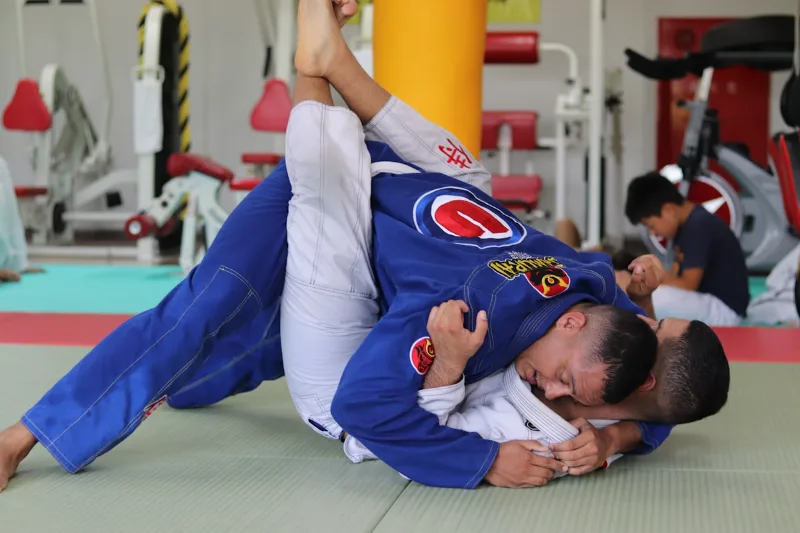
It’s worth addressing something directly: some later narratives credit Helio Gracie as the sole founder of Brazilian Jiu Jitsu. The historical record — and the account held by the Carlos-Gracie side of the family — is that Carlos was Maeda’s direct student, opened the first academy, and taught Helio and their other brothers everything they knew. Helio’s important contributions came later, and we’ll cover them next. But the art began with Carlos.
Helio Gracie: Leverage, Adaptation, and the Kimura Fight
Of all Carlos’s brothers, Helio Gracie became one of the most influential teachers the family ever produced. Born in 1913, Helio was physically small and frail as a child. Doctors restricted his physical activity, so he spent years watching his older brothers train before stepping onto the mat himself. When he finally did, he discovered that many techniques required a strength and athleticism he simply did not have.
Rather than accepting those limitations, Helio adapted. Building on what Carlos had taught him, he refined throws, sweeps, and submissions to rely even more heavily on leverage, timing, and body mechanics. A larger opponent’s weight became an advantage to exploit rather than a wall to overcome. These refinements strengthened the defining principle of the art — that a smaller, technically skilled grappler can consistently defeat a bigger, stronger opponent.
Helio proved the system worked through challenge matches, taking on fighters from every discipline. His most famous bout — a three-hour, forty-five-minute fight against Masahiko Kimura in 1951 — became legendary even in defeat. Kimura himself reportedly said that Helio was the toughest opponent he ever faced. The shoulder lock Kimura used to win that match is still called “the kimura” in BJJ academies worldwide. Helio continued teaching and refining the art until his death in 2009 at the age of 95.
The 12 Commandments of Carlos Gracie
Throughout his life, Carlos Gracie studied human behavior, nutrition, and discipline as intensely as he studied the mat. He eventually codified his philosophy into what are known today as the 12 Commandments of Carlos Gracie — a code that students still read, memorize, and live by in authentic Gracie academies around the world:
- Be so strong that nothing can disturb your peace of mind.
- Speak to everyone of happiness, health, and prosperity.
- Give all your friends the feeling that they are valuable.
- Always look at events from a positive point of view, and turn positivity into a reality in life.
- Think always of the best, work solely for the best, and expect always the best.
- Always be as enthusiastic about the success of others as you are about your own.
- Forget about past mistakes and concentrate your energies on the victories ahead.
- Always keep your fellow men joyful and have a pleasant attitude to all who address you.
- Spend all the time you need in perfecting yourself, but leave no time to criticize others.
- Become too big to feel unrest, too noble to feel anger, too strong to feel fear, and too happy to tumble in adversity.
- Always have a positive opinion about yourself and tell it to the world, not through words of vanity but through benevolence.
- Have the strong belief that the world is beside you if you keep true to what is best within you.
Carlos also developed the Gracie Diet, a nutritional system built on years of self-experimentation that the family still uses to this day. He fathered 21 children, 11 of whom he awarded the black belt in Jiu Jitsu. He died on October 7, 1994, at the age of 92 — the patriarch who built an art, a family, and a philosophy that has now outlived him by more than three decades.
Royce Gracie and the Birth of the UFC
By the late 1980s, the Gracie family had migrated to the United States. Rorion Gracie — Helio’s son — opened a garage academy in Southern California and began spreading Gracie Jiu Jitsu to American students. But the family’s biggest impact on global martial arts was still ahead.
In 1993, Rorion co-created the Ultimate Fighting Championship — a no-holds-barred tournament designed to answer the question every martial artist had debated for decades: which fighting style actually works? The format was simple and brutal: eight fighters from different disciplines, single-elimination bracket, minimal rules. No weight classes. No time limits. No judges’ decisions.
The Gracies chose Royce — not the biggest or strongest family member, but the one whose average build would best demonstrate BJJ’s effectiveness. At six feet, one inch and 176 pounds, Royce was smaller than every opponent he faced. It didn’t matter. He submitted Art Jimmerson (boxing), Ken Shamrock (shootfighting), and Gerard Gordeau (savate) in a single night to win UFC 1. He went on to win UFC 2 and UFC 4, cementing Gracie Jiu Jitsu as the most effective fighting system on the planet.
Royce Gracie became the first inductee into the UFC Hall of Fame in 2003. His victories didn’t just launch the UFC — they fundamentally changed how fighters train. Within a decade, every serious MMA competitor was training BJJ. The art that Carlos built in Rio had become mandatory knowledge for combat athletes worldwide.
The Gracie Legacy in Modern BJJ
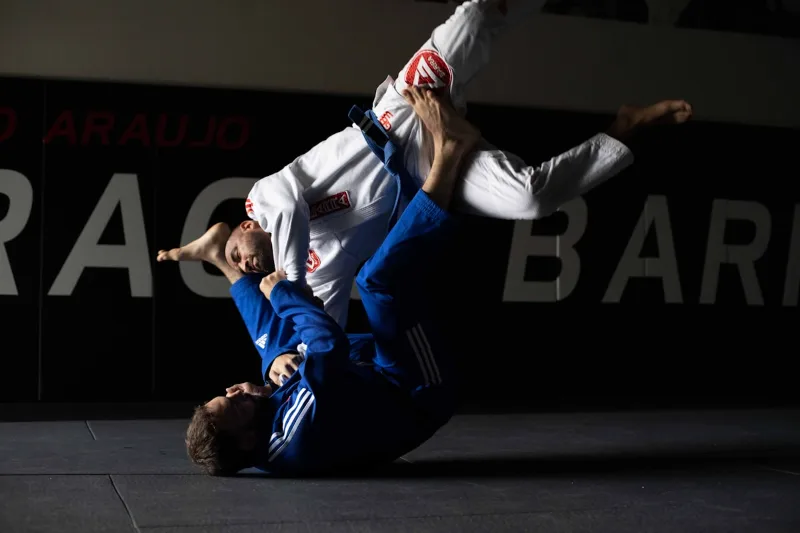
Today, the Gracie family tree includes hundreds of practitioners across multiple generations. Rickson Gracie, often called the greatest fighter the family ever produced, compiled a record that remains the stuff of legend. Roger Gracie dominated world championship competition ten times over. Kyra Gracie brought women’s BJJ into the spotlight. Carlos Gracie Jr. founded the International Brazilian Jiu Jitsu Federation (IBJJF) in 1994, creating the competitive structure that governs the sport worldwide today.
But the Gracie legacy is not just about famous names or tournament records. It lives in the principles passed down through every legitimate BJJ lineage: technique over strength, patience over aggression, and the understanding that position before submission is the path to victory. When you train at an academy with authentic Gracie lineage, you’re learning the same core principles Carlos developed a century ago — refined and pressure-tested across generations of competition.
Our Direct Line to the Gracie Family
This is where most martial arts schools would end the article with a generic “we have Gracie lineage” claim. Ours isn’t generic.
Global Martial Arts USA is a Rocian Gracie Brazilian Jiu Jitsu (RGBJJ) branch academy. Our head instructor, Professor Konrad Spillmann, received his black belt from Master Rocian Gracie Jr. on December 12, 2001 — and the connection runs far deeper than a belt certificate.
Rocian Gracie Jr. is a 6th-degree black belt, the son of Rocian Gracie Sr., and the grandson of Carlos Gracie — the founder of the art. That’s a direct, unbroken line: Maeda to Carlos to Rocian Sr. to Rocian Jr. to our mat in Gallatin. Master Rocian Jr. and Professor Spillmann grew up together and have worked together for more than thirty years. They are, in every sense that matters, brothers.
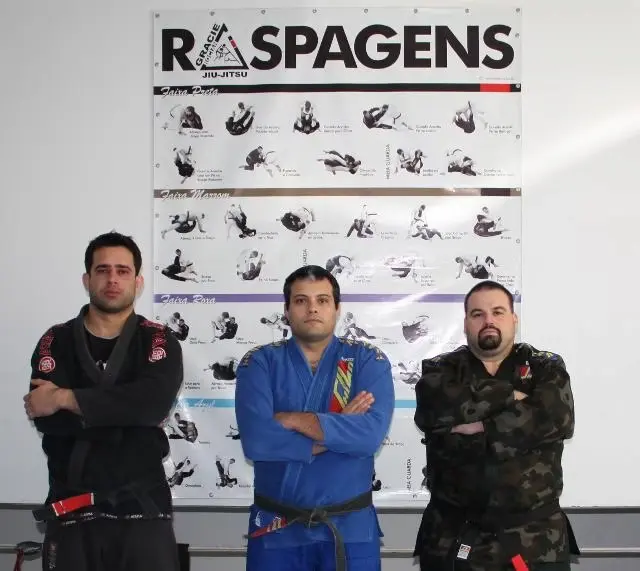
That brotherhood is documented in a way few lineage claims ever are: Master Rocian named his own son Conrado after Professor Spillmann. In Gracie culture, that kind of naming is not a casual gesture — it’s a public declaration of family.
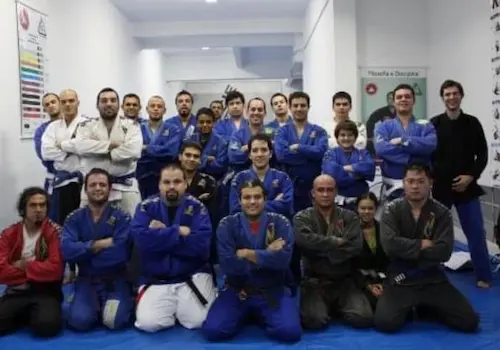
What does this mean for you as a student? Every technique we teach comes from the Rocian Gracie Jr. method — the same structured, self-defense-focused curriculum taught directly by Master Rocian Jr. and passed down from his grandfather. Our BJJ program is taught by Professor Spillmann along with his sons and grandsons, making GMA not just a lineage academy but a generational one. Whether you’re working through the BJJ belt ranking system for the first time or sharpening your competition game, you’re training in a system with more than a century of unbroken instruction behind it.
For students looking to go deeper into dedicated grappling and competition, explore our competition-focused BJJ program at GMA Team.
Ready to Get Started?
Your first class is free. Whether you’re a complete beginner or an experienced martial artist, we’d love to welcome you to the GMA family — and to the direct lineage of the family that built the art.
Call us at (731) 324-3847 or book your free trial online.
Frequently Asked Questions
Who really founded Brazilian Jiu Jitsu?
Carlos Gracie founded Brazilian Jiu Jitsu. He was Mitsuyo Maeda’s direct student starting in 1917, opened the first Gracie academy in Rio de Janeiro in 1925, and personally taught his younger brothers — including Helio — the art he had learned. Helio later made important refinements to the system, emphasizing leverage to accommodate his smaller body, but the foundation and the original transmission came from Carlos.
Why did Royce Gracie win the first UFC?
Royce Gracie won UFC 1 in 1993 by submitting all three of his opponents using Gracie Jiu Jitsu ground techniques. His opponents — a boxer, a shootfighter, and a savate specialist — had no answer for his grappling. Royce’s smaller size made the victories even more convincing, proving that technique and leverage could overcome raw power.
Does GMA have Gracie lineage?
Yes — direct lineage. Global Martial Arts USA is an official Rocian Gracie Brazilian Jiu Jitsu branch academy. Our head instructor, Professor Konrad Spillmann, received his black belt from Master Rocian Gracie Jr. on December 12, 2001. Master Rocian Jr. is the grandson of Carlos Gracie, the founder of the art. This gives every student at GMA a direct, unbroken line back to the family that created Brazilian Jiu Jitsu.
Who is Rocian Gracie Jr.?
Rocian Gracie Jr. is a 6th-degree Brazilian Jiu Jitsu black belt, the son of Rocian Gracie Sr., and the grandson of Carlos Gracie. He is known for a structured, self-defense-focused methodology taught at his academies in Brazil and through his network of affiliate branch schools worldwide. Global Martial Arts USA in Gallatin, TN is one of those branch academies.