
Five rounds into an open mat, your grips are gone, your legs feel like sand, and the person across from you is still moving like it’s round one. Some of that is conditioning. A surprising amount of it is what you ate — or didn’t eat — in the 24 hours before class. The best diet for BJJ isn’t a magic meal plan or a supplement stack. It’s a handful of basics done consistently: enough protein, enough fuel, enough water, and meals timed around when you actually train.
Here’s what jiu jitsu athletes really eat, how much of each macronutrient you need, what to eat before and after class, and the mistakes that drain your gas tank faster than any cardio gap.
Why Nutrition Matters More in BJJ Than You Think
Jiu jitsu is an odd mix of demands. A single roll alternates between long stretches of isometric grip and pressure work and short, explosive bursts — a scramble, a bridge, a hard pass. Most students roll several times a class and train several classes a week. That combination burns through stored carbohydrate fast, beats up muscle tissue, and sweats out a lot of fluid, especially in a gi.
Recovery is the other half. You don’t get better during class; you get better in the days between classes, when your body repairs what you broke down. Eat too little, and you show up to the next session still sore, slower to learn, and more likely to tweak something. That’s why new students chasing weight loss on a hard calorie deficit so often stall — they’re asking their body to adapt to a brand-new sport with no raw materials. If you’re in your first months on the mat, our BJJ white belt tips cover the training side of that same survival problem.
Building the Best Diet for BJJ: Protein, Carbs, and Fat
Protein: the recovery nutrient
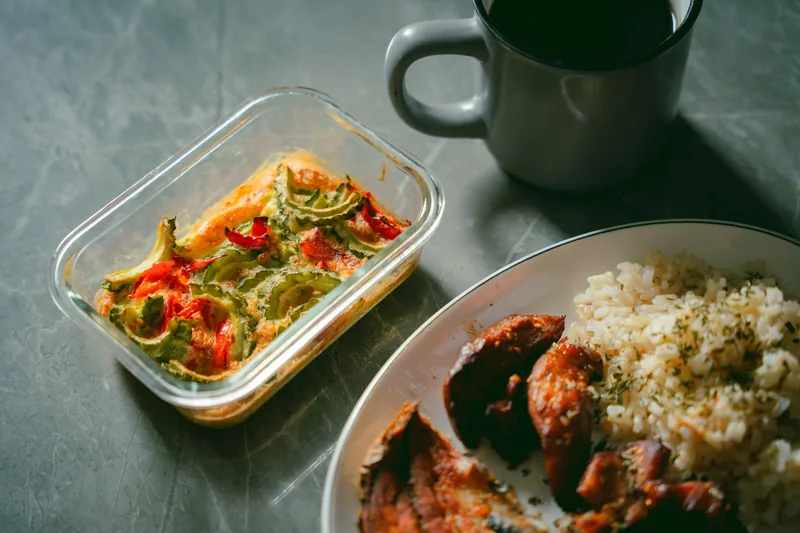
The International Society of Sports Nutrition’s position stand puts the daily protein target for most exercising people at 1.4 to 2.0 grams per kilogram of body weight. For a 180-pound (82 kg) grappler, that’s roughly 115 to 165 grams a day. The same position stand suggests spreading it out in doses of about 20 to 40 grams every three to four hours rather than eating it all at dinner.
In practice, that means a real protein source at every meal: eggs, Greek yogurt, chicken, lean beef, fish, turkey, cottage cheese, tofu, beans, or lentils. If you hit those numbers from food, you don’t need anything else. A protein shake is simply a convenient way to close the gap on busy days.
Carbohydrates: the fuel for hard rounds
Carbs are the nutrient grapplers most often cut and most often regret cutting. High-intensity scrambles run largely on stored glycogen, and when it’s low, you feel it as the flat, heavy “I have nothing left” sensation halfway through class. Sports nutrition guidelines from the American College of Sports Medicine scale carbohydrate intake to training load — roughly 3 to 5 grams per kilogram on lighter days and 5 to 7 on days with about an hour of moderate-to-hard work.
Build meals around rice, potatoes, oats, whole-grain bread, pasta, fruit, and beans. Eat more on heavy training days and less on rest days. That one habit does more for most people’s gas tank than any cardio program.
Fat: the steady background
Fat supports hormones and overall health and keeps meals satisfying — olive oil, nuts, avocado, eggs, and fatty fish all belong in your week. The catch is timing. Fat digests slowly, so a greasy meal right before class tends to sit in your stomach during warm-ups. Keep the heavier-fat meals away from training and save them for the rest of the day.
What to Eat Before and After BJJ Class
Two to three hours before class: a normal balanced meal — a protein, a carb, and some vegetables. Chicken and rice, a turkey sandwich with fruit, or eggs with toast and oatmeal all work.
Thirty to sixty minutes before: if you’re coming straight from work and haven’t eaten, go small and easy to digest. A banana, a rice cake with honey, or a handful of pretzels gives you usable fuel without the nausea of getting stacked on a full stomach. Skip anything high in fat, fiber, or dairy right before you roll. Nobody wants to discover what a heavy burrito feels like under side control.
After class: within a couple of hours, eat a meal with 20 to 40 grams of protein and a solid serving of carbohydrate to start refilling what you used. For evening classes, that’s simply dinner. If class runs late and you’re not hungry, a glass of milk, a yogurt, or a shake counts.
Training twice in a day, or pairing BJJ with the weight room, raises the stakes on all of this. Our guide to MMA strength and conditioning covers how to schedule lifting around mat time so the two don’t sabotage each other.
Hydration: The Most Overlooked Part of a BJJ Nutrition Plan
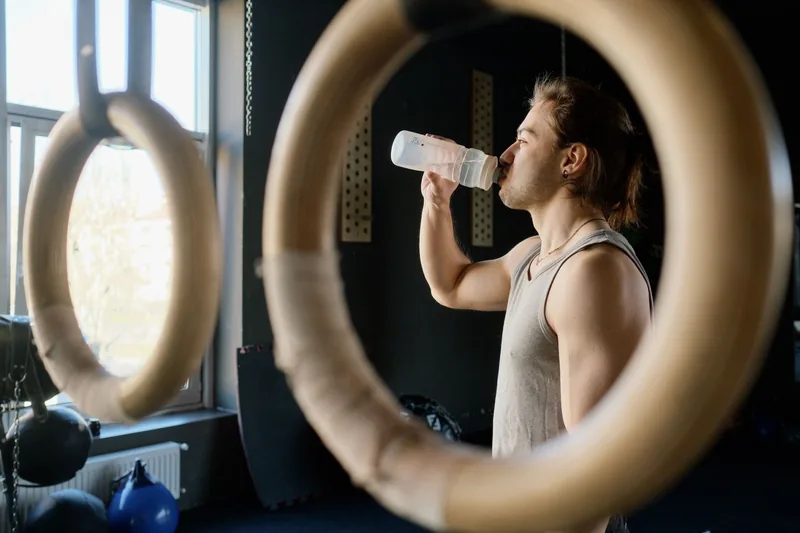
A heavy gi, a warm room, and close contact make jiu jitsu one of the sweatiest things you can do indoors. Sports medicine research consistently finds that losing around 2% of your body weight in fluid is enough to start dragging down performance — for a 180-pound person, that’s under four pounds of sweat, which a hard class can easily produce.
The simple fix: drink steadily through the day instead of chugging a bottle in the parking lot. Weigh yourself before and after a few classes to see how much you typically lose, and replace it afterward. Pale yellow urine is a reasonable everyday check. For long or very sweaty sessions, especially in a Tennessee summer, a drink or snack with sodium helps replace what water alone doesn’t.
Common BJJ Diet Mistakes (and What Competitors Do Differently)
Undereating while trying to lose weight. A modest deficit is fine. A large one leaves you exhausted, slow to recover, and more injury-prone. Lose weight gradually, and keep protein high while you do it.
Treating supplements as the foundation. Protein powder, creatine, and electrolytes are useful tools, but they sit on top of a real diet — they don’t replace one. When you’re ready to add them, fuel your training with GMA Warrior Supplements, and talk to your doctor first if you have a health condition or take medication.
Copying fighters’ weight cuts. IBJJF competitors weigh in wearing their gi right before their first match, so there’s no time to rehydrate after a big water cut. That’s why smart jiu jitsu competitors diet down gradually over weeks and walk in close to their division limit, rather than dehydrating the week of the event. Remember that a gi adds a few pounds on the scale — one of the practical differences we cover in gi vs no-gi BJJ.
Inconsistency. Eating perfectly on Monday and skipping meals Tuesday through Thursday doesn’t average out. The best diet for BJJ is the one you can actually repeat every week.
Train Smarter at GMA in Gallatin, TN
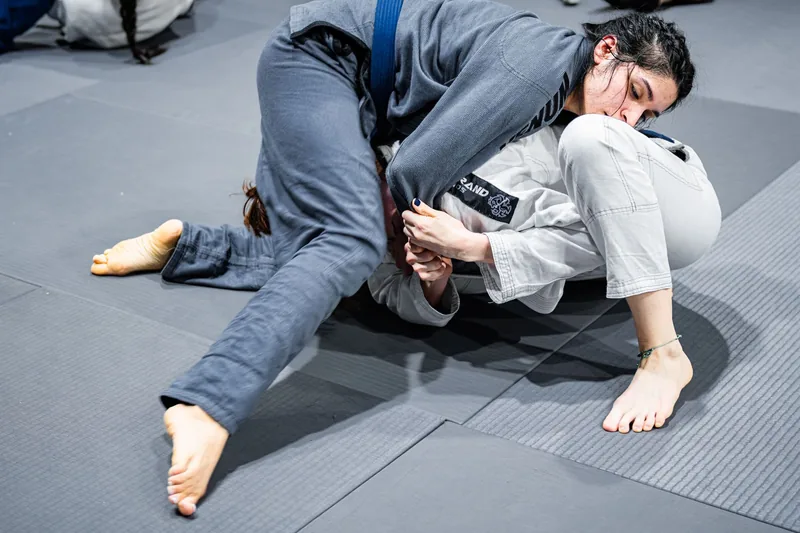
Food supports training. It doesn’t replace it. Our Brazilian Jiu Jitsu program in Gallatin, TN runs gi and no-gi classes for adults and kids, led by Grandmaster K.O. Spillmann, who earned his black belt under Professor Rocian Gracie Jr. and holds IBJJF and USBJJF Level 3 certification. With 50+ years of teaching in Sumner County, Global Martial Arts USA has watched plenty of students discover that eating better was the missing piece of their progress, not a secret technique.
If you’re thinking about competing, GMA Team Brazilian Jiu Jitsu is our dedicated academy for deeper grappling training. Whatever your goals, check the class schedule and come roll with us.
Ready to Get Started?
Your first class is free. Whether you’re a complete beginner or an experienced martial artist, we’d love to welcome you to the GMA family.
Call us at (731) 324-3847 or book your free trial online.
Frequently Asked Questions
Should I eat before BJJ class?
Yes, for most people. A normal meal two to three hours before class, or a small, easy-to-digest carb snack 30 to 60 minutes before, gives you fuel without an upset stomach. Training completely empty tends to show up as early fatigue during rolls.
How much protein do I need for jiu jitsu?
The International Society of Sports Nutrition recommends 1.4 to 2.0 grams per kilogram of body weight per day for most exercising people, spread across meals in doses of about 20 to 40 grams. For a 180-pound grappler, that’s roughly 115 to 165 grams a day.
Is a low-carb or keto diet good for BJJ?
It can work for some people’s general health, but most grapplers perform worse on very low carbohydrate intake because hard rounds rely heavily on stored glycogen. If you try it, expect a drop in intensity, and consider scaling carbs up on your hardest training days.