
Your kid just watched a fight on TV and now wants to “do MMA.” Before you say yes or no, it helps to know what youth MMA actually looks like, because a good class has very little in common with a televised cage fight. Done right, youth MMA is structured martial arts training: striking, grappling, and self-defense taught in age-appropriate stages. Done wrong, it’s unsupervised sparring with too much contact too soon.
This parent’s guide covers what MMA for kids really involves, what the research says about safety, the warning signs of a bad program, the right age to start each part of training, and how we approach it at Global Martial Arts USA in Gallatin, TN.
What Youth MMA Actually Looks Like
Mixed martial arts simply means training more than one art: stand-up striking from arts like TaeKwonDo, plus grappling from arts like Brazilian Jiu Jitsu or wrestling. For adults, that can lead to competition. For children, a quality youth MMA program looks much more like a traditional martial arts class than a fight.
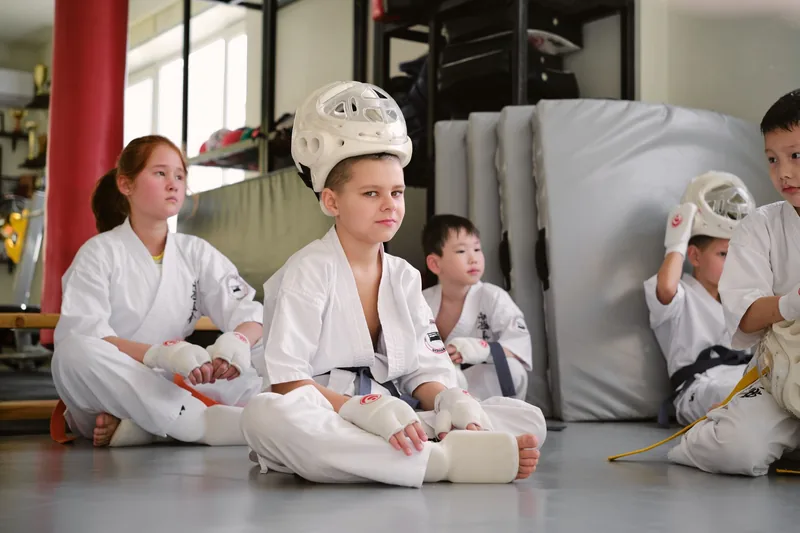
A typical kids class starts with a bow-in and a warm-up, moves into technique drills (kicks and punches on pads, takedowns and escapes on the mat), and finishes with games that build coordination and conditioning. Kids learn how to fall safely, how to control a partner, and when not to use what they’ve learned. Live sparring, if it happens at all, comes later, with rules, gear, and close supervision.
That’s why the term can be misleading. What most parents picture when they hear “MMA” isn’t what good youth programs teach. If you want the adult version broken down, our guide to MMA training for beginners shows how the disciplines fit together.
Is Youth MMA Safe? What the Research Says
The most useful guidance for parents comes from the American Academy of Pediatrics, which published a clinical report on youth martial arts in the journal Pediatrics in 2016. Its core findings line up with what experienced instructors already know:
Non-contact training carries the lowest risk. Forms, drills, pad work, and technique practice with a cooperative partner are generally considered lower risk than contact sports many kids already play.
Contact sparring and competition raise the risk. The report identifies blows to the head and choking or submission movements as the higher-risk activities, because they can lead to concussions and other head injuries.
Gear helps, but it isn’t magic. Soft headgear and mouthguards haven’t been proven to prevent concussions, and they can give kids a false sense of security.
Maturity matters. The report recommends that children wait for contact training and competition until they’re physically and emotionally ready, and that they train under properly qualified instructors who enforce the rules.
So the honest answer is this: youth MMA is as safe as the program running it. The art itself isn’t the danger. Head contact, poor supervision, and pushing kids into competition too early are.
Red Flags vs Green Flags in a Kids MMA Program
When you visit a school, watch a class before you sign anything. Here’s what to look for.
Green flags:
- Kids are grouped by age and size, and the curriculum changes as they grow.
- Most of the class is technique and drilling, not live fighting.
- Instructors teach how to fall, tap, and control a partner before anything else.
- Staff have completed child-safety training such as Safe Sport certification.
- The school teaches conflict avoidance and treats physical self-defense as a last resort.
- There’s a clear belt or rank system, so kids can see their progress.
Red flags:
- Young children doing hard sparring with strikes to the head.
- Chokes and joint locks applied fast and hard instead of slowly and under control.
- A “toughen them up” attitude, or instructors who yell at kids who tap.
- Pressure to compete or fight in the first few months.
- No one can tell you who trained the instructors or what their credentials are.
The Best Age to Start Each Part of MMA Training
There’s no single right age for MMA, because MMA isn’t one skill. A better question is when your child is ready for each piece.
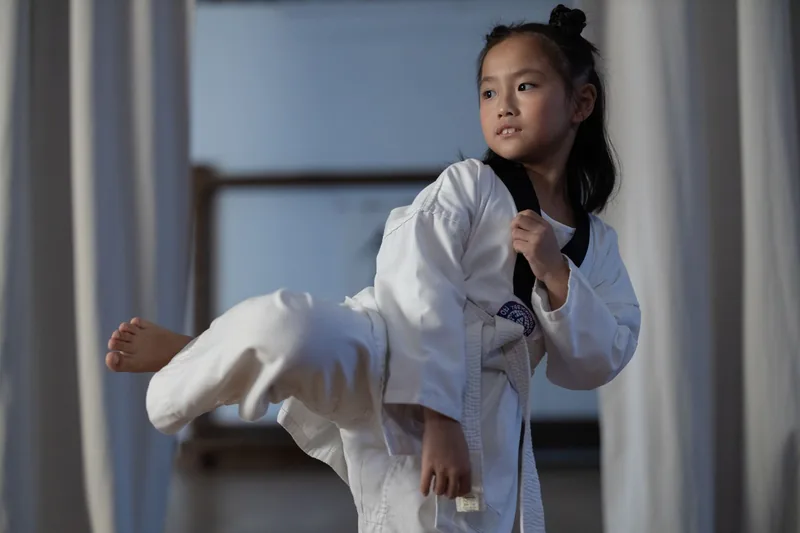
Ages 3 to 6: fundamentals through play. At this stage the goal is listening, balance, coordination, and confidence. Short classes, lots of games, zero sparring. Kids can begin learning basic kicks, stances, and how to fall safely.
Ages 7 to 12: real technique, controlled contact. Kids are ready for a structured curriculum: striking combinations on pads, forms, takedowns, escapes, and positional grappling. Any sparring should be light, rule-based, and closely supervised. This is also when the character side of training (respect, discipline, handling frustration) does some of its best work.
Ages 13 to 17: more intensity, with judgment. Teens can handle harder training, more live rounds, and, if they want it, competition. Many are ready to train alongside adults. Even here, head contact should be limited and managed by experienced coaches.
Every child is different. A mature 10-year-old and an anxious 10-year-old need different paths, which is why a good instructor matters more than any age chart.
How GMA Approaches Kids MMA Training in Gallatin, TN
Global Martial Arts USA has taught kids in Sumner County for more than 50 years, and we were voted a top school in the county. We don’t run a cage-fighting class for children. Instead, our kids train the same building blocks MMA is made of, in the order and at the intensity that fits their age.
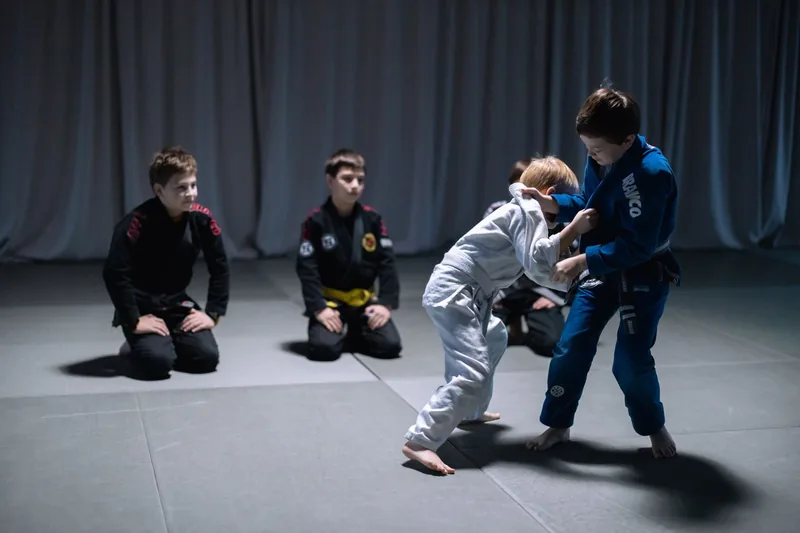
Our kids martial arts program starts with Little Lions for ages 3 to 6, then moves into a Youth Program for ages 7 to 12 built on a full TaeKwonDo curriculum of forms, sparring, and self-defense, at a school led by a 9th Degree TKD Black Belt. Kids can add kids Jiu Jitsu from age 4, learning the grappling half of the picture through Gracie-lineage, IBJJF-certified instruction. Teens 13 to 17 train alongside adults, and those who want to compete can work toward it.
Safety and character sit underneath all of it. Our staff are Safe Sport Certified, our anti-bullying approach teaches “talk away, walk away, run away” before any physical technique, and we check report cards before belt testing. Children with special needs train in our mainstream classes, and many have earned black belts. Read more about the benefits of martial arts for kids and adults, or check the class schedule for kids class times.
Busy family? Many GMA kids train every day through our after school pickup and homeschool partnership. Learn about our After School Program.
Ready to Get Started?
Your first class is free. Whether you’re a complete beginner or an experienced martial artist, we’d love to welcome you to the GMA family.
Call us at (731) 324-3847 or book your free trial online.
Frequently Asked Questions
Is MMA safe for kids?
MMA can be safe for kids when it’s taught as structured, age-appropriate martial arts training with qualified instructors. The American Academy of Pediatrics notes that non-contact drills and technique work carry lower risk, while head strikes, chokes, and early competition carry higher risk. Choose a program that limits head contact and supervises closely.
What age should a child start MMA?
Kids can start martial arts fundamentals as young as 3 through play-based classes. Structured striking and grappling technique fits ages 7 to 12, while harder sparring and competition are best saved for teens who are physically and emotionally ready.
Will MMA make my child more aggressive?
In a good program, the opposite usually happens. Kids learn self-control, respect, and conflict avoidance, and they gain the confidence that makes them less likely to fight. At GMA, physical self-defense is always taught as the last resort.