
Most people have heard of TaeKwonDo and karate. Far fewer can tell you what HapKiDo is, even though it’s one of the most practical self-defense systems to come out of Korea. So, what is HapKiDo? In short, it’s a Korean martial art built to end a real confrontation: kicks and strikes at long range, joint locks and throws up close, and defense on the ground, all organized around redirecting an attacker’s force instead of fighting it head-on.
This guide covers where HapKiDo came from, what the name actually means, the ideas that drive every technique, how it compares to the arts people usually confuse it with, and what training looks like at Global Martial Arts USA in Gallatin, TN.
What Is HapKiDo? The Short Answer
HapKiDo is a Korean self-defense art that covers every range of a fight. It doesn’t run on competition rules, and it doesn’t specialize in one kind of technique. A HapKiDo student learns to strike, to control joints, to throw, to escape grabs, and to deal with weapons, then to string those skills together under pressure.
What ties it all together is a principle rather than a technique list: don’t meet force with force. When an attacker pushes, you turn. When they pull, you enter. Leverage, balance, and body position do the work that raw strength does in other systems, which is why HapKiDo works for people of every size and why it has long been popular with law enforcement and military trainers.
If you want the full breakdown of the curriculum and the Gup and Dan ranks, our guide to HapKiDo techniques and the belt system goes deep on both. This post is the starting point: what the art is and why it exists.
Where HapKiDo Came From
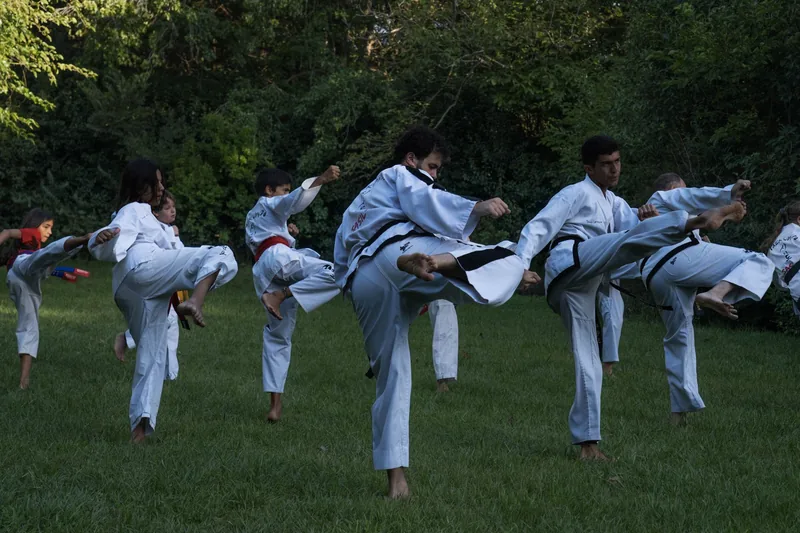
HapKiDo is a young art by martial arts standards, and its early history is still debated by historians and senior practitioners. The broad outline most sources agree on looks like this.
Choi Yong-sool is generally credited as the founder. As a boy he was taken to Japan, and he returned to Korea after World War II with a grappling-heavy system usually linked to Daito-ryu Aiki-jujutsu, the same Japanese tradition that later produced aikido. Exactly how and how long he trained there is one of the open questions in HapKiDo history.
Back in Korea, Choi began teaching around 1948 in the city of Daegu. His first well-known student, Seo Bok-seob, was already a judo black belt and helped open one of the first schools for the art. Through the 1950s and 1960s, Choi’s early students, including Ji Han-jae, added the powerful kicks and strikes Korea is known for, along with weapons work. The art went by several names before “HapKiDo” stuck; who coined it is still disputed.
The result was a uniquely Korean blend: Japanese-rooted joint locks and throws fused with Korean kicking and striking. From there it spread worldwide through instructors, military programs, and several international federations, which is why you’ll see different HapKiDo organizations and styles today.
What Does HapKiDo Mean?
The name is three Korean syllables (합기도), each carrying part of the art’s philosophy:
Hap (합) means coordination, joining, or harmony. Ki (기) means energy, breath, or spirit. Do (도) means the way or the path, the same “do” you see in TaeKwonDo and judo. Put together, HapKiDo is usually translated as “the way of coordinating energy” or “the way of coordinated power.”
That translation is the art in a sentence. You coordinate your energy with your opponent’s instead of colliding with it. If you like this kind of thing, our Korean martial arts terminology glossary covers the other terms you’ll hear in class, from Sabumnim to Dan.
How HapKiDo Works: Circles, Redirection, and Every Range
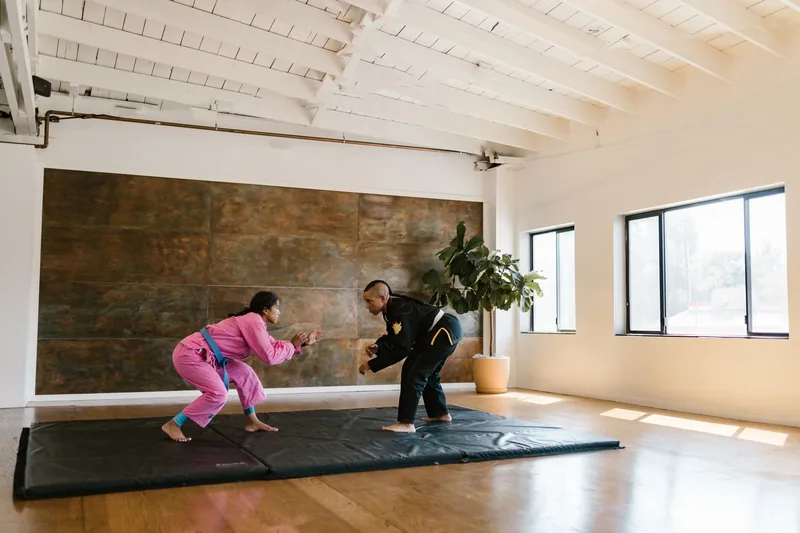
Watch a good HapKiDo practitioner and you’ll notice almost nothing moves in a straight line. Blocks turn into circular deflections, grabs become wrist locks, and an attacker’s forward momentum becomes the throw that puts them on the floor. Three ideas show up again and again:
Non-resistance. You blend with an attack instead of absorbing it. A bigger, stronger attacker can’t overpower someone who isn’t pushing back.
Circular motion. Turning your body redirects force and keeps you balanced, while straight-line blocking tends to stop you in place and leave you open.
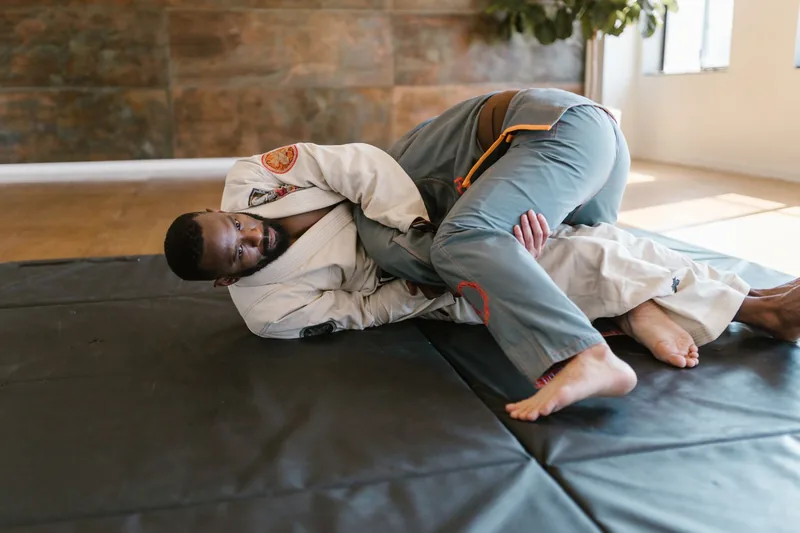
Total range coverage. HapKiDo trains you for wherever the fight happens: kicks at a distance, elbows and knees up close, locks and throws in a clinch, and escapes on the ground. At GMA, ground defense also draws on foundational Gracie Brazilian Jiu-Jitsu, so students are never helpless if they end up on the floor. If you want to go deeper on the ground game, you can explore our dedicated BJJ program at GMA Team.
This is why HapKiDo usually earns a spot on any honest list of the best martial arts for self defense. It trains the situations real confrontations actually produce, without competition rules shaping what’s allowed.
HapKiDo vs TaeKwonDo, Aikido, and Judo
Because HapKiDo shares roots and vocabulary with several other arts, people often lump it in with them. Here’s how it differs:
TaeKwonDo is Korea’s striking art, famous for fast, high kicks and an Olympic sport side. HapKiDo kicks too, but adds joint locks, throws, and weapon defense, and has no sport format. The two pair well: at GMA, many students train both. Our guide to what TaeKwonDo is covers the striking side in depth.
Aikido comes from the same Daito-ryu roots and shares the circular, redirecting philosophy. HapKiDo is generally more direct and combative, with far more striking and kicking in the mix.
Judo centers on throws and pins and is built around sport competition. HapKiDo uses throws as one tool among many, often set up by strikes or finished with a lock.
Is HapKiDo Right for You?
HapKiDo is a strong fit if you want practical self-defense more than trophies. It suits adults with no martial arts background, because the techniques depend on leverage rather than athleticism. It suits experienced martial artists who want to add locks, throws, and weapon defense to a striking base. And it suits officers, security staff, and service members who need control and restraint skills; our law enforcement self defense programs build on exactly this material.
Expect a learning curve. Joint locks take time to apply cleanly, and training partners have to work with control and trust. In return, you build coordination, flexibility, and the calm that comes from having actually practiced against grabs, strikes, and weapons. For the bigger picture of protecting yourself outside the dojang, our guide on how to defend yourself pairs well with HapKiDo training.
HapKiDo Training at GMA in Gallatin, TN
Global Martial Arts USA has taught Korean martial arts in Sumner County for more than 50 years and was voted a top school in the county. Our HapKiDo program is a non-sport, commando-style combat system led by Master A. Davis and certified through the GHF, KHF, KKAHMA, and WCHF. Classes are open to ages 12 and up, and teens train alongside adults in a structured, controlled environment.
Students learn stand-up fighting, ground defense, joint locks and throws, pressure points, defense against guns, knives, and clubs, and traditional weapons including cane, bo staff, and short stick. Because GMA teaches multiple arts under one roof, it’s easy to cross-train HapKiDo with TaeKwonDo or our self defense classes. Check the class schedule for HapKiDo times, or read more about our instructors and history on the about page.
Ready to Get Started?
Your first class is free. Whether you’re a complete beginner or an experienced martial artist, we’d love to welcome you to the GMA family.
Call us at (731) 324-3847 or book your free trial online.
Frequently Asked Questions
Is HapKiDo Korean or Japanese?
HapKiDo is a Korean martial art. Its founder, Choi Yong-sool, brought joint-lock and throwing techniques back from Japan that are usually linked to Daito-ryu Aiki-jujutsu, but the art was developed and named in Korea, where his students added Korean kicking, striking, and weapons training.
Is HapKiDo good for self defense?
Yes. HapKiDo was built for real confrontations rather than competition. It covers kicks and strikes, joint locks, throws, ground defense, and weapon defense, and it relies on leverage and redirection, so it works for people who are smaller or less athletic than their attacker.
How old do you have to be to start HapKiDo at GMA?
HapKiDo classes at Global Martial Arts USA are open to ages 12 and up. Younger children can start in our Kids Martial Arts or TaeKwonDo programs, which build discipline, confidence, and age-appropriate self-defense skills.