
Most people picture self defense as a single move — the perfect strike, the clever escape. Real situations don’t work that way. Knowing how to defend yourself is a sequence of decisions, and the physical part sits in the middle of it, not at the start. At Global Martial Arts USA in Gallatin, TN, our instructors have spent more than 50 years teaching students that the person who wins a confrontation is usually the one who saw it coming, kept their hands up, and left as early as they could.
This guide walks through that sequence in order: how to hold your ground without escalating, what adrenaline does to your body when things turn physical, how to handle the attacks that actually happen, and what to do in the minutes after it’s over.
How to Defend Yourself: Think in Layers, Not Moves
Every self defense situation has layers, and each one is a chance to end it before the next. Avoid the situation if you can see it developing. Leave if you’re already in it. Defuse it verbally if leaving isn’t possible. Defend physically only when someone forces the issue — and then escape the moment you’ve created an opening.
Notice that “win the fight” isn’t on the list. Your goal is to get home. Standing there to prove a point after you’ve broken free is how a defensible situation turns into a second, worse one.
The first two layers — awareness and avoidance — prevent the large majority of trouble, and we cover them in depth in our guide to personal safety and situational awareness. This post picks up where that one leaves off: the moment someone is in front of you and the situation is heating up.
Hold Your Ground Without Starting a Fight
When someone approaches aggressively, how you stand matters as much as what you say. Self defense instructors call it “the fence”: hands up in front of your chest, palms open, elbows slightly bent, feet staggered with your weight balanced. To a bystander it looks like you’re calming someone down. To you, it’s a guard — your hands are already between you and the threat, and you can push, block, or strike from there without winding up.
Pair the fence with short, loud, clear commands: “Back up.” “Stop.” “Don’t come any closer.” You aren’t negotiating. You’re drawing a line and making witnesses aware that you’re the one trying to avoid a fight.
While you talk, watch for the signs that words have stopped working. Common pre-attack indicators include:
- Closing distance after you’ve told them to stop
- Glancing at your jaw, or scanning around to check for witnesses
- Blading the body — turning one shoulder forward like a fighter
- Hands hidden, clenched, or reaching toward a pocket or waistband
- Sudden calm or silence after shouting
If you see these, your next move is to leave or to act — not to keep talking. For the everyday fundamentals behind this, read our overview of practical self defense knowledge.
What Adrenaline Does When You Have to Defend Yourself
The moment a confrontation turns physical, your body dumps adrenaline. Your heart rate spikes, your vision narrows toward the threat, your hearing can drop out, and your hands shake. Fine motor control — the kind you need to dial a phone or work a complicated wrist lock — degrades fast, while big, simple movements stay available.
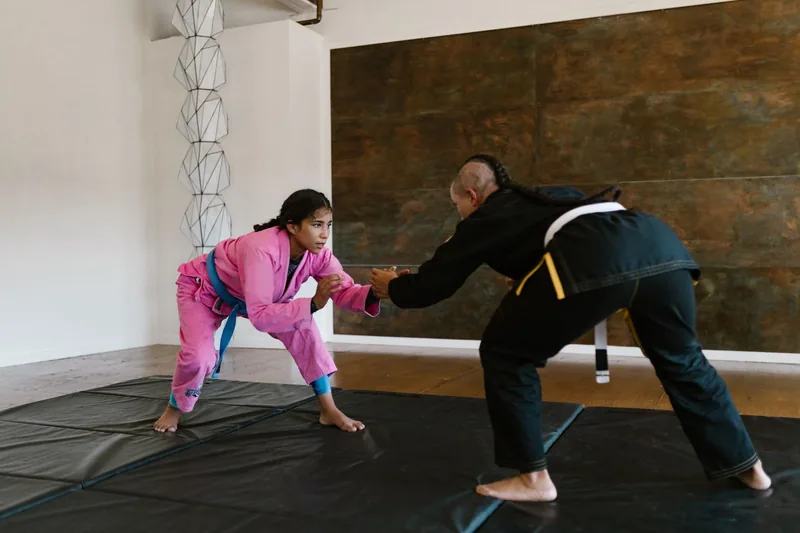
That has two practical consequences. First, the techniques worth learning are gross-motor: pushes, palm strikes, knees, elbows, and escapes built on whole-body movement. Second, a technique you’ve only read about or watched once will not show up when your heart is pounding. What shows up is what you’ve repeated, ideally with a partner adding pressure.
This is why we train the same handful of responses over and over in our self defense classes, and why controlled partner drills matter more than learning a long menu of moves. Under stress, the body defaults to what it has rehearsed.
Defending Against the Attacks That Actually Happen
You don’t need an answer for every scenario in a movie. You need reliable answers for the few that come up again and again.
Grabs
A wrist or clothing grab is how many physical confrontations begin. Don’t yank straight back against the fingers — rotate toward the thumb, the weakest point of any grip, and drive out explosively. If they hold on, strike to make them let go. Our HapKiDo program builds an entire system around turning an attacker’s grip against them.
Strikes and Rushes
Keep your hands up and your chin down; the fence already puts you halfway there. Against a wild swing, cover your head with your forearms and step in or off-line rather than backing straight up. Then create distance and get out. Close-range tools from Wing Chun are built for exactly this kind of crowded, in-your-face moment.
Headlocks and Chokes
Protect your airway first: tuck your chin, turn into the crook of their elbow, and get a hand on the arm pulling on your neck. Lower your hips so they can’t lift you, then work your head out. This is a skill to learn with a qualified instructor and a cooperative partner, not from text alone.

On the Ground
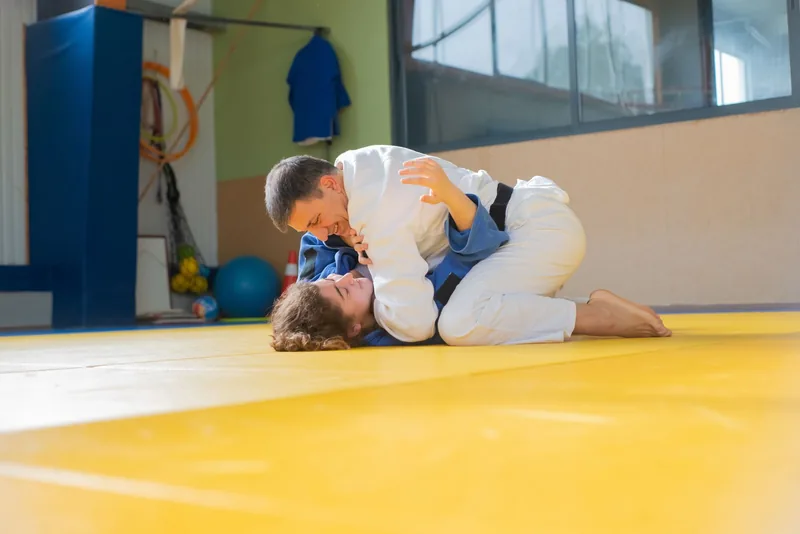
If you go down, protect your head, keep your feet between you and the attacker, and use them to push away and stand up. Being pinned underneath someone heavier is the worst position in self defense, which is why ground escapes from Brazilian Jiu Jitsu are part of every serious program. Students who want to go deeper can explore our dedicated BJJ program at GMA Team, and our post on BJJ self defense covers why the ground game matters.
After It’s Over: Get Safe, Call, Document
The confrontation isn’t finished when you break free. Get to a safe, public place first. Then call 911, even if you think you “won” — the first person to report an incident is often treated as the victim, and witnesses disperse quickly. Get checked for injuries, since adrenaline can hide them for hours. Write down what happened while it’s fresh.
On the legal side, Tennessee law generally does not require you to retreat if you’re somewhere you have a right to be, you’re not the initial aggressor, and you reasonably believe force is immediately necessary to protect yourself. Force must still be reasonable for the threat in front of you, and continuing after the threat has ended is no longer self defense. This is general information, not legal advice — if you’ve been involved in an incident, talk to an attorney before giving a detailed statement.
Learning to Defend Yourself in Gallatin
Reading builds understanding. Training builds the reflexes you’ll actually use. At GMA, self defense draws from HapKiDo, Brazilian Jiu Jitsu, Wing Chun, and TaeKwonDo, taught by instructors led by Grandmaster K.O. Spillmann — a 9th Degree TaeKwonDo Black Belt, 7th Dan in HapKiDo, and IBJJF-certified BJJ Black Belt who has taught self defense to law enforcement and military professionals. Our staff is Safe Sport Certified, and GMA has been voted a top school in Sumner County across more than 50 years of teaching.
No experience or fitness level is required to start. If you’re still weighing which art fits you, our comparison of the best martial art for self defense breaks down the trade-offs, women can find a focused guide in our self defense for women post, and you can check our class schedule to find a time that works.
Ready to Get Started?
Your first class is free. Whether you’re a complete beginner or an experienced martial artist, we’d love to welcome you to the GMA family.
Call us at (731) 324-3847 or book your free trial online.
Frequently Asked Questions
What is the best way to defend yourself in a fight?
The best defense is not being there: leave early, keep distance, and use your voice. If you can’t avoid it, keep your hands up in a fence position, use simple gross-motor techniques like pushes, palm strikes, and grip escapes to create an opening, then get away and call 911.
Can you learn how to defend yourself without martial arts experience?
Yes. Awareness, the fence, and verbal boundaries are useful immediately. The physical escapes become reliable under stress after a few months of consistent practice with a partner, because reliability comes from repetition rather than from knowing more techniques.
Do I have to retreat before defending myself in Tennessee?
Tennessee law generally does not impose a duty to retreat if you are lawfully present, not the aggressor, and reasonably believe force is immediately necessary. Force must still be proportionate to the threat. Laws change and details matter, so consult an attorney about any specific situation.