
Walk into any jiu jitsu academy and you’ll notice the room runs on rules nobody wrote on the wall. People bow at the edge of the mat, slap hands before every round, and step aside when a higher belt rolls toward them. That’s BJJ etiquette, and it isn’t about tradition for its own sake. In a sport where two people practice chokes and joint locks at full speed, good etiquette is what keeps everyone healthy and coming back.
This guide covers the mat rules every BJJ student should know: hygiene, how class runs, how to start and finish a roll, how belts factor in, and the safety rules that protect you and your training partners.
Why BJJ Etiquette Matters More Than in Most Sports
In most martial arts, contact is limited or controlled at a distance. In Brazilian Jiu Jitsu you spend the whole class pressed against other people, cheek to cheek, often with your partner’s arm across your neck. That closeness is what makes the art so effective, and it’s also why the rules of behavior are stricter than they look.
Most BJJ mat rules fall into three groups. Hygiene rules keep skin infections out of the room. Respect rules keep the training culture healthy, so higher belts help newer students instead of punishing them. Safety rules make sure dangerous techniques stay safe to practice. Break any of the three and people get hurt, get sick, or quit.
If you’re brand new, you don’t need to memorize everything before your first class. Your instructors will show you how class runs. But knowing the basics ahead of time makes your first weeks on the mat at our Brazilian Jiu Jitsu program a lot more comfortable.
Hygiene: The First BJJ Mat Rule
Ask any instructor what the most important rule is and most will say hygiene. Grappling mats can spread skin infections like ringworm, staph, and impetigo when people get careless. These spread through skin contact and shared surfaces, and one person training with an infection can take half the room out for weeks.
- Wash your gi or rash guard after every class. Not every other class. A gi that sat in a gym bag overnight is a problem for your partners.
- Trim your fingernails and toenails. Long nails cut partners and tear gis. Check them before every session.
- Shower before and after training. Showing up clean is a courtesy. Showering promptly afterward is your best defense against picking something up.
- Never walk off the mat barefoot. Wear sandals to the bathroom and the lobby, then take them off at the mat’s edge. Shoes never go on the mat.
- Cover cuts and stay home with a rash. If you have an open wound, tape it up. If you have a suspicious spot on your skin, get it checked before you train. Nobody will think less of you for skipping a class.
Class Etiquette: Before, During, and After
Most academies follow a similar rhythm. Knowing it means you’ll never feel lost.
Arrive early. Get changed and be ready a few minutes before class starts. If you’re running late, wait at the edge of the mat until the instructor waves you in rather than walking into the middle of a lesson.
Bow on and off the mat. Many schools bow when stepping onto and off the training area. It’s a simple sign that you’re entering a space with its own rules.
Listen when the instructor is talking. When a technique is being shown, stop drilling, sit down, and watch. Side conversations and practicing your own moves during a demonstration are the quickest way to annoy everyone around you.
Drill what was taught. If the lesson is a scissor sweep, drill the scissor sweep. Save the move you saw online for open mat.
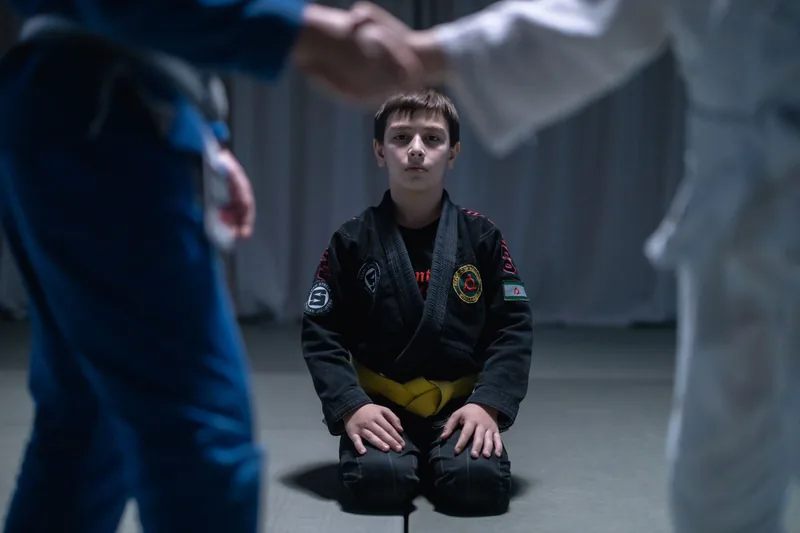
Thank your partners. At the end of class, shake hands or slap hands with the people you trained with. A quick “thanks for the roll” goes a long way.
Rolling Etiquette: How to Spar the Right Way
Live sparring, called rolling, is where etiquette matters most. These are the rules most academies share.
Slap and bump to start. Before every round, slap hands and bump fists with your partner. It signals that you’re both ready and that the roll is friendly, even when it’s competitive.
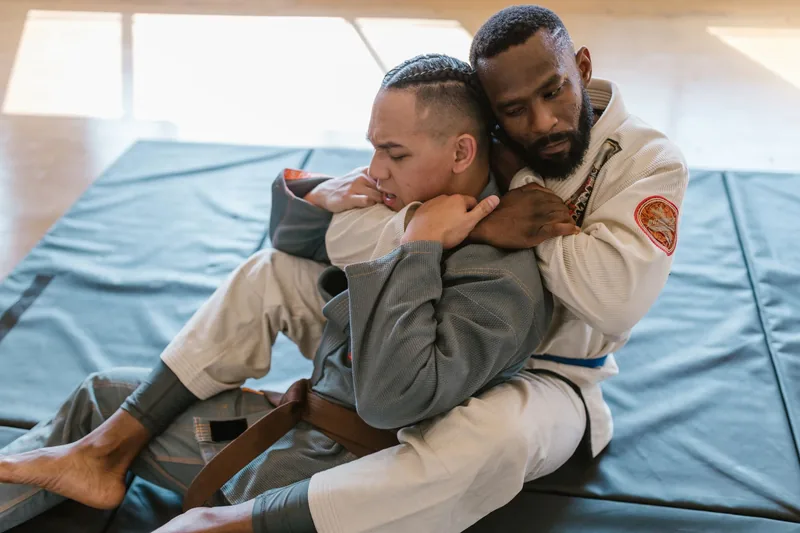
Tap early, and respect every tap. Tap with your hand on your partner or the mat, or say “tap” out loud if your hands are trapped. When your partner taps, let go immediately. Not after one more squeeze, not after you finish adjusting. Releasing late is one of the most serious etiquette violations in jiu jitsu.
Match your partner’s intensity. Rolling with a beginner, a smaller partner, or someone coming back from an injury is not the time to go all out. A good partner adjusts. A bad one treats every round like a world championship final.
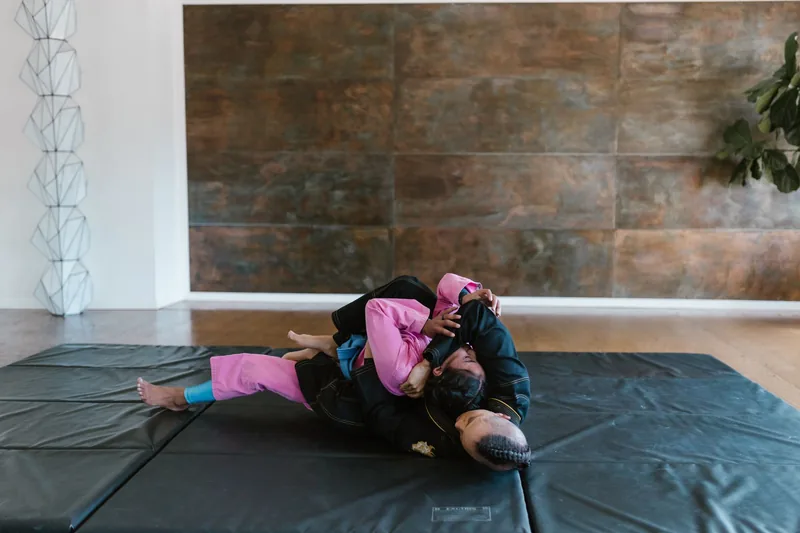
Don’t slam and don’t crank. Apply submissions slowly and with control so your partner has time to tap. Spiking someone onto the mat or snapping on an armbar is how training partners end up in physical therapy.
Mind the room. Keep an eye on the pairs around you. If you’re about to roll into another pair, stop and reset to the middle of the mat. When two pairs are about to collide, the lower belt typically gives way.
Belt Etiquette and Respecting Rank
BJJ belts take years to earn. Our guide to the BJJ belt ranking system explains how long the path usually runs, and that timeline is a big part of why rank is respected on the mat.
- Address instructors properly. Black belts are commonly called “Professor” in jiu jitsu. Follow whatever your academy uses.
- Learn your academy’s custom for asking to roll. In some gyms lower belts can ask anyone to roll. In others it’s customary to let higher belts do the asking. Watch how your academy does it.
- It’s okay to decline a roll. If you’re injured or exhausted, a polite “not this round, thanks” is fine.
- Higher belts set the tone. Rank comes with responsibility. The best upper belts help newer students learn instead of just tapping them over and over.
- Never wear a belt you didn’t earn. Belts and stripes are awarded by your instructor, period.
Safety Rules That Protect Your Training Partners
The most important BJJ mat rules are about keeping each other in one piece. Tell your partner about any injury before you start, not halfway through the round when they grab the bad shoulder. Don’t use techniques that are above your level or not allowed at your rank. IBJJF competition rules restrict dangerous leg locks like heel hooks and certain neck cranks by belt level and division, and most academies apply similar limits in the training room.
Gi and no-gi training have a few differences too. In no-gi, clothing grips aren’t allowed, and rash guards and spats replace the kimono. Our breakdown of gi vs no-gi BJJ covers what changes. And if you’re in your first year, our BJJ white belt tips pair well with everything here.
Learn BJJ the Right Way at GMA in Gallatin, TN
At Global Martial Arts USA, good BJJ etiquette is part of the curriculum. Our program in Gallatin, TN operates under the Rocian Gracie Jr. organization, and Grandmaster K.O. Spillmann received his BJJ black belt directly from Professor Rocian Gracie Jr. With 50+ years of martial arts teaching in Sumner County, our instructors pace beginners carefully and pair them with experienced training partners, so you learn the art in a safe, family-friendly environment.
Want to see more of our grappling program? Explore our dedicated BJJ program at GMA Team, or check the class schedule to find a gi or no-gi class that fits your week.
Ready to Get Started?
Your first class is free. Whether you’re a complete beginner or an experienced martial artist, we’d love to welcome you to the GMA family.
Call us at (731) 324-3847 or book your free trial online.
Frequently Asked Questions
What is the most important rule of BJJ etiquette?
Respect the tap. When your partner taps, release the submission immediately. Close behind it is hygiene: a clean gi, trimmed nails, and staying off the mat when you have a skin infection.
Do you bow in Brazilian Jiu Jitsu?
Many academies bow when stepping on and off the mat, and some bow to the instructor at the start and end of class. Others use handshakes instead. Follow what your academy does. Either way, the point is the same: showing respect for the space and the people in it.
Can a white belt ask a black belt to roll?
It depends on the academy. In many gyms anyone can ask anyone, while in others it’s customary to let higher belts do the asking. If you’re not sure, watch how others do it or ask your instructor.