

Choosing the best martial art for self defense depends on what kind of threat you’re preparing for — and how you want to respond when it happens. A street confrontation looks nothing like a controlled sparring match, and the style that wins tournaments isn’t always the one that keeps you safest walking to your car at night. At Global Martial Arts USA in Gallatin, TN, we’ve spent over 50 years training students across multiple disciplines, and we’ve seen firsthand which skills translate to real-world safety.
This guide compares the most effective martial arts for self defense, breaks down what each one does best, and explains why a multi-discipline approach gives you the strongest foundation for personal protection.
What Makes a Martial Art Effective for Self Defense?
Before comparing styles, it helps to know what actually matters in a self defense situation. Real confrontations are fast, chaotic, and unpredictable. They happen in parking lots, hallways, and crowded spaces — not on padded mats with a referee standing by.
The most effective self defense arts share a few traits. They teach you to control distance — knowing when to close the gap and when to create space. They train reactions under pressure so your body responds before your conscious mind catches up. They cover multiple ranges of combat: standing strikes, clinch work, and what to do if you end up on the ground. And they emphasize awareness and de-escalation alongside physical technique, because the best fight outcome is always the one you avoid entirely.
At GMA, our self defense program is built on this principle. We don’t teach a single style in isolation — we draw from the disciplines below to give students tools for every scenario.
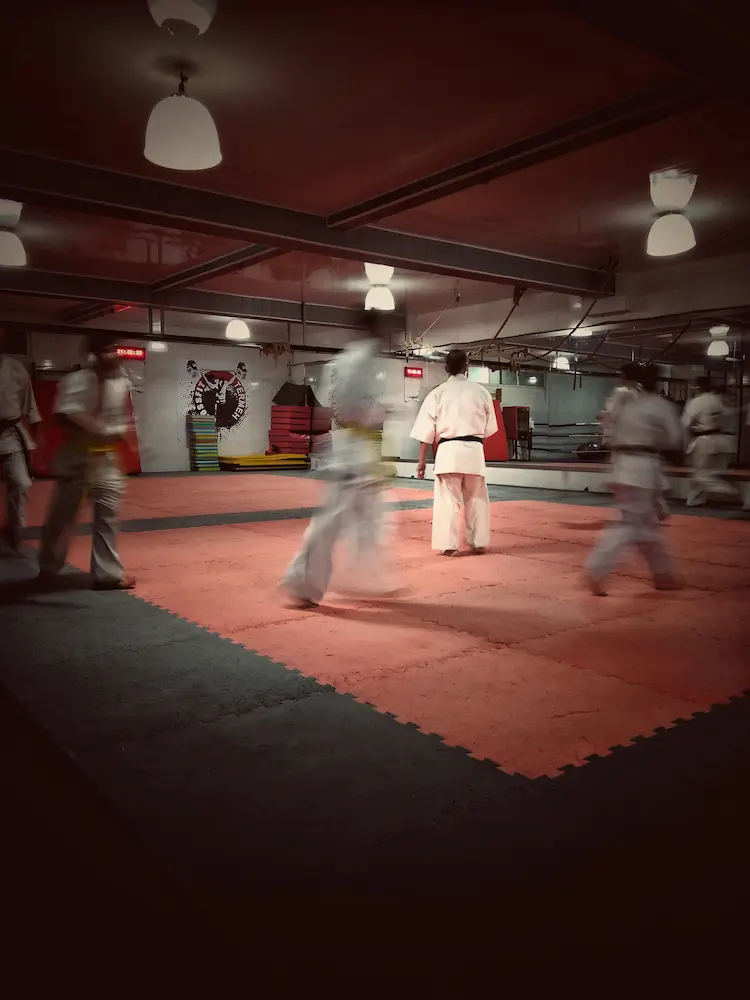
Brazilian Jiu Jitsu: Ground Control and Submissions
Brazilian Jiu Jitsu (BJJ) is widely considered one of the best martial arts for self defense on the ground. Most real fights end up in a clinch or on the floor within seconds, and BJJ teaches you how to control an opponent from there — using leverage and technique instead of brute strength.
BJJ practitioners learn to neutralize larger, stronger attackers through positional control, chokes, and joint locks. If someone takes you down or pins you against a wall, BJJ gives you a systematic way to escape, reverse position, and either submit the attacker or create space to get back on your feet.
GMA’s BJJ program operates under the direct lineage of Rocian Gracie Jr., an IBJJF-certified Black Belt. Our curriculum covers both gi and no-gi grappling, with a strong emphasis on the self defense applications that the Gracie family originally designed the art around. For students who want to go deeper, explore our dedicated BJJ program at GMA Team.
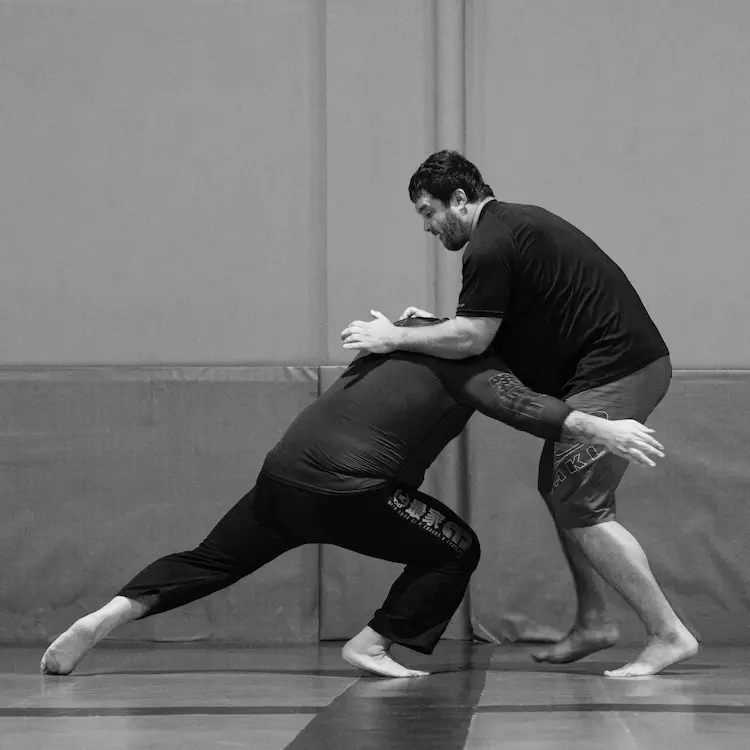
TaeKwonDo: Striking Power and Distance Management
If BJJ owns the ground, TaeKwonDo owns the space between you and a threat. TaeKwonDo builds explosive kicking power, fast hand strikes, and the ability to manage distance — keeping an attacker outside of grabbing range while you decide whether to disengage or respond.
TaeKwonDo practitioners develop speed, timing, and the cardiovascular conditioning to sustain effort under stress. The art also trains mental discipline and the ability to stay calm when adrenaline spikes — a skill that matters as much as any technique in a real confrontation.
At GMA, our TaeKwonDo program is led by KwanJangNim K.O. Spillmann, a 9th Degree Black Belt with over 50 years of teaching experience. The program blends traditional forms and sparring with practical self defense knowledge that students can apply outside the dojang.
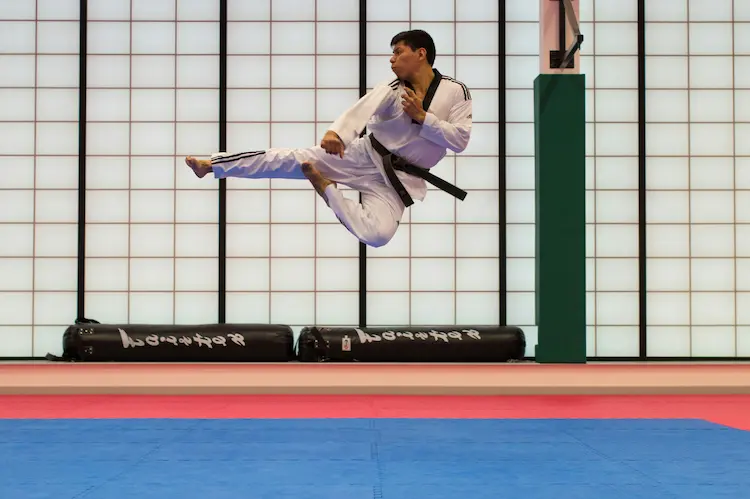
HapKiDo: Joint Locks, Throws, and Close-Range Control
HapKiDo fills the gap between striking and grappling. It specializes in joint manipulation, wrist locks, throws, and redirection — techniques designed to control an aggressor without needing to go to the ground or throw heavy strikes.
This makes HapKiDo particularly effective for situations where de-escalation has failed but you need a measured response. Law enforcement and security professionals have trained in HapKiDo for decades because it offers control without excessive force. If someone grabs your arm, pushes you, or gets in your face, HapKiDo gives you options to redirect their energy and neutralize the threat.
GMA’s HapKiDo curriculum emphasizes real-world application — practicing defenses against common grabs, pushes, and holds that students actually encounter. Combined with TaeKwonDo striking, it creates a standing self defense skill set that covers most threat scenarios before a fight ever reaches the ground.
Wing Chun: Close-Quarters Combat
When distance collapses and you’re face-to-face with an attacker, Wing Chun provides fast, efficient striking and trapping techniques built for tight spaces. Developed for close-range combat, Wing Chun uses simultaneous attack and defense — blocking and striking in the same motion — which makes it effective when you don’t have room to throw full-power kicks or wide punches.
Wing Chun’s centerline theory teaches practitioners to protect their most vulnerable targets while attacking along the shortest path to the opponent. For self defense in confined environments like elevators, stairwells, or between parked cars, this approach is hard to beat.
Why Multi-Discipline Training Is the Real Answer
Here’s the truth that experienced martial artists and self defense instructors agree on: no single style covers everything. A striker who’s never trained on the ground is vulnerable to a tackle. A grappler who can’t manage distance may get hurt before the clinch. A joint-lock specialist needs a plan for when the attacker throws punches from outside their range.
That’s why GMA’s approach combines multiple disciplines into a cohesive self defense system. Our students train TaeKwonDo for striking and distance, HapKiDo for joint locks and control, Brazilian Jiu Jitsu for ground defense, and Wing Chun for close-quarters responses. This multi-art foundation — refined across 50+ years of instruction — prepares students for the unpredictable nature of real-world threats.
Our full class lineup lets you train across these disciplines on a single schedule, under one roof. Whether you start with one art and expand or train multiple styles from day one, you’re building the kind of well-rounded skill set that no single discipline can provide alone.
Ready to Get Started?
Your first class is free. Whether you’re a complete beginner or an experienced martial artist, we’d love to welcome you to the GMA family.
Call us at (731) 324-3847 or book your free trial online.
Frequently Asked Questions
What is the single best martial art for self defense?
There is no single best style because real threats are unpredictable. Brazilian Jiu Jitsu is widely regarded as the most effective ground-fighting art, TaeKwonDo excels at striking and distance management, and HapKiDo specializes in joint locks and control. The most prepared self defense practitioners train across multiple disciplines to cover all ranges of combat.
How long does it take to learn self defense?
You can learn foundational awareness skills and basic physical responses in your first few classes. Building reliable technique under pressure typically takes three to six months of consistent training. At GMA, our self defense curriculum is designed to give students practical skills they can use from the very beginning while building toward deeper proficiency over time.
Is martial arts training safe for beginners?
Yes. Reputable schools like GMA structure beginner classes with safety as the top priority. Techniques are taught progressively, sparring is supervised, and instructors match training intensity to each student’s experience level. GMA is Safe Sport Certified and has been voted the top martial arts school in Sumner County.