
Tai chi for seniors has quietly become one of the most recommended exercises in modern healthcare — and for good reason. The slow, deliberate movements build balance, strengthen stabilizing muscles, and calm the nervous system without putting stress on aging joints. At Global Martial Arts USA in Gallatin, TN, we’ve guided students in their 60s, 70s, and 80s through their first steps in tai chi for more than 50 years. You don’t need to be flexible. You don’t need to be strong. You just need to be willing to show up.
This guide covers what tai chi offers older adults, the specific health benefits backed by research, what a first class looks like, and simple ways to begin — whether you’re standing steady or need to start from a chair.
Why Tai Chi Is Ideal for Seniors
Most exercise programs ask the body to do more — lift heavier, move faster, push harder. Tai chi asks the opposite. The challenge is internal: slow the mind, relax unnecessary tension, and move with precision. That difference is exactly what makes it so well suited to older adults. There’s no impact on the knees, no strain on the shoulders, and no competitive pressure to keep up with anyone. The movements meet you at your current ability and gently expand what that ability is.
Tai chi is also inherently functional. Every movement trains the same skills seniors rely on every day — shifting weight safely, turning without losing balance, coordinating breath with effort, and recovering when something unexpected throws you off center. Over weeks and months of practice, those skills become reflexive. A misstep on uneven pavement becomes a minor wobble instead of a fall.
Health Benefits of Tai Chi for Seniors
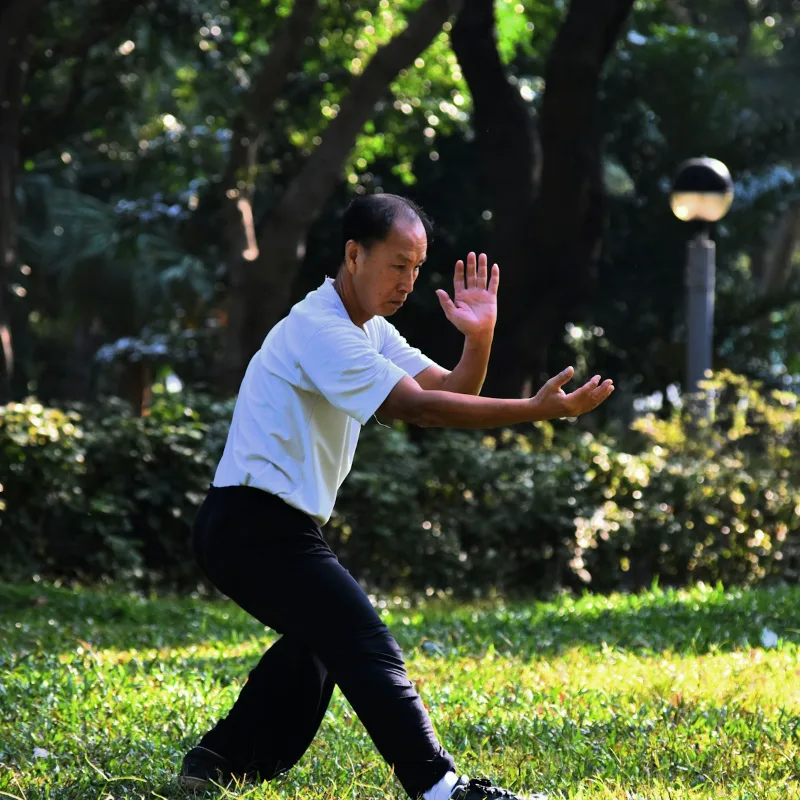
The research on tai chi and aging is unusually strong for a low-impact practice. A 2017 review published in JAMA Internal Medicine found that tai chi reduced fall risk in older adults by up to 50 percent, outperforming conventional balance training and stretching programs. The CDC and the National Council on Aging now list tai chi among their top recommended fall-prevention interventions.
Beyond balance, older adults who practice tai chi regularly show measurable improvements in blood pressure, cardiovascular health, bone density, sleep quality, and symptoms of anxiety and depression. Several studies have also documented cognitive benefits — improved memory, faster processing speed, and better executive function — likely tied to the combination of physical movement, breathing, and mental focus the practice demands. For seniors managing conditions like arthritis, Parkinson’s disease, or recovery from a stroke, tai chi often fits into a rehabilitation plan when higher-impact exercise is off the table.
These benefits aren’t reserved for people who start young. Studies consistently find that older adults who begin tai chi in their 60s, 70s, or 80s experience the same gains as younger practitioners — sometimes faster, because the contrast between sedentary aging and gentle consistent movement is so pronounced. Our guide to tai chi for beginners walks through what the first months of practice look like for anyone new to the art.
Chair Tai Chi and Standing Tai Chi — Both Work
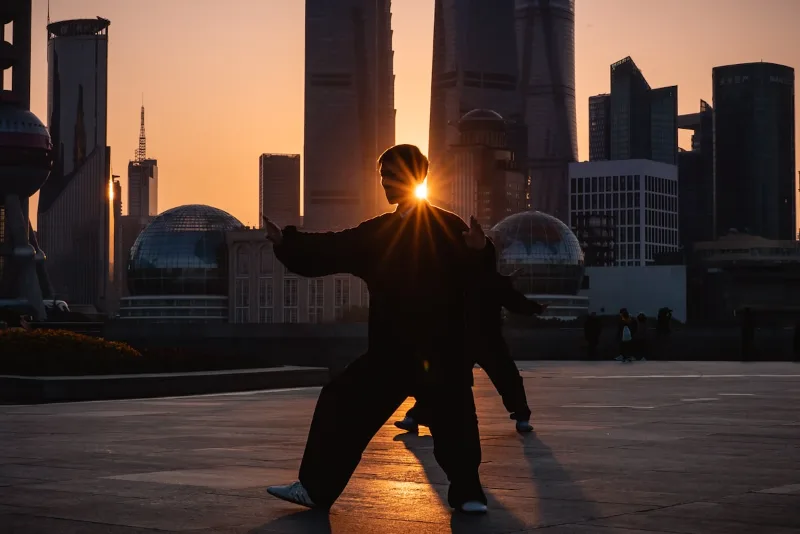
One of the most practical features of tai chi for seniors is that the same movements can be performed standing or seated. Students who have strong balance and good mobility typically practice standing, learning the traditional Yang Style forms that have been taught for generations. Students recovering from surgery, managing chronic pain, or dealing with significant balance challenges can perform modified versions of every movement from a sturdy chair.
Chair tai chi isn’t a watered-down version of the real practice — it’s the same arm movements, the same breathing, the same mental focus, just with the lower body stabilized. Many seniors begin seated, build their core strength and coordination over weeks or months, and gradually transition to standing practice. Others prefer seated work permanently, and still experience the cardiovascular, cognitive, and mood benefits the art is known for.
At GMA, our instructors regularly adapt movements on the fly based on what a student brings into class that day. A flare-up of arthritis, a recent knee surgery, a bad night’s sleep — none of those need to stop your practice. Tai chi adapts around the body you have today.
What to Expect in Your First Class
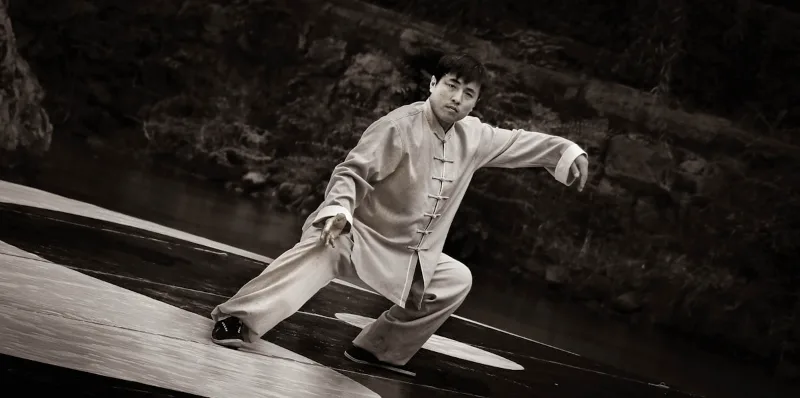
Walking into a martial arts school for the first time can feel intimidating at any age, but our tai chi program was designed with first-timers in mind. A typical class begins with gentle warm-up movements — slow neck rolls, shoulder circles, easy weight shifts — followed by breathing exercises that settle the mind and prepare the body for focused movement. The room is quiet. No loud music, no shouted counts, no one sprinting past you.
From there, the instructor introduces foundational movements one at a time. You’ll practice weight shifts, stepping patterns, and arm movements at a pace your body can absorb. Classes usually run 45 to 60 minutes. Most seniors leave feeling looser and calmer than when they arrived — and many report better sleep that night. Wear comfortable, loose clothing and flat-soled shoes. No uniform, no equipment, no prior experience required.
GMA has been voted the top martial arts school in Sumner County, and our tai chi program is taught by instructors with decades of experience in both the health and martial applications of the art. That background matters for seniors — understanding why a movement works makes it easier to practice with intention rather than just copying shapes.
How to Start Tai Chi Safely
If you’re considering tai chi and have any chronic health conditions, a quick conversation with your doctor is a good first step. Tai chi is one of the safest forms of exercise available, but a provider who knows your history can flag anything specific to watch. Once you have the green light, the single best thing you can do is show up to a class. Videos and books can supplement your learning, but tai chi is a physical skill that requires real-time feedback from a qualified instructor — and for seniors in particular, that feedback on posture and weight distribution is what prevents minor issues from becoming bigger ones.
Look for a school that teaches tai chi as a complete system — breathing, martial applications, and philosophical principles alongside the movements themselves. At Global Martial Arts USA, we teach tai chi alongside TaeKwonDo, HapKiDo, and our other disciplines, with a dedicated tai chi program that welcomes students of every age and fitness level. You can view our class schedule and drop in for a free trial any time.
Ready to Get Started?
Your first class is free. Whether you’re a complete beginner or an experienced martial artist, we’d love to welcome you to the GMA family.
Call us at (731) 324-3847 or book your free trial online.
Frequently Asked Questions
Is tai chi safe for seniors with arthritis or joint pain?
Yes. Tai chi is one of the few exercises specifically recommended by the Arthritis Foundation because its slow, low-impact movements strengthen the muscles around painful joints without aggravating them. Many seniors with arthritis report reduced stiffness and less daily pain after a few months of consistent practice.
Can I do tai chi if I use a cane or walker?
Absolutely. Chair-based tai chi provides the full benefit of the practice — breathing, coordination, cognitive engagement, and upper body movement — without requiring standing balance. As strength and confidence build, many seniors transition to standing practice with support, and some eventually move to full standing forms.
How often should seniors practice tai chi to see benefits?
Research consistently shows measurable balance and health improvements with two to three classes per week, each lasting 45 to 60 minutes. Many of our students attend twice weekly and practice short routines at home between classes to reinforce what they’ve learned.