

Brazilian jiu jitsu — what is it, and why has it become one of the fastest-growing martial arts in the world? At its core, jiu jitsu is a ground-based grappling system that teaches you to control and submit opponents using leverage, joint locks, and chokes rather than strikes or brute strength. That single principle — that a smaller, skilled practitioner can overcome a larger, stronger one — is what sets BJJ apart from nearly every other martial art.
At Global Martial Arts USA in Gallatin, TN, we’ve seen this transformation happen with hundreds of students. This guide covers what BJJ is, how it works, where it came from, and what you can expect when you first step on the mat.
What Makes Brazilian Jiu Jitsu Different from Other Martial Arts?
Most striking arts — boxing, TaeKwonDo, karate — operate primarily in the standing range. BJJ takes the opposite approach. Its entire philosophy is built around taking a fight to the ground, where body mechanics and leverage matter far more than size or raw power.
This is what makes BJJ so effective for real-world self defense. Most physical confrontations end up on the ground within seconds. BJJ teaches you to be comfortable — even dangerous — in a position where most untrained people panic. That’s why it became the foundation of mixed martial arts when Royce Gracie submitted four opponents in a single night at UFC 1, competing against wrestlers, boxers, and karate black belts. If you’ve been comparing options and want to know which art is best for real situations, our breakdown of the best martial art for self defense puts BJJ in full context alongside TaeKwonDo, HapKiDo, and Wing Chun.
But BJJ isn’t just for MMA or self defense. The vast majority of practitioners train for fitness, mental challenge, and the deeply satisfying process of mastering a complex skill system. It rewards patience and intelligence in a way few physical activities do.
The Core Concepts of BJJ Training
Understanding the foundational principles helps beginners know exactly what they’re stepping into.
Positional control. BJJ places a huge emphasis on position before submission. You work to establish dominant positions — mount, back control, side control — before attempting a finish. Rushing submissions from bad positions is a hallmark of inexperience. Learning to be patient, and to recognize when a position is truly secured, is one of the first things every beginner internalizes.
Leverage over strength. The defining principle of BJJ: technique multiplies force in ways that strength alone cannot match. A properly applied armbar, choke, or guard sweep works not because the person applying it is stronger, but because they understand angles, pressure, and the mechanical limits of the human body.
Submissions. Joint locks targeting the elbow, shoulder, knee, or ankle — and chokes applying pressure to the carotid arteries or airway — are the finishing tools of BJJ. In training, you “tap out” to signal your partner you’re caught. This keeps the training environment safe and sustainable for years of consistent practice.
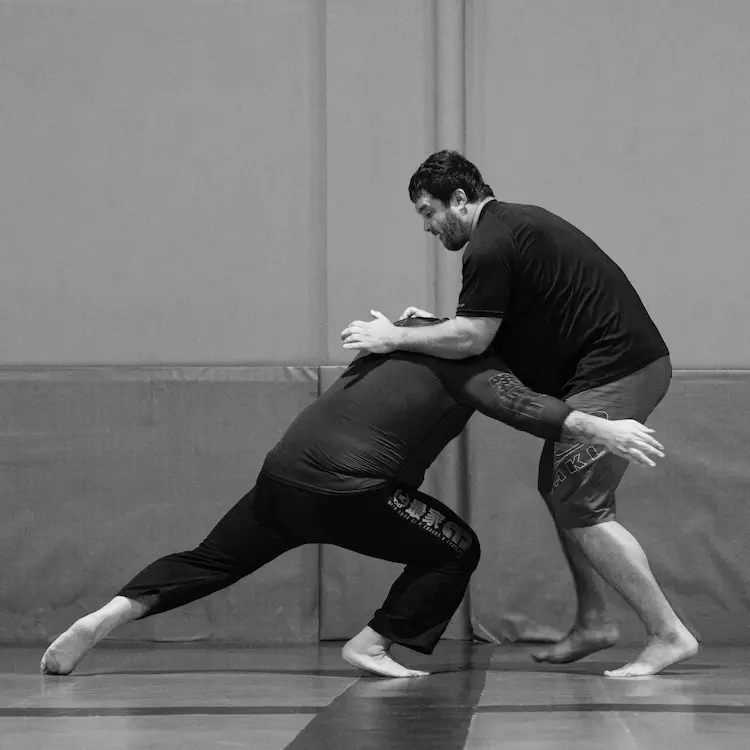
Live sparring (rolling). More than any other martial art, BJJ trains with full-resistance partners on a regular basis. “Rolling” — the BJJ term for sparring — is where technique gets pressure-tested under realistic conditions and real skills develop. You can’t fake competence on the mat for long.
The History of Brazilian Jiu Jitsu
BJJ traces its roots to Japanese judo, specifically through Mitsuyo Maeda — a champion judoka who emigrated to Brazil in the early 20th century. Maeda taught the Gracie family in exchange for help settling in the country, and Carlos Gracie became one of his most dedicated students.
Carlos passed the art to his brothers. His youngest brother, Helio Gracie — small, frail, and unable to execute many of the strength-dependent judo techniques — spent years adapting the art to rely almost entirely on leverage and body mechanics. This adaptation became the foundation of what the world now calls Brazilian Jiu Jitsu.
The Gracie family spread BJJ through public challenge matches for decades, taking on fighters from every discipline. When the UFC brought those challenge matches to a televised audience in 1993, Royce Gracie’s dominance proved the effectiveness of ground-based grappling to a worldwide audience and ignited the global BJJ movement still accelerating today. For the full story of how one family changed martial arts forever, read our deep dive on the Gracie family and the history of Jiu Jitsu.
What to Expect as a BJJ Beginner
New students often arrive expecting boot-camp intensity. BJJ is demanding, but it’s far more structured and welcoming than its reputation suggests.
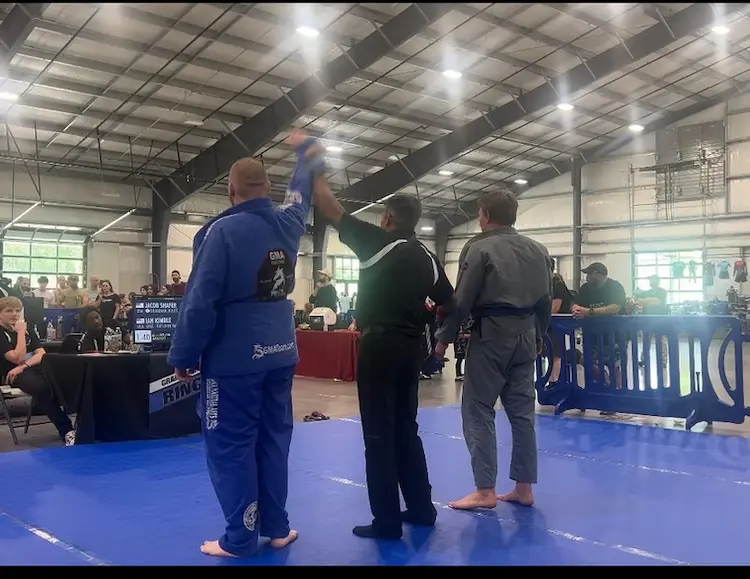
The belt system. Adult BJJ practitioners progress through white, blue, purple, brown, and black belt. Unlike many martial arts, promotions in BJJ are merit-based — there are no formal tests or memorized forms. Your instructor promotes you when your skill demonstrates readiness, period. Our full breakdown of the BJJ belt ranking system explains what each belt represents and what realistic timelines look like.
Your first class. Expect fundamentals: how to fall safely, basic guard positions, and one or two foundational submissions or sweeps. Most schools run new students through a structured beginner curriculum before introducing them to open mat rolling. There’s no expectation that you’ll figure it out by watching — good instructors teach progressively.
The mat culture. BJJ schools have a distinctive atmosphere built around mutual challenge and respect. You’ll tap frequently when you start, and so will everyone else around you — that’s the process, not a measure of failure. The people you roll with most regularly often become some of your closest training partners.
BJJ at Global Martial Arts USA in Gallatin
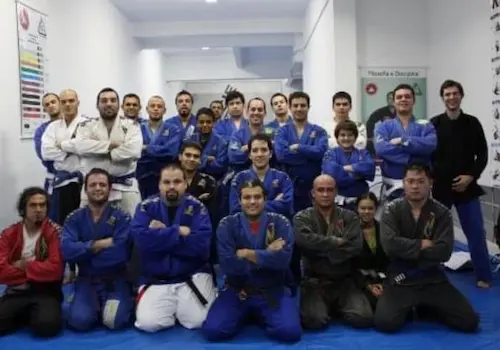
Our Brazilian Jiu Jitsu classes in Gallatin carry a direct Gracie lineage, taught by IBJJF-certified black belt instructors. That lineage matters — it means the techniques you learn trace directly back to the source, not a watered-down commercial approximation.
With 50+ years of martial arts experience at GMA, our instructors bring genuine depth to every class. They understand how to progress students — meeting people where they are and building real skills at a sustainable pace. Whether you’re stepping on the mat for the first time or returning after years away, you’ll find a program built for long-term development.
Students who want to take their training to the competitive level can pursue that path through our dedicated competition program at GMA Team, where serious competitors train under structured preparation. And for those who want to understand the full picture of what you can study here, explore the complete class lineup — BJJ is one of eight disciplines we offer.
Ready to Get Started?
Your first class is free. Whether you’re a complete beginner or an experienced martial artist, we’d love to welcome you to the GMA family.
Call us at (731) 324-3847 or book your free trial online.
Frequently Asked Questions
How long does it take to get a blue belt in BJJ?
Most students reach blue belt after 1-2 years of consistent training, though timelines vary based on training frequency, natural aptitude, and your instructor’s standards. BJJ promotions are merit-based — there are no shortcuts, and that’s exactly what makes each belt meaningful.
Do I need to be in shape to start BJJ?
No. Most beginners are gassed after the warm-up in their first class. That’s entirely normal — BJJ itself will get you in shape over time. Show up as you are, commit to consistent attendance, and the conditioning follows.
Is BJJ safe for beginners?
Yes, when trained at a reputable school. Tapping out immediately when caught in a submission, communicating with partners about pressure, and training under experienced instructors keeps injury rates low. At GMA, we establish mat culture and safety expectations from day one — your longevity in the art matters to us as much as your progress.