

The research on tai chi benefits has grown from a handful of small studies to hundreds of peer-reviewed trials spanning decades. What researchers have found consistently is this: a practice built on slow, deliberate movement and controlled breathing produces measurable improvements in balance, stress response, cardiovascular function, and joint health — without the injury risk of high-impact training. At Global Martial Arts USA in Gallatin, TN, we’ve taught tai chi for more than 50 years, and the science now backs what our instructors have observed in students since the beginning: steady practice changes how the body ages.
This guide covers the most significant evidence-based tai chi benefits — what the research shows, which conditions respond best, and how those gains translate into everyday life.
Balance and Fall Prevention: The Most Documented Tai Chi Benefit
Falls are the leading cause of injury-related death among adults over 65, and preventing them is one area where tai chi research has produced some of the strongest evidence in all of exercise science. A landmark meta-analysis published in JAMA Internal Medicine examined 10 randomized controlled trials and found that tai chi reduced fall risk in older adults by up to 50 percent — outperforming both conventional balance training and stretching programs. The CDC and the National Council on Aging both list tai chi among their top-recommended fall prevention interventions.
What makes tai chi effective for balance goes beyond simple leg strengthening. The practice constantly trains weight shifting — moving your center of gravity from foot to foot in controlled, deliberate ways that directly mirror the movements that cause falls in real life. Over time, practitioners develop improved proprioception (the body’s sense of its own position in space), stronger stabilizing muscles in the ankles and hips, and a trained reflex to recover when balance is disrupted. These aren’t abstract benefits. They show up as fewer stumbles, more confident movement on uneven ground, and faster recovery from unexpected slips. For older adults looking for a gentle entry point, our guide to tai chi for seniors covers how to adapt the practice to different fitness levels and mobility needs.
Tai Chi Benefits for Stress, Anxiety, and Mental Health
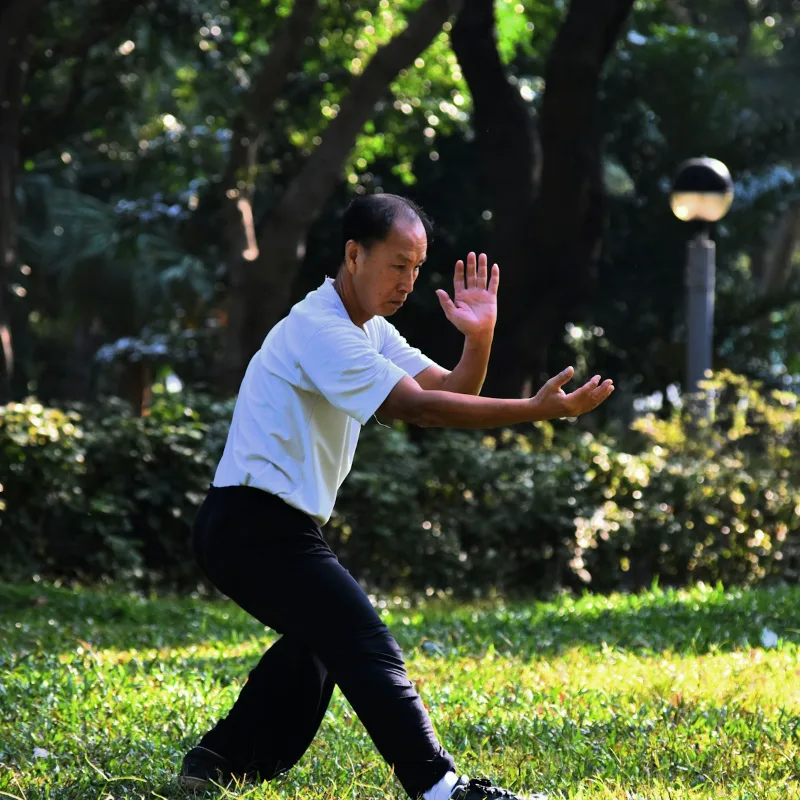
Tai chi’s effect on the nervous system is not incidental — it’s built into the mechanics of the practice. The slow, continuous movements paired with diaphragmatic breathing directly activate the parasympathetic nervous system, shifting the body out of the stress response and into a state of physiological calm. Multiple studies have documented this effect through measurable markers: reduced cortisol levels, lower resting heart rate, and decreased inflammatory markers associated with chronic stress.
The mental health research is substantial. A systematic review published in BMC Complementary Medicine and Therapies found that tai chi significantly reduced symptoms of anxiety and depression across clinical populations, with effect sizes comparable to other forms of exercise and, in some cases, comparable to medication for mild to moderate anxiety. What’s notable is that tai chi addresses stress through multiple channels at once — the physical relaxation of gentle movement, the respiratory effect of controlled breathing, and the cognitive engagement of learning and memorizing sequences of movement. That last factor matters more than it might seem: the mental focus required to remember and execute a form occupies the same mental space that anxious rumination typically fills. You can’t run worst-case scenarios through your head while coordinating a Brush Knee into a Ward Off Left.
What Tai Chi Does for Joints, Arthritis, and Chronic Pain
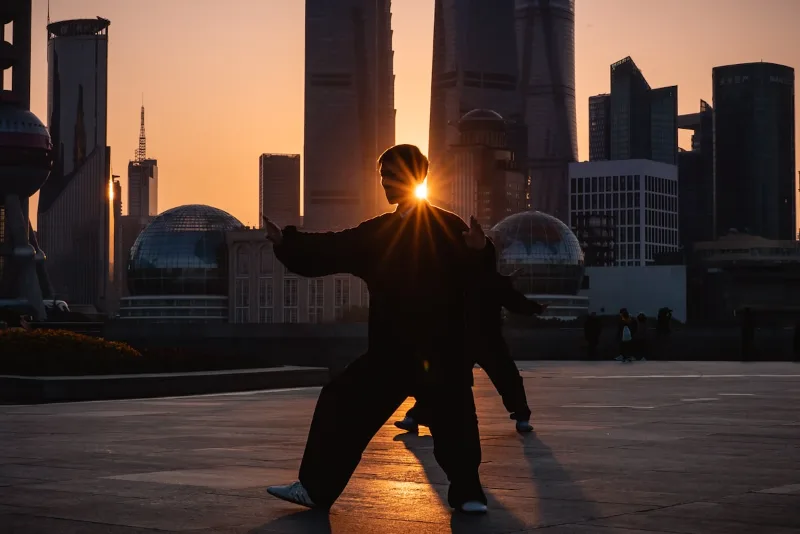
Tai chi is one of the few exercises the Arthritis Foundation recommends across both rheumatoid arthritis and osteoarthritis. The reason comes down to biomechanics: tai chi’s slow, circular movements take the joints through their full range of motion without compressing them under load. That combination — movement without impact — lubricates cartilage, strengthens the muscles that stabilize painful joints, and maintains flexibility in ways that higher-impact exercise often can’t achieve for people managing significant pain.
The clinical evidence is consistent. A randomized controlled trial published in Arthritis & Rheumatology found that tai chi outperformed physical therapy for both pain relief and physical function in patients with knee osteoarthritis. Research on rheumatoid arthritis shows improvements in pain scores, grip strength, and disease activity markers in tai chi practitioners versus controls. Beyond arthritis, tai chi has been studied for fibromyalgia, lower back pain, and musculoskeletal pain from a range of causes — with positive results across most conditions. Our Tai Chi program in Gallatin draws students managing everything from recovering knees to decades-old back injuries. The adaptability of tai chi means a student with significant limitations on day one can still practice — and still get real benefit, even at a modified range of motion.
Heart Health, Blood Pressure, and Circulation
Tai chi is not an aerobic workout in the traditional sense, but its cardiovascular benefits are well documented. A meta-analysis of 39 randomized controlled trials found that regular tai chi practice reduced systolic blood pressure by an average of 9 to 10 mmHg — an effect size clinically meaningful enough that some physicians have begun recommending it as a complementary approach for patients managing hypertension. Diastolic blood pressure shows similar improvements in the research, as does resting heart rate over time.
Beyond blood pressure numbers, the cardiovascular research shows improvements in functional aerobic capacity, cholesterol profiles, and markers of arterial stiffness in long-term practitioners. For anyone who can’t safely engage in higher-intensity aerobic activity — whether due to age, joint conditions, cardiac history, or current fitness level — tai chi offers a medically recognized path to cardiovascular improvement through gentle, sustained movement.
How to Start Getting the Benefits of Tai Chi
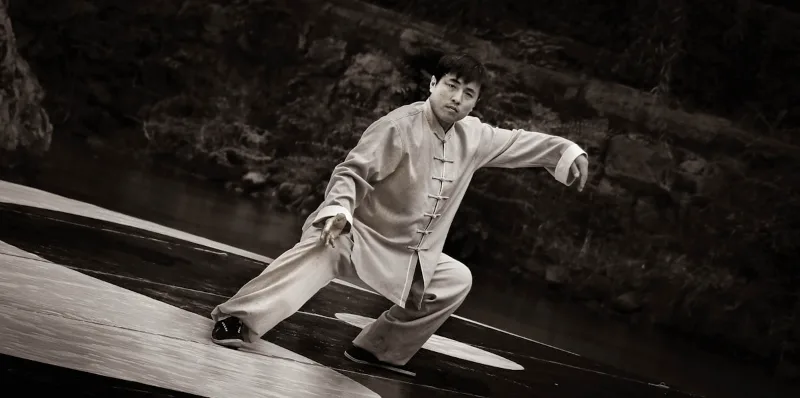
Research consistently shows that tai chi benefits begin to appear within 8 to 12 weeks of regular practice — typically two to three sessions per week, each lasting 45 to 60 minutes. That’s a realistic timeline for someone starting from scratch, and the improvements compound as practice continues. Balance benefits accumulate over months. Mental health benefits tend to appear faster, sometimes within the first few weeks. Chronic pain relief varies by condition but generally tracks with how consistently a student shows up.
The most important factor at the start is qualified instruction. Tai chi movements learned with poor postural alignment or incorrect weight distribution don’t produce the same results as movements learned correctly — and some can place unnecessary strain on the joints the practice is designed to help. For those new to the art, our tai chi for beginners guide covers what to expect in the first weeks of practice. When you’re ready to step onto the mat, you can view our class schedule and try your first class free.
Ready to Get Started?
Your first class is free. Whether you’re a complete beginner or an experienced martial artist, we’d love to welcome you to the GMA family.
Call us at (731) 324-3847 or book your free trial online.
Frequently Asked Questions
How long does it take to notice tai chi benefits?
Most research shows measurable improvements within 8 to 12 weeks of practicing two to three times per week. Mental health and stress reduction benefits often appear sooner — sometimes within the first few weeks of consistent practice. Balance and physical benefits build more gradually and compound over months and years of regular training.
Do you need to attend classes to get tai chi benefits, or can you practice alone?
Learning from a qualified instructor is strongly recommended, especially at the start. Proper alignment and weight distribution are the foundation of the benefits — and they’re difficult to learn from video alone without real-time correction. Once you have a solid foundation from class instruction, practicing at home between sessions extends and reinforces what you’ve learned. The most effective approach combines class instruction with shorter home practice sessions in between.
Are tai chi benefits only for older adults?
Not at all. While much of the research focuses on older populations — because falls and chronic conditions are more prevalent in that group — tai chi benefits apply across all age groups. Younger adults use the practice for stress management, injury prevention, and cross-training. Competitive athletes use it to improve body awareness and coordination. The cognitive and health benefits are accessible at any age, and the skills developed through tai chi — balance, proprioception, controlled movement — compound over a lifetime of practice.