
The BJJ vs wrestling debate is one of the oldest arguments in grappling, and for good reason — both arts turn a standing confrontation into a ground battle, both reward technique and timing over raw size, and both build some of the toughest, most well-conditioned athletes on the planet. But the moment the fight hits the mat, they part ways completely. Wrestling is obsessed with the takedown and the pin; Brazilian Jiu Jitsu is built around control and the submission.
At Global Martial Arts USA in Gallatin, TN, grappling is a core part of what we teach, and new students constantly ask how BJJ stacks up against wrestling. This guide breaks down where the two arts overlap, the fundamental difference in how they win, how scoring and rules diverge, why they treat the bottom position so differently, and why cross-training both is one of the smartest things a grappler can do.
BJJ vs Wrestling: The Core Difference Is Takedowns vs. Submissions
If you remember one thing about BJJ vs wrestling, make it this: wrestling wants to put you on your back and hold you there, while BJJ wants to submit you once the fight is on the ground. Everything else follows from that single distinction.
Wrestling is built around the takedown. Single-legs, double-legs, high crotches, and throws are the bread and butter, and the entire objective is to force your opponent to the mat, establish top control, and — in folkstyle — pin their shoulders to the ground to end the match instantly. There are no chokes or joint locks in mainstream wrestling; dominance is expressed through position, pressure, and relentless conditioning.
Brazilian Jiu Jitsu treats the takedown as just the doorway. Once the fight reaches the floor, a BJJ practitioner works to pass the legs, climb the positional ladder to mount or back control, and finish with a choke or joint lock. Where a wrestler is horrified to end up on their back, a BJJ player is perfectly comfortable there, using the guard to attack and sweep. If you’re new to the ground game, our guide on what Brazilian Jiu Jitsu is lays out the fundamentals.
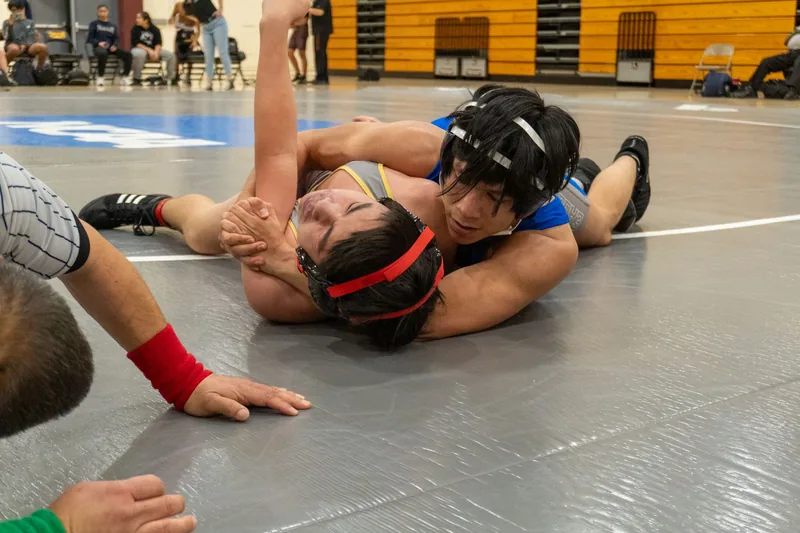
Wrestling Styles: Folkstyle, Freestyle, and Greco-Roman
Part of what makes the BJJ vs wrestling comparison tricky is that “wrestling” isn’t one thing. There are three major competitive styles, each with its own rules. Folkstyle is what’s taught in American middle schools, high schools, and colleges, and it emphasizes control and riding time on top. Freestyle is the international Olympic version, allowing attacks on the legs and rewarding exposure — turning an opponent’s back to the mat. Greco-Roman is the most specialized: it bans all holds below the waist, so every takedown comes from upper-body throws, clinches, and brutal body locks.
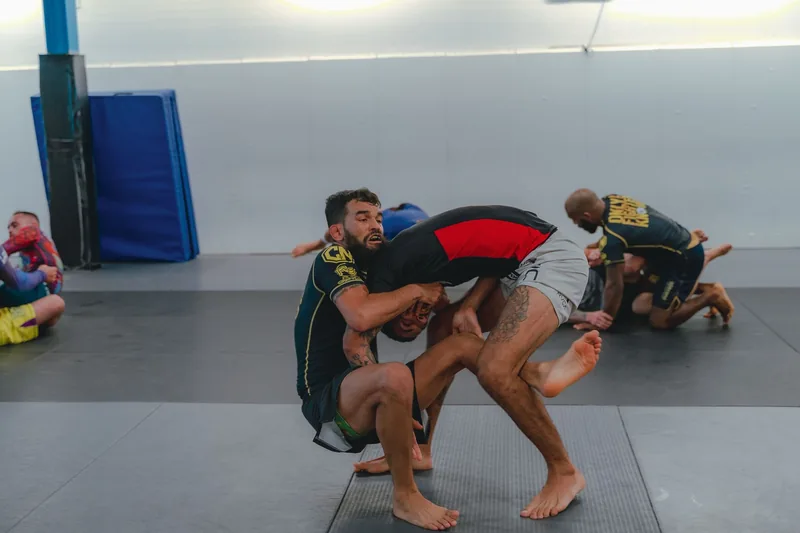
BJJ, by contrast, is far more standardized. Whether you train in a traditional gi or in the faster no-gi format with a rash guard and shorts, the positional hierarchy and submission-based objective stay the same. That consistency is one reason BJJ translates so cleanly into self-defense and mixed martial arts — the goal never changes, only the grips do.
Scoring and Rules: Pins vs. Submissions
The rulebooks make each art’s philosophy concrete. In wrestling, you score points for takedowns, escapes, reversals, and near-falls, and the ultimate prize is the pin — holding both of your opponent’s shoulders to the mat ends the match on the spot. In folkstyle, sustained top control even earns cumulative riding-time points. The clock is always ticking and stalling is penalized, so the pace is explosive and relentless.
BJJ uses a points system that rewards ground control on the way to a finish: two points for a takedown or sweep, three for passing the guard, and four for reaching mount or back control. But points are secondary — a submission ends the match immediately, no matter the score. Because there’s no rush to stand back up and no pin to escape, BJJ matches unfold as long, chess-like exchanges on the floor that would be reset or scored entirely differently in wrestling. It’s a similar contrast to the one we cover in our breakdown of judo vs jiu jitsu, where throws and pins meet the ground game.
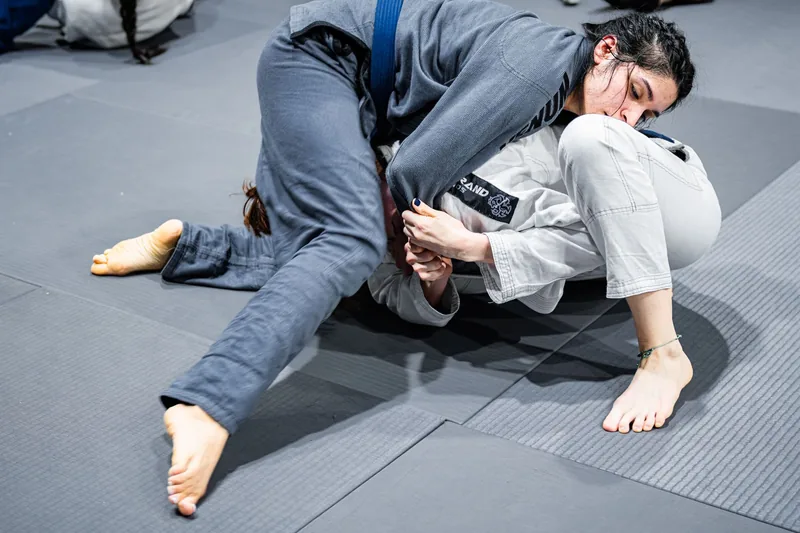
The Bottom-Position Divide
Nowhere is the BJJ vs wrestling difference clearer than in how each art treats being on the bottom. In wrestling, your back touching the mat is close to a death sentence — it leads directly to a pin and a loss, so wrestlers spend enormous energy scrambling to avoid it and to escape back to their feet.
In BJJ, the bottom is a place of opportunity. The guard — controlling an opponent from your back with your legs — is one of the most developed and dangerous positions in the entire art. A skilled BJJ practitioner will happily invite you into their guard to hunt for sweeps, chokes, and armbars. This is exactly why so many wrestlers who cross-train BJJ describe it as learning a new language: everything their sport taught them to fear, BJJ taught them to weaponize.
Which Should You Train — and Why Not Both?
There’s no universal winner in BJJ vs wrestling; the “better” art depends on your goals. Wrestling builds unmatched takedown power, top pressure, explosive athleticism, and a mentality of relentless forward pace. BJJ gives you a complete finishing system, the ability to stay dangerous even off your back, and a way for a smaller person to control and submit a larger attacker through leverage and patience — which is why it’s a cornerstone of modern self defense training.
The two also complement each other beautifully. Wrestling’s takedowns dictate where a fight happens, and BJJ’s submissions decide how it ends — which is why the most complete grapplers, and nearly every high-level MMA fighter, train both. That’s the philosophy behind GMA’s approach: our Brazilian Jiu Jitsu classes in Gallatin carry a direct Gracie lineage and are led by IBJJF-certified black belt instructors, and our curriculum folds in the takedowns and top control that bring a fight to the ground — not just the ground game itself. Serious competitors can go deeper through our dedicated program at GMA Team, and anyone still deciding can explore our full class lineup of eight disciplines taught under one roof.
Ready to Get Started?
Your first class is free. Whether you’re a complete beginner or an experienced martial artist, we’d love to welcome you to the GMA family.
Call us at (731) 324-3847 or book your free trial online.
Frequently Asked Questions
Is BJJ or wrestling better for a real fight?
Both are excellent, and they cover different phases of a fight. Wrestling excels at controlling where the fight goes — taking an opponent down and staying on top — while Brazilian Jiu Jitsu excels once the fight is on the ground, giving a smaller person the tools to control and submit a larger attacker. The most effective answer is exposure to both, which is how we teach grappling at GMA in Gallatin, where our BJJ curriculum includes the takedowns that bring a fight to the mat.
Does wrestling have submissions like BJJ?
Mainstream folkstyle, freestyle, and Greco-Roman wrestling do not use chokes or joint locks — victory comes from takedowns, control, and pins. Submissions are the heart of Brazilian Jiu Jitsu instead. This is the single biggest reason wrestlers who add BJJ become so dangerous: they already own the takedown and top game, and BJJ adds the finishing tools they were missing.
Can I start BJJ if I’ve never wrestled?
Absolutely. The vast majority of BJJ students walk in with zero wrestling background, and the art is designed so that technique overcomes athleticism. Beginners learn positions, escapes, and basic submissions at a safe pace, and your takedowns develop naturally alongside your ground game. You can read more in our guide to the BJJ belt ranking system to see how progress is structured from white belt onward.