
If you’re comparing grappling arts, the judo vs jiu jitsu question comes up fast — and the short answer is that they’re cousins with very different personalities. Judo wins the fight standing up with explosive throws; Brazilian Jiu Jitsu (BJJ) wins it on the ground with control and submissions. Both trace back to the same Japanese roots, both are practiced in a gi, and both reward technique over brute strength. But how they get the job done couldn’t be more different.
At Global Martial Arts USA in Gallatin, TN, grappling is a core part of what we teach, and beginners constantly ask which art is “better.” This guide breaks down where the two come from, the core difference in how they fight, how competition and scoring work, and how their belt systems compare — so you can decide what fits your goals.
Shared Roots: Where Judo and Jiu Jitsu Both Come From
Judo and Brazilian Jiu Jitsu are branches of the same tree. Judo was founded in 1882 by Jigoro Kano, who refined the older Japanese battlefield art of jujutsu into a safer, sport-focused system he called Kodokan Judo. Kano’s genius was removing the most dangerous techniques so students could train full-speed against resisting partners — the same “live” training that makes both arts so effective today.
Brazilian Jiu Jitsu grew directly out of judo. In the early 1900s, Kano sent one of his top students, Mitsuyo Maeda, abroad to spread the art. Maeda settled in Brazil and taught Carlos Gracie, whose family adapted the ground-fighting portion of judo into a system optimized for a smaller person to defeat a larger opponent. That family lineage is the story we cover in our history of the Gracie family and Brazilian Jiu Jitsu. So when people debate judo vs jiu jitsu, they’re really debating two paths that split from the same source about a century ago.
Judo vs Jiu Jitsu: The Core Difference Is Throws vs. Ground Fighting
If you remember one thing about judo vs jiu jitsu, make it this: judo is a stand-up art, and BJJ is a ground art. Everything else follows from that single distinction.
Judo is built around nage-waza — throwing techniques. The entire objective is to use grips, timing, balance, and leverage to lift or sweep your opponent off their feet and slam them cleanly onto their back. Judo does include groundwork (newaza), but competition rules limit how long you can stay there, so training emphasizes the throw above all.
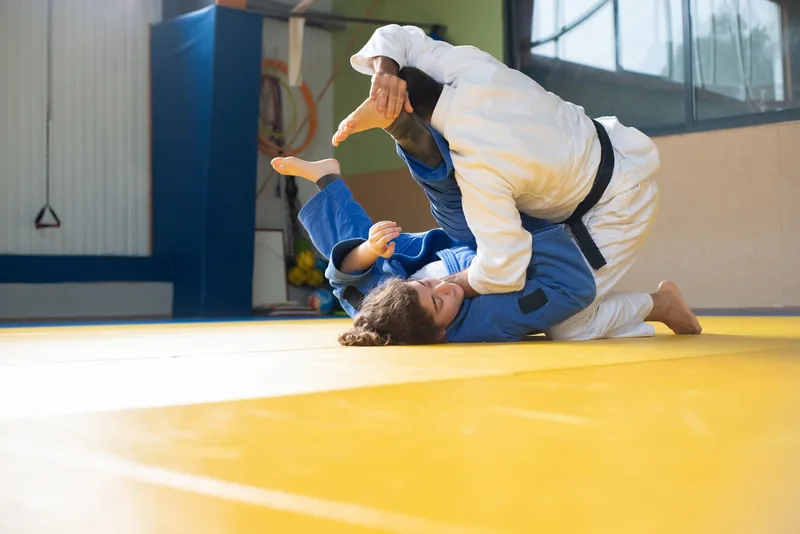
Brazilian Jiu Jitsu flips the priority. A takedown or guard pull is just the doorway — the real match begins on the ground, where you work to pass your opponent’s legs, climb the positional ladder to mount or back control, and finish with a choke or joint lock. Where a judoka wants to end things in one decisive throw, a BJJ practitioner is content to bring the fight down and methodically dismantle their opponent’s defenses. If you’re new to the ground game, our guide on what Brazilian Jiu Jitsu is lays out the fundamentals.
How Scoring and Competition Rules Differ
The rulebooks make the philosophies concrete. In judo, the ultimate prize is ippon — a single, powerful, controlled throw that lands your opponent squarely on their back ends the match instantly. You can also score ippon with a 20-second pin or a submission, but the throw is king. If the action hits the mat and stalls, the referee stands both athletes back up within a few seconds to keep the pace high.
BJJ uses a points system that rewards ground control. You earn points for advancing to dominant positions — two points for a takedown or sweep, three for passing the guard, four for reaching mount or back control. A submission ends the match immediately, no matter the score. Because there’s no rush to stand back up, BJJ matches allow long, chess-like exchanges on the floor that would be reset in judo.
Belt Systems and Time to Black Belt
Both arts use colored belts to mark progress, but the pace is dramatically different. A dedicated judoka can often reach black belt in roughly four to six years. In BJJ, the adult ranks run white, blue, purple, brown, and black, and earning that black belt typically takes eight to twelve years of consistent training — one of the slowest, most demanding progressions in all of martial arts. The BJJ belt is famous precisely because it’s so hard to earn; you can read exactly how promotions work in our breakdown of the BJJ belt ranking system.
That difference reflects each art’s emphasis. Judo’s ranking leans on standing skill and competitive results, while BJJ’s long road reflects the sheer volume of positions, escapes, and submissions a practitioner must master on the ground before the art considers them an expert.
Which Should You Train — and Why Not Both?
There’s no universal winner in judo vs jiu jitsu; the “better” art depends on what you want. Judo builds explosive power, exceptional balance, and the ability to end a confrontation the instant it starts — invaluable skills, especially on hard ground. BJJ gives you unmatched control once a fight goes to the floor, and a way for a smaller person to neutralize a stronger attacker through patience and leverage, which is why it’s a cornerstone of modern self defense training.
The two also complement each other beautifully. Olympic judoka cross-train BJJ to sharpen their submissions, and elite BJJ competitors study judo to improve their takedowns. That’s the philosophy behind GMA’s approach: our Brazilian Jiu Jitsu classes in Gallatin carry a direct Gracie lineage and are led by IBJJF-certified black belt instructors, and our curriculum folds in the throws and takedowns that bring a fight to the ground — not just the ground game itself. Serious competitors can go deeper through our dedicated program at GMA Team, and anyone still deciding can explore our full class lineup of eight disciplines taught under one roof.
Ready to Get Started?
Your first class is free. Whether you’re a complete beginner or an experienced martial artist, we’d love to welcome you to the GMA family.
Call us at (731) 324-3847 or book your free trial online.
Frequently Asked Questions
Is judo or jiu jitsu better for self defense?
Both are excellent, and they cover different ranges. Judo excels at controlling and slamming an attacker to the ground, which can end a threat instantly on hard pavement. Brazilian Jiu Jitsu excels once the fight is already on the ground, giving a smaller person the tools to control and submit a larger attacker. Many people find the ground control of BJJ the most reassuring, but the ideal answer is exposure to both — which is how we teach grappling at GMA in Gallatin.
Is Brazilian Jiu Jitsu just the ground part of judo?
Historically, that’s close to the truth. BJJ grew out of the newaza (ground-fighting) portion of Kodokan judo after Mitsuyo Maeda brought the art to Brazil. The Gracie family then spent decades refining, expanding, and pressure-testing that ground game into a complete system with far more positions, sweeps, and submissions than judo’s groundwork alone.
Do you train in a gi for both judo and jiu jitsu?
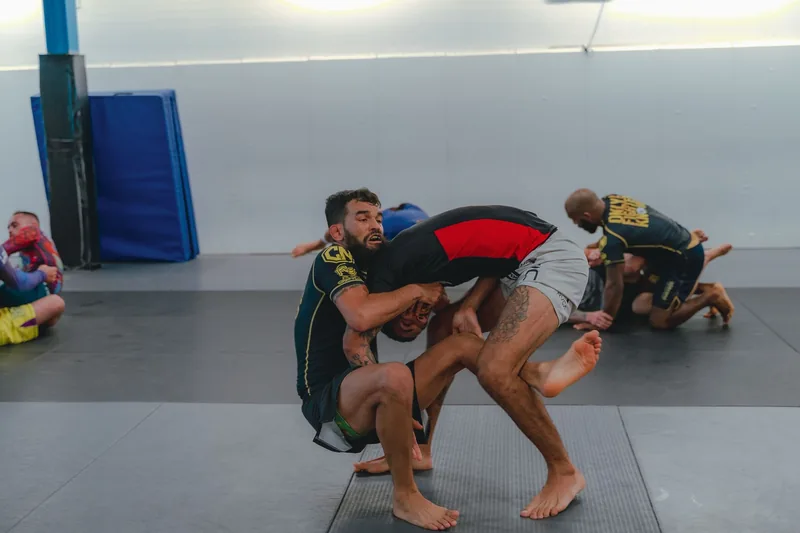
Yes. Both arts are traditionally practiced in a gi, and gripping the jacket and pants is central to setting up throws in judo and controlling positions in BJJ. BJJ also has a popular “no-gi” format using a rash guard and shorts, which changes the grips and speeds the pace up considerably.