

TaeKwonDo is one of the most widely practiced martial arts in the world — an Olympic sport, a self-defense system, and a complete physical discipline built around speed, power, and Korean martial philosophy. But for most people who haven’t trained in a dojo, the question “what is TaeKwonDo?” gets answered with a vague reference to high kicks and board-breaking. There’s a lot more to it than that.
This guide covers everything a beginner needs to understand TaeKwonDo: its origins, what training actually looks like, how the belt system works, and whether it’s right for you.
The Meaning Behind the Name
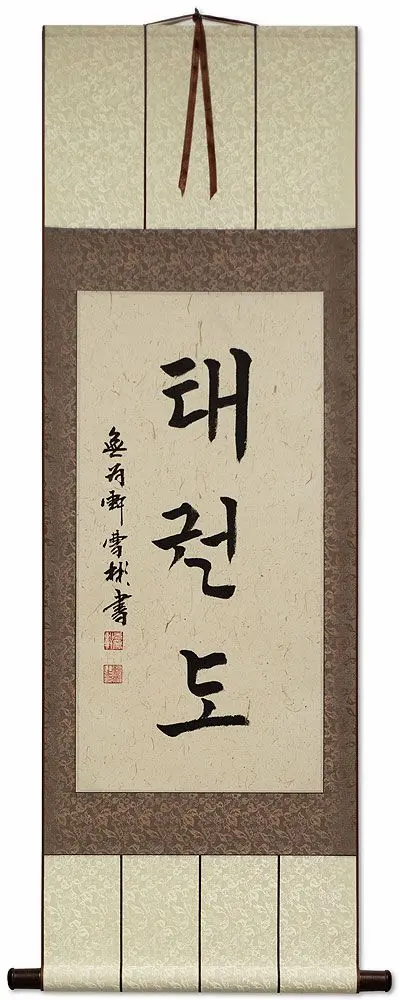
TaeKwonDo breaks down into three Korean words: Tae (발, foot or kick), Kwon (권, fist or punch), and Do (도, way or path). Together: “the way of the foot and fist.” That translation captures the technical emphasis of the art — kicks and hand techniques — but the Do at the end signals something deeper than combat sport.
In traditional Korean martial arts, the Do suffix means the art is a path of self-cultivation, not just a fighting method. TaeKwonDo’s official tenets — courtesy, integrity, perseverance, self-control, and indomitable spirit — aren’t just words on a wall. They’re what instructors like KwanJangNim K.O. Spillmann have built entire training systems around. After 50+ years of teaching in Gallatin, TN, the philosophy behind the art is inseparable from the technique.
A Brief History of TaeKwonDo
TaeKwonDo’s modern form emerged in post-WWII Korea. When Japan’s occupation ended in 1945, Korean martial artists — many of whom had trained in Japanese karate and Chinese martial arts during the occupation — began rebuilding a distinctly Korean fighting tradition. They drew from ancient Korean kicking arts like Taekkyeon and Subak, combined with the technical rigor of modern martial arts training.
In 1955, masters from Korea’s major martial arts schools (kwans) convened to unify their methods under a single name: TaeKwonDo. The General Choi Hong Hi, widely credited with formalizing the art, wanted it to represent Korean national identity and philosophy — not just a fighting system borrowed from occupiers. Over the following decades, TaeKwonDo spread globally at a pace few martial arts have matched. It became an Olympic demonstration sport in 1988 at the Seoul Games and earned full medal status at the Sydney 2000 Olympics.
At Global Martial Arts USA, our lineage traces through the Jidokwon — one of the original founding schools — giving our TaeKwonDo program a direct connection to the art’s authentic Korean roots. If you’re curious how TaeKwonDo compares to other striking arts from the same era, our TaeKwonDo vs. karate breakdown covers the differences in depth.
What TaeKwonDo Training Actually Looks Like
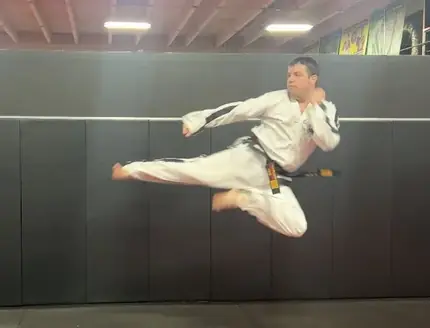
A TaeKwonDo class covers several interconnected areas of training. You won’t just stand in line throwing kicks at air — though kicking drills are a foundational part of every session.
Kicks. TaeKwonDo’s signature contribution to martial arts is its kicking arsenal. Front kicks, roundhouse kicks, sidekicks, back kicks, spinning heel kicks, jumping kicks — the curriculum is extensive. Developing fast, powerful, and accurate kicks requires flexibility, timing, and explosive hip movement. Students work on this progressively, starting with the basics before advancing to combinations and jumping/spinning variations.
Forms (Poomsae). Poomsae are choreographed sequences of techniques — kicks, blocks, strikes, and stances performed in a precise pattern. Each belt rank has corresponding forms that encode the art’s principles into muscle memory. Forms training teaches body mechanics, focus, and precision without requiring a sparring partner. They’re also central to belt testing and tournament competition.
Sparring. Controlled sparring develops timing, distance management, and the ability to apply techniques under pressure. GMA sparring emphasizes control and technique — not full-contact brawling. Beginners start with light contact and basic combinations before progressing to more dynamic exchanges. Protective gear (headgear, gloves, chest protector, shin guards) is standard for sparring sessions.
Self-defense applications. Beyond the sport side, TaeKwonDo training at GMA covers practical self-defense: how to use kicks to control distance and create space, how to respond to grabs and wrist holds, and how to use TaeKwonDo’s striking tools in real situations. Our TaeKwonDo program is built on 50+ years of teaching these principles to students across Gallatin and Sumner County.
The TaeKwonDo Belt System
TaeKwonDo uses a colored belt ranking system that progresses from white belt (beginner) through a series of colored ranks before reaching black belt. The exact colors and the number of intermediate ranks vary slightly between schools and governing bodies, but the general progression at GMA follows the traditional Jidokwon curriculum.
White belt represents the beginning — a clean slate, ready to absorb training. As students earn colored belts, they take on increasingly demanding poomsae, more complex kicking combinations, and greater self-defense understanding. Each rank tests both technical skill and character development — the philosophical tenets matter as much as the kicks. For a detailed breakdown of how colored belts work across Korean martial arts, our martial arts belt ranking system guide explains each level.
Black belt in TaeKwonDo is the beginning of mastery — not its end. It means a student has absorbed the foundational curriculum and is ready for serious study. Black belts at GMA continue training under KwanJangNim Spillmann, earning degrees (dan ranks) that reflect deepening expertise over years and decades of practice.
Is TaeKwonDo Good for Self Defense?
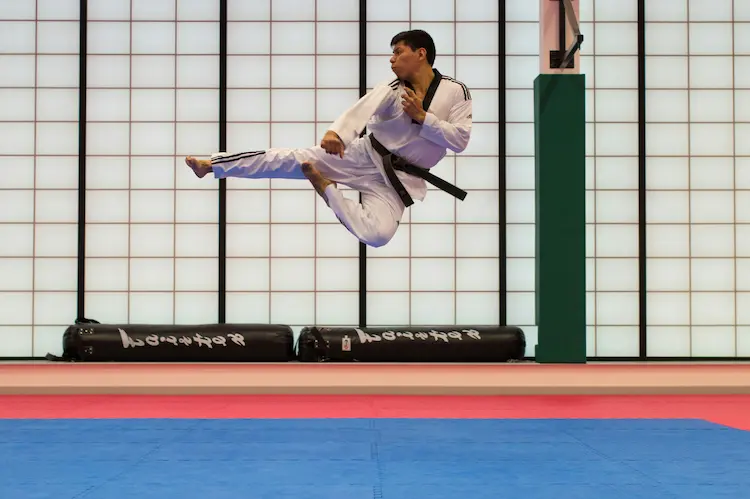
TaeKwonDo is a highly effective tool for self-defense — with one important caveat. Kicks are powerful and can create significant distance between you and an attacker, which is often exactly what you want. A well-timed TaeKwonDo sidekick stops aggression at range before a confrontation escalates. The speed, footwork, and explosive movement developed through years of TaeKwonDo training translate directly into real-world defensive capability.
That said, most modern self-defense trainers — including KwanJangNim Spillmann — acknowledge that no single martial art covers every scenario. Real altercations can go to the ground, involve multiple attackers, or close to clinch range where long kicks become less effective. This is why GMA’s curriculum pairs TaeKwonDo with HapKiDo (joint locks, throws, close-range control) and Brazilian Jiu Jitsu (ground fighting). Students who cross-train across disciplines develop genuinely complete self-defense capability — not just a sport game.
If you’re focused on practical self-defense, our HapKiDo program and self-defense classes complement TaeKwonDo training directly. Many GMA students train in multiple disciplines simultaneously.
Ready to Get Started?
Your first class is free. Whether you’re a complete beginner or an experienced martial artist, we’d love to welcome you to the GMA family.
Call us at (731) 324-3847 or book your free trial online.
Frequently Asked Questions
Is TaeKwonDo good for beginners?
TaeKwonDo is well-suited for beginners of all ages and fitness levels. Instructors start students with foundational stances, basic kicks, and introductory forms before progressing to more complex material. You don’t need flexibility or prior martial arts experience — both develop through consistent training. At GMA, beginner classes in Gallatin, TN are structured to build confidence alongside technique from day one.
How long does it take to earn a black belt in TaeKwonDo?
Most dedicated students earn their black belt in TaeKwonDo within 3 to 5 years of consistent training, though this varies significantly based on how often you train and your individual progression. GMA doesn’t rush rank advancement — black belt at this school means something. Students are evaluated on both technical ability and character development, which takes time to develop properly.
What’s the difference between TaeKwonDo and other martial arts?
TaeKwonDo specializes in fast, powerful kicks — roughly 70–80% of Olympic competition scoring comes from kicking techniques. Compared to karate (which balances hand and foot techniques) or HapKiDo (which emphasizes joint locks and throws), TaeKwonDo develops exceptional kicking power, flexibility, and range management. It’s one of the best striking arts for creating distance and controlling confrontations before they escalate to close range.