
Tai chi for beginners can feel like stepping into a completely different world. The slow, flowing movements look nothing like what most people picture when they think of martial arts — but that quiet power is exactly what makes tai chi one of the most effective practices for building balance, reducing stress, and improving long-term health. At Global Martial Arts USA in Gallatin, TN, we’ve taught tai chi to students of every age and fitness level for over 50 years. Whether you’re 25 or 75, you don’t need any experience to start.
This guide covers everything a beginner needs to know — what tai chi actually is, what your first class looks like, the foundational movements you’ll learn, and the health benefits backed by research. By the end, you’ll have a clear picture of what to expect and how to take your first step.
What Is Tai Chi and Where Does It Come From?
Tai chi (sometimes written as taiji) is a Chinese martial art that dates back several centuries. It was originally developed as a combat system, but over time evolved into a practice that blends self-defense techniques with deep breathing, meditation, and slow, deliberate movement. Every posture in tai chi has a martial application — the graceful arm sweep that looks like a dance move is actually a block, redirect, or strike performed at reduced speed.
The style most commonly taught to beginners is Yang Style Tai Chi, known for its smooth, expansive movements and accessible pace. At GMA, our program is rooted in Yang Style because it offers the best entry point for new students while still teaching authentic martial principles. The movements are performed standing, with soft knees and relaxed shoulders, creating a low-impact workout that strengthens your body from the inside out.
What to Expect in Your First Tai Chi Class
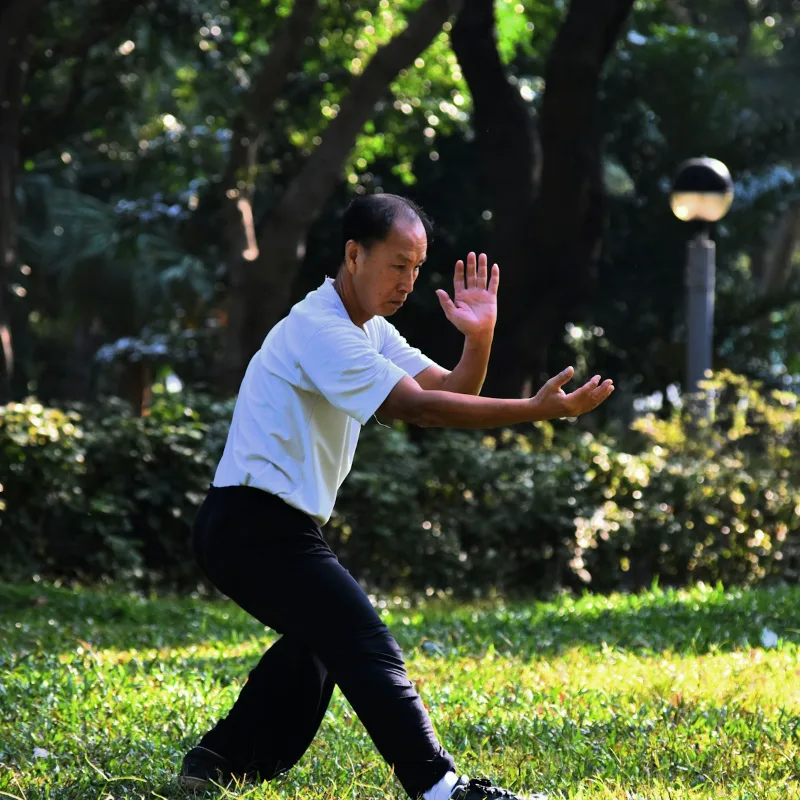
Walking into any martial arts class for the first time can feel intimidating, but tai chi is one of the most welcoming environments you’ll find. There’s no sparring, no high kicks, and no pressure to keep up with advanced students. A typical beginner class at GMA starts with a brief warm-up — gentle stretches, breathing exercises, and basic stance work to get your body aligned and your mind focused.
From there, the instructor introduces foundational movements one at a time. You’ll practice weight shifts, stepping patterns, and arm movements at a pace that allows your body to absorb each position naturally. Classes typically run 45 to 60 minutes, and most beginners report feeling more relaxed and centered afterward — even on their very first day.
You don’t need special equipment to start. Wear comfortable, loose-fitting clothing and flat-soled shoes (or go barefoot if the studio allows it). There’s no uniform requirement for beginners, though many students eventually train in traditional martial arts attire. If you’re curious about the terminology you’ll hear, our martial arts terminology glossary covers many of the terms used across disciplines at GMA.
Foundational Tai Chi Movements Every Beginner Should Know
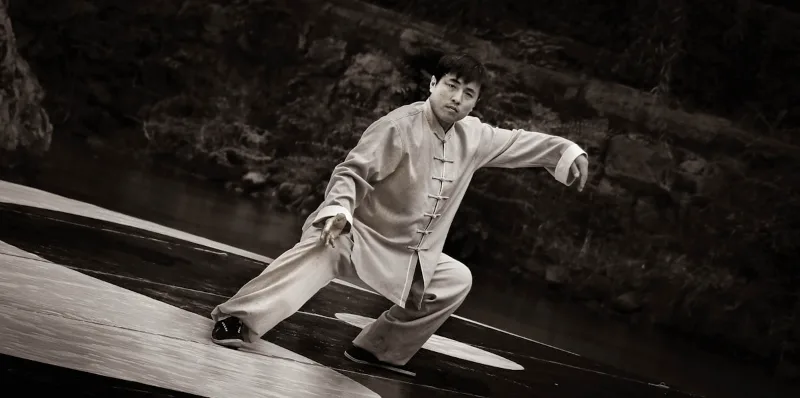
Tai chi forms are sequences of connected movements performed in a specific order. The most widely practiced beginner sequence is the 24 Form (also called the Beijing Form or Simplified Form), which condenses the longer traditional forms into a manageable set of movements that teach all the core principles.
A few foundational movements you’ll encounter early in your training:
Commencement — the opening posture. You stand with feet shoulder-width apart, slowly raise your arms to shoulder height with relaxed wrists, then lower them back down. This simple movement teaches you to coordinate breath with motion and find your center of gravity.
Parting the Wild Horse’s Mane — a stepping movement where your arms separate in opposite directions as you shift your weight forward. This teaches you to move your entire body as one connected unit, with power rooted in the legs and expressed through the hands.
Wave Hands Like Clouds — a side-stepping movement where your hands pass across your body in alternating arcs. It develops coordination, balance, and the ability to stay grounded while moving laterally.
None of these movements require strength, speed, or flexibility beyond what a healthy adult can manage. The challenge in tai chi is internal — learning to relax muscles you didn’t know were tense, coordinating your breathing with your movement, and developing the body awareness to feel where your weight is at any given moment.
Health Benefits of Tai Chi for Beginners
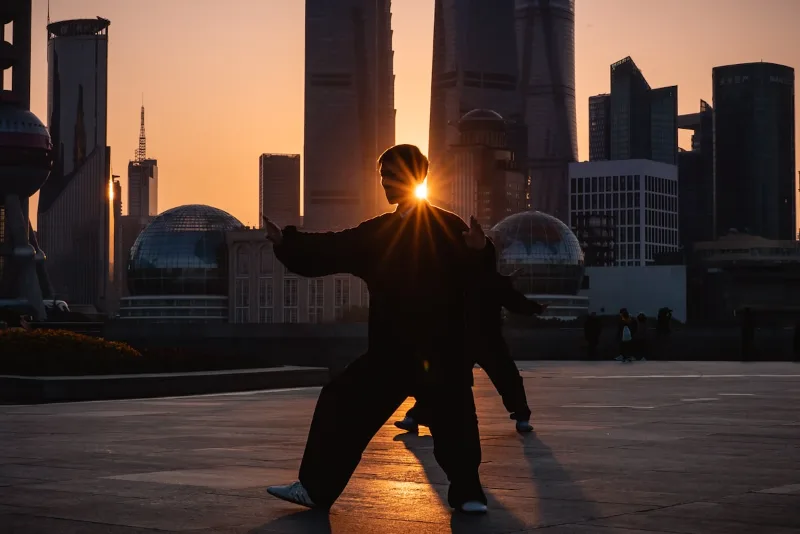
Research consistently supports what tai chi practitioners have known for centuries. A 2019 meta-analysis published in the British Journal of Sports Medicine found that tai chi significantly improves balance, reduces fall risk in older adults, lowers blood pressure, and decreases symptoms of anxiety and depression. The practice also shows promise for managing chronic pain conditions, including arthritis and fibromyalgia.
For beginners specifically, the benefits often show up faster than expected. Within the first few weeks of regular practice, most students notice improved posture, better sleep quality, and a calmer response to daily stress. Because tai chi is low-impact and self-paced, it’s accessible to people recovering from injuries, managing chronic conditions, or simply looking for a sustainable exercise practice that won’t break down their joints over time.
GMA’s tai chi program in Gallatin, TN is taught by instructors with decades of experience in both the health and martial applications of the art. That dual perspective matters — understanding why each movement exists helps students practice with intention rather than just copying shapes. Our school has been voted the top martial arts school in Sumner County, and our tai chi classes reflect the same standard of instruction that defines every program we offer.
How to Start Your Tai Chi Practice
The single best thing a beginner can do is show up to a class. Videos and books can supplement your learning, but tai chi is a physical skill that requires real-time feedback from a qualified instructor. Small adjustments to your posture, weight distribution, and hand position make the difference between a movement that works and one that’s just an empty gesture.
When choosing a school, look for instructors with verifiable credentials and a curriculum that teaches tai chi as a complete system — not just the physical movements, but the breathing methods, martial applications, and philosophical principles that give the art its depth. At Global Martial Arts USA, we teach tai chi alongside TaeKwonDo, Brazilian Jiu Jitsu, HapKiDo, and other disciplines, giving students the option to explore multiple martial arts under one roof.
You don’t need to be flexible. You don’t need to be young. You don’t need any prior martial arts experience. Tai chi meets you exactly where you are and builds from there — one slow, intentional movement at a time.
Ready to Get Started?
Your first class is free. Whether you’re a complete beginner or an experienced martial artist, we’d love to welcome you to the GMA family.
Call us at (731) 324-3847 or book your free trial online.
Frequently Asked Questions
Can I learn tai chi at home as a beginner?
You can practice movements you’ve already learned in class, but starting at home without instruction makes it easy to develop habits that are difficult to correct later. A qualified instructor provides the real-time feedback that video tutorials cannot. Once you’ve built a foundation in class, home practice becomes a powerful supplement to your training.
How long does it take to learn the basic tai chi form?
Most beginners can learn the 24 Form movements within three to six months of consistent weekly practice. Learning the physical sequence is the first step — refining your breathing, relaxation, and internal awareness is a lifelong process that deepens with every session.
Is tai chi a real martial art?
Yes. Tai chi was developed as a combat system, and every movement in the form has a martial application. The slow practice method trains body mechanics, timing, and sensitivity that translate directly to self-defense. At GMA, our instructors teach both the health and martial sides of tai chi so students understand the full depth of what they’re practicing.