
Ask ten people to settle MMA vs boxing vs karate and you’ll get ten answers, most of them about who would win a fight. That’s the least useful way to compare them. These three aren’t competing versions of the same thing — they’re built around different rules, different goals, and different ideas about what a fight even is. Understanding that difference tells you far more than any hypothetical matchup.
At Global Martial Arts USA in Gallatin, TN, we’ve been teaching striking and grappling arts for more than 50 years, and the question we hear most from adults isn’t “which style is best?” It’s “which one is right for me?” This guide breaks down what each style actually trains, where each one is strongest and weakest, and how to pick the path that matches what you’re after.
MMA vs Boxing: Two Very Different Rulesets
The cleanest way to understand MMA vs boxing is to look at what each ruleset permits, because the rules shape everything — the techniques, the stance, the training, even the body type that thrives.
Boxing allows punches to the head and body, and nothing else. That constraint is not a weakness; it’s what produces the finest hands in combat sports. Because a boxer never has to defend a kick or a takedown, they can stand square and low, slip punches by inches, and develop head movement and footwork at a level no other sport matches. Boxing also delivers the best conditioning-per-hour of the three, and it’s the most beginner-legible: two hands, one range, endless depth.
Mixed martial arts opens the ruleset back up. Punches, kicks, knees, elbows, clinch work, takedowns, and ground submissions are all live, which means an MMA fighter can never fully commit to any one range. Stance is more upright and bladed to defend kicks and takedowns. That deep boxing head movement becomes risky, because ducking into a knee ends fights. MMA trades boxing’s depth in one range for competence across every range.
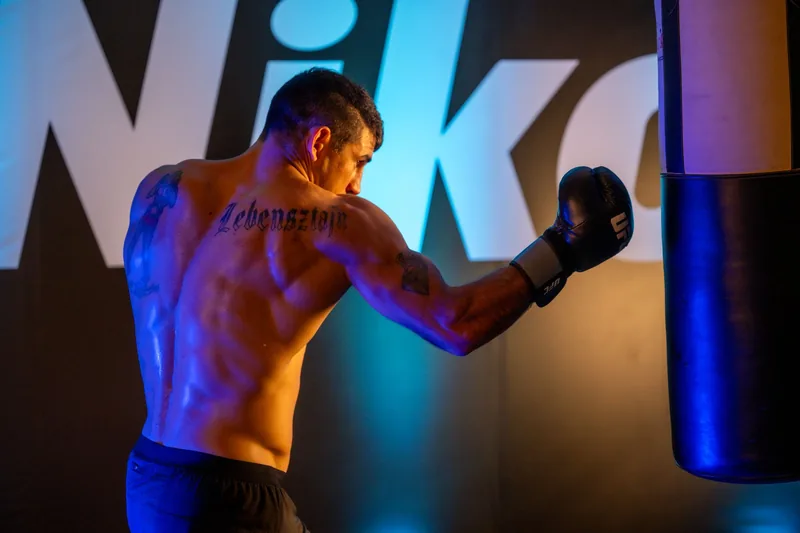
Neither is “better.” A boxer moved into MMA rules is exposed to leg kicks and takedowns they’ve never trained against. An MMA fighter in a boxing ring is usually outclassed on pure hands by a specialist. The ruleset decides the winner more often than the athlete does — which is exactly why comparing them as if they’re interchangeable misses the point.
Where Karate Fits: Traditional Striking, Different Purpose
Karate is the odd one out here, because it wasn’t built as a sport at all. It’s a traditional striking art from Okinawa and Japan, organized around forms, precise technique, distance control, and the explosive single strike. Competition karate scores clean, controlled contact — which rewards timing, blitzing entries, and the ability to close and exit distance faster than your opponent can react.
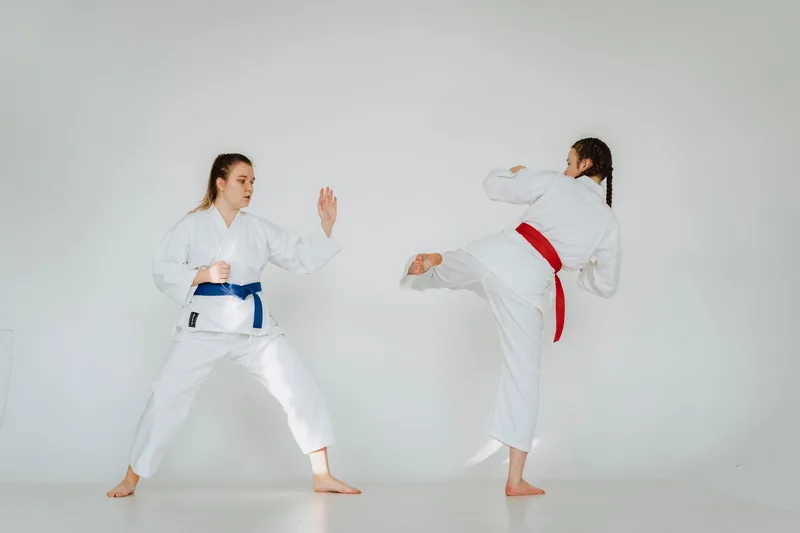
What karate develops better than the other two is the long-range game: linear entries, sharp footwork, and the discipline to strike once with full commitment rather than trading. Its trade-off is that point-scoring formats can teach habits — pulling strikes, resetting after contact, ignoring the clinch — that don’t transfer cleanly to a continuous fight.
Karate and Korean striking arts share a lot of that DNA, which is why the comparison people search for most often is TaeKwonDo vs karate. Both prize precision, forms, and distance. TaeKwonDo simply leans harder into kicking range and hip mechanics, and that kicking foundation is one of the most transferable striking skills into an MMA context — several of the most effective strikers in modern MMA came up through Korean and Japanese striking arts before they ever put on a glove.
How the Three Compare Where It Matters
Range. Boxing owns close-to-mid punching range. Karate owns long range and the entry into it. MMA has to cover both, plus clinch and ground.
Self defense. Boxing gives you the fastest usable hands, and hands solve most real confrontations. Karate gives you distance management and the confidence to keep it. MMA covers the phase both of them skip — what happens when a fight ends up on the ground, which is where a large share of real altercations go. Grappling ability is the single biggest gap in a striking-only skill set.
Learning curve. Boxing is the fastest to become functional in. Karate takes longer to feel effective but builds body control and discipline earlier. MMA has the steepest curve, because you’re learning several arts at once — which is why MMA training for beginners works best when you pick one base and layer the rest on top instead of trying to absorb everything in month one.
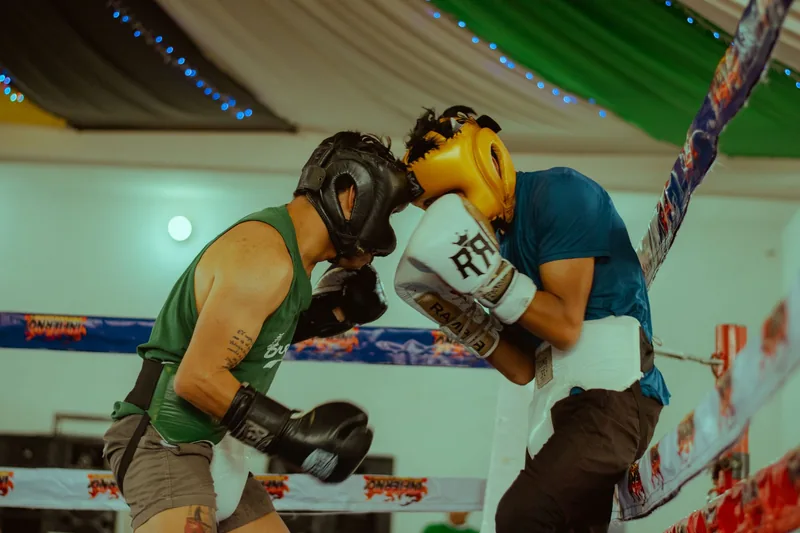
Injury and longevity. All three carry risk. Boxing concentrates repeated head contact in sparring; MMA spreads risk across joints, ligaments, and the head; traditional karate training, with its controlled-contact formats, is often the gentlest way to train striking over decades.
Which Fighting Style Should You Train?
Start from your goal, not from which style wins arguments.
If you want conditioning and hands, start with striking fundamentals. If you want the complete picture, you need striking and grappling — that’s the honest answer, and it’s the one the MMA ruleset exposed thirty years ago. Our TaeKwonDo program builds the kicking range, balance, and hip mechanics most beginners are weakest at, and Brazilian Jiu Jitsu covers the ground phase that no striking art addresses. Students who want to go deeper into grappling can explore our dedicated BJJ program at GMA Team.
If close-range striking and structure appeal to you more than sport competition, Wing Chun trains the trapping range that both boxing and karate largely leave alone.
Training the Full Skill Set in Gallatin, TN
GMA doesn’t run a cage-fighting program. What we run is every discipline mixed martial arts is built from, taught separately by instructors who specialize in each one — striking through TaeKwonDo under a 9th Degree Black Belt, ground fighting through IBJJF black belt Brazilian Jiu Jitsu instruction, joint locks and throws through HapKiDo, and close-range work through Wing Chun. Our staff is Safe Sport Certified, and GMA has been voted a top school in Sumner County across more than 50 years teaching families here.
For most adults that’s the better path anyway: you learn each art properly instead of a diluted sampler of all of them, and the mixed skill set assembles itself over a year or two without you ever having to choose a single camp. Not sure where to begin? Explore our full class lineup or view our class schedule and try the one that sounds like you.
Ready to Get Started?
Your first class is free. Whether you’re a complete beginner or an experienced martial artist, we’d love to welcome you to the GMA family.
Call us at (731) 324-3847 or book your free trial online.
Frequently Asked Questions
Is MMA better than boxing for self defense?
For most real situations, MMA covers more ground — specifically the clinch and the floor, which boxing never trains. Boxing’s advantage is that its core skill, hitting and not getting hit, becomes usable faster than almost anything else. The strongest self defense base is striking plus grappling, which is why we recommend pairing a striking art with Brazilian Jiu Jitsu rather than picking one and stopping there.
Can a karate practitioner beat a boxer?
It depends almost entirely on the ruleset. Under boxing rules, a karateka loses their kicks and their preferred range and is at a serious disadvantage. Under open rules, karate’s long-range entries and kicking arsenal give a boxer a problem they’ve never trained to solve. Skill level and training intensity decide most matchups long before style does.
Which style is best for a complete beginner?
Pick the one you’ll actually attend twice a week. Consistency beats style selection by a wide margin in the first year. If you want the fastest functional striking, start with a striking art; if you want the biggest skill gap in most people’s game closed, start with grappling. You can add the other later — most of our students do.