
The benefits of martial arts training reach further than most people expect. Yes, you get fit. But students who walk through the doors of a martial arts school — whether they’re 6 or 66 — consistently report changes that go well beyond physical conditioning: sharper focus, real confidence, a sense of community, and a mental resilience that carries into every corner of their lives.
At Global Martial Arts USA in Gallatin, TN, we’ve been watching those changes happen for 50+ years. This guide breaks down exactly what the research and our experience show about the full-spectrum benefits of martial arts — for your body, your mind, and your sense of purpose.
Physical Fitness Benefits of Martial Arts
Most people who start martial arts training aren’t looking for a gym workout — but they end up getting one of the best full-body conditioning programs available. A typical class combines cardiovascular endurance work (footwork drills, pad rounds, sparring), strength and power development (stances, kicks, throws), and flexibility training (warm-ups, joint mobility work). You’re building all three simultaneously, which most conventional workouts don’t do.
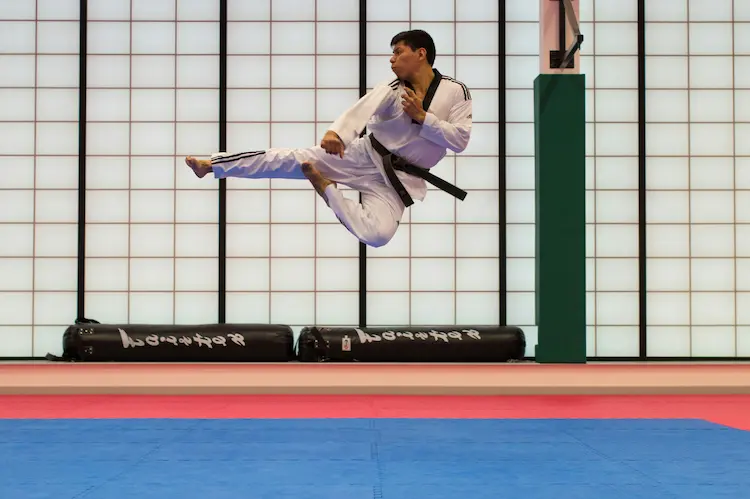
The physical payoff varies by discipline. TaeKwonDo builds explosive leg strength and cardiovascular fitness through high-velocity kicking. Brazilian Jiu Jitsu develops total-body strength and grip endurance through rolling. Tai Chi, at the other end of the spectrum, builds deep core stability, balance, and joint health through slow, deliberate movement — which is why it’s often prescribed for fall prevention in older adults. The common thread is that every style demands something from your body and delivers measurable returns.
Unlike a treadmill or weight room routine, martial arts training adapts naturally to the practitioner. A 12-year-old working toward their first black belt and a 65-year-old starting Tai Chi for the first time are both doing martial arts — just at different intensities with different outcomes. The structure meets you where you are.

Mental Discipline and Stress Relief
The mental benefits of martial arts training are harder to measure than a lower resting heart rate, but they may be more lasting. Training requires and builds focus in a way that’s almost impossible to replicate elsewhere. When you’re drilling a technique, sparring, or working through a form, there’s no room for distraction — the task in front of you demands your full attention. That sustained focus, practiced over weeks and months, rewires how you handle mentally demanding situations outside the dojang or training floor.
Stress reduction is the other major mental health benefit consistently reported by martial arts practitioners. Physical exertion clears cortisol. The structured, goal-oriented nature of training gives the mind a constructive outlet. And the social environment of a good martial arts school — where people show up, push each other, and celebrate progress together — provides genuine human connection that combats isolation. Research on the science behind these effects is growing; a 2023 review published in Frontiers in Psychology found significant associations between martial arts practice and reduced anxiety, improved self-esteem, and better stress management across age groups.
For a deeper look at the science behind movement and mental wellness, our post on Tai Chi benefits and what the research shows covers the most well-studied discipline in this area — the findings apply more broadly than you might expect.
Confidence and Character Development
Confidence built in a martial arts school is earned, not handed out. You set a goal — a belt rank, a technique, a competition — and you work for it. Some weeks it comes easily. Other weeks you get tapped out, miss your target, or just feel slow. Learning to show up anyway, to keep refining, and to eventually break through a plateau is an experience that changes how you see yourself. That’s not a motivational poster concept — it’s what happens when you earn a belt you struggled toward for eight months.
The character development is built into the structure of traditional martial arts. Respect for instructors, for training partners, for the art itself — these aren’t incidental to the curriculum, they are the curriculum. At GMA, our 9th Degree Black Belt KwanJangNim K.O. Spillmann has taught the same values for over five decades: discipline, humility, perseverance, and respect. Those aren’t traits students memorize from a poster on the wall. They’re things students practice on the mat every class until they become second nature.
This is especially powerful for younger students. Kids who train in martial arts consistently show improved self-regulation, better conflict resolution skills, and higher academic performance in independent studies. The correlation isn’t a surprise to anyone who has watched a child go from shy and uncertain at their first class to leading warm-ups as a senior belt two years later.
Martial Arts for Every Stage of Life
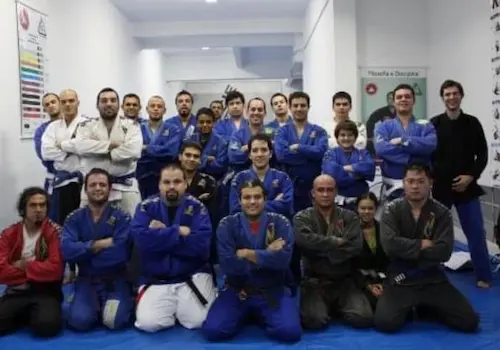
One of the most persistent misconceptions about martial arts is that you have to start young or already be athletic. Neither is true. GMA has students who began training in their 50s and 60s and went on to earn black belts. Our Tai Chi program specifically serves an older adult population looking for low-impact movement with real health outcomes — and it delivers them consistently.
For kids, the benefits start almost immediately: better coordination, attention span, listening skills, and a social environment built around positive peer relationships rather than competitive social hierarchies. For adults, martial arts training often fills a gap that’s hard to name — a physical challenge with a clear progression, a community that shows up consistently, and a practice that demands your full presence. For seniors, the benefits include fall prevention, joint mobility, and the cognitive engagement of learning new movement patterns. And for everyone, there’s the motivating factor of a structured curriculum with visible milestones.
If you’re fueling an active training regimen, recovery nutrition matters too. GMA Warrior Supplements offers training-focused products designed to support energy and recovery for martial artists at every level.
The full range of GMA’s programs — from TaeKwonDo and BJJ to Tai Chi and Wing Chun — is available at our All Classes page. Whether you’re brand new or returning to training after years away, there’s a program designed for where you are right now.
Ready to Get Started?
Your first class is free. Whether you’re a complete beginner or an experienced martial artist, we’d love to welcome you to the GMA family.
Call us at (731) 324-3847 or book your free trial online.
Frequently Asked Questions
How long before I see the benefits of martial arts training?
Most students notice changes in energy, focus, and coordination within the first four to six weeks of consistent training. Physical fitness improvements — endurance, flexibility, strength — typically become measurable after two to three months. The deeper benefits, like confidence and mental resilience, develop over a longer arc of training but often show up in unexpected moments outside the gym well before students consciously recognize them.
Can adults start martial arts with no prior experience?
Absolutely. The majority of GMA’s adult students started with no martial arts background. Our programs are structured to meet beginners where they are — there are no prerequisites for any of our classes. Adults who start later often progress more intentionally than younger students because they’re choosing to be there and have the mental focus to apply feedback quickly.
What martial art has the most health benefits?
Every martial art delivers meaningful health benefits — the “best” one is the one you’ll actually train consistently. That said, different styles excel in different areas: Tai Chi has the strongest clinical research base for balance, stress reduction, and chronic disease management; TaeKwonDo offers among the highest cardiovascular demands; BJJ is exceptional for functional strength and problem-solving under pressure. At GMA, you have access to all of these under one roof — and our instructors can help you find the right fit for your specific goals.