
Most people think of heart exercise as something that leaves you gasping — running, cycling, a sweat-soaked spin class. So it surprises a lot of people that one of the best-studied forms of movement for the cardiovascular system is slow enough to do in street shoes. Tai chi for heart health has been tested in randomized trials on high blood pressure, heart failure, and cardiac rehabilitation, and the results are steady enough that cardiologists increasingly mention it by name. At Global Martial Arts USA in Gallatin, TN, many of our tai chi students first walked in because a doctor told them to “find something gentle and stick with it.”
This guide explains how a slow martial art can affect the heart and blood vessels, what the strongest studies actually found, who stands to benefit most, and how to start safely — especially if you already have a heart condition.
How a Slow Practice Can Help Your Heart
Tai chi works on the cardiovascular system through two routes at once. The first is physical. A full form keeps you moving continuously for 10 to 20 minutes or more, with your knees bent and your weight shifting from leg to leg the entire time. That sustained, low-to-moderate effort raises your heart rate gently and keeps the large muscles of the legs pumping — which helps return blood to the heart and gives the vascular system steady, repeatable work.
The second route is the nervous system. Every movement is paced to slow, deep, diaphragmatic breathing. That breathing pattern nudges the body away from its stress response — the “fight or flight” state that tightens blood vessels and pushes blood pressure up — and toward the calmer parasympathetic state where the heart can relax. It is the same mechanism behind the effects we described in our guide to tai chi for anxiety and stress relief, and for blood pressure it matters a great deal: chronic stress is one of the quieter drivers of hypertension.
Put those together and you get something unusual: a workout that trains the heart while actively lowering the stress load on it. Ordinary cardio does the first. Tai chi does both.
Tai Chi and Blood Pressure: What the Research Shows
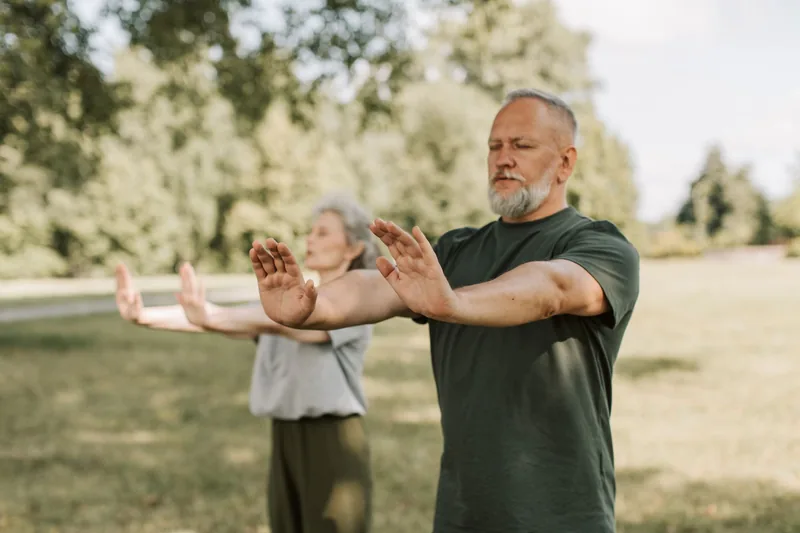
Blood pressure is where the evidence for tai chi for heart health is strongest. The most convincing study to date was published in JAMA Network Open in 2024. Researchers at two hospitals in China randomly assigned 342 adults with prehypertension — systolic pressure of 120 to 139 or diastolic of 80 to 89 — to either tai chi or aerobic exercise such as brisk walking, jogging, or cycling. Both groups trained four times a week, an hour per session, for a full year.
Both groups improved, which is a good reminder that any regular exercise helps. But tai chi did better. After 12 months, systolic pressure fell by about 7 points in the tai chi group versus about 4.6 points in the aerobic group, and 24-hour ambulatory readings also dropped more with tai chi. A few points may not sound dramatic, but at the population level even small sustained drops in systolic pressure are associated with meaningfully lower risk of stroke and heart disease — and prehypertension is exactly the stage where catching the trend early matters most.
Earlier, smaller trials and reviews point in the same direction for people who already have high blood pressure, though their quality varies more. The honest summary: tai chi reliably helps blood pressure, it compares well with conventional cardio, and it is not a substitute for medication your doctor has prescribed. If you are on blood pressure medication, keep taking it and let your physician decide whether anything changes as your readings improve.

Tai Chi for Heart Failure and Cardiac Recovery
For people living with heart disease, the question is less about prevention and more about getting back to living. Here the research is more nuanced, and worth reading carefully. In 2011, a Harvard-affiliated team published a randomized trial in Archives of Internal Medicine with 100 patients who had chronic systolic heart failure. Half did 12 weeks of twice-weekly tai chi; the other half attended heart-health education sessions.
Tai chi did not improve the standard fitness tests — six-minute walk distance and peak oxygen uptake were about the same in both groups. What it did improve was how patients felt and functioned: quality-of-life scores, mood, and confidence in their ability to exercise all improved significantly more in the tai chi group. For someone with heart failure, that confidence is not a small thing. Fear of exertion keeps many cardiac patients sedentary, and sedentary living makes nearly every heart condition worse.
That is the realistic role for tai chi after a cardiac diagnosis: a safe, approachable way to move regularly, rebuild trust in your body, and complement — never replace — a formal cardiac rehabilitation program. Always get clearance from your cardiologist before starting.
Who Benefits Most from Tai Chi for Heart Health
Tai chi tends to deliver the most for people who will not or cannot do traditional high-intensity cardio. That includes:
- Adults with elevated or borderline blood pressure who want a habit they can keep for years, not weeks.
- Older adults for whom running or jumping is hard on the joints — our guide to tai chi for seniors covers chair-supported and standing options.
- People recovering from a cardiac event who have been cleared to exercise and want something gentle to build on.
- High-stress professionals whose blood pressure climbs with their workload.
Consistency is the active ingredient. The trials above ran three months to a year with two to four sessions a week. A practice you enjoy and repeat will do more for your heart than an intense program you quit in February. That is a big reason tai chi works: students tend to stay with it.
Starting Tai Chi Safely When Your Heart Is a Concern
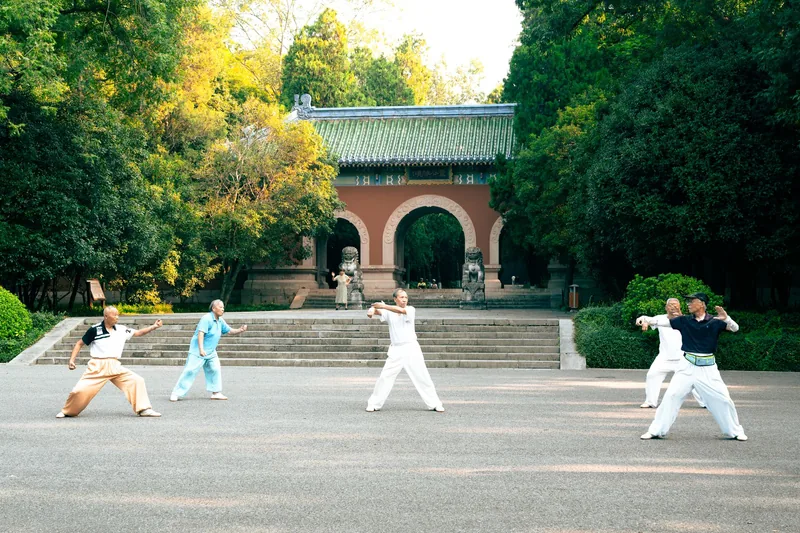
Talk to your doctor first, especially if you have a heart condition, take blood pressure medication, or have been told to limit exertion. Then start with a class rather than a video. Tai chi is gentle, but a good instructor will watch your stance depth, keep you breathing naturally (never holding your breath), and scale movements to how you feel that day. If you feel chest pain, unusual shortness of breath, or dizziness, stop and seek medical care.
At GMA, our tai chi classes are taught in the traditional Yang style under Grandmaster W. Vardeman, founder of the Golden Talon Kung Fu system with more than 50 years of martial arts experience. Beginners work at their own pace, and nobody is expected to arrive flexible or fit. If you are brand new, our tai chi for beginners guide walks through what your first class looks like, and our broader overview of tai chi benefits covers the research on balance, stress, and joint health. Heart health is also shaped by what happens outside class — sleep, stress, and nutrition — and some students choose to fuel their training with GMA Warrior Supplements (check with your doctor before adding any supplement if you take heart medication).
Global Martial Arts USA has served families in Sumner County for more than 50 years and has been voted the top martial arts school in the county. You can view the class schedule and pick a time that fits.
Ready to Get Started?
Your first class is free. Whether you’re a complete beginner or an experienced martial artist, we’d love to welcome you to the GMA family.
Call us at (731) 324-3847 or book your free trial online.
Frequently Asked Questions
Can tai chi lower blood pressure?
Yes, in most people who practice consistently. In a 2024 randomized trial of 342 adults with prehypertension, a year of tai chi lowered systolic blood pressure by about 7 points — more than aerobic exercise did in the same study. Results depend on how often you practice, and tai chi should complement, not replace, any medication your doctor prescribes.
Is tai chi safe for people with heart disease?
For most people with stable heart disease who have been cleared by their cardiologist, yes. It is low-impact and self-paced, and it has been studied in heart failure patients without safety concerns. Get medical clearance first, tell your instructor about your condition, and stop if you feel chest pain, dizziness, or unusual breathlessness.
How often should I do tai chi for heart health?
The studies that showed cardiovascular benefits used two to four sessions per week for at least 12 weeks, and the strongest blood pressure results came from a full year of practice. A practical target is two classes a week plus short sessions at home, kept up over months rather than weeks.