
You don’t need a gym membership, fancy equipment, or years of experience to start training like a fighter. A good martial arts workout builds strength, speed, coordination, and cardio all at once — and most of it can be done in your living room with nothing but your own bodyweight. If you’ve never thrown a punch or held a stance in your life, this guide is your starting point.
Below, we’ll walk through how to warm up safely, the foundational movements every beginner should drill, simple conditioning exercises that build a fighter’s body, and a sample routine you can follow today. We’ve coached complete beginners for over 50 years at Global Martial Arts USA in Gallatin, TN, and the same principles we use on the mat work just as well at home.
What a Beginner Martial Arts Workout Looks Like
A martial arts workout is different from a standard gym session. Instead of isolating one muscle at a time, you train movement patterns — rotating your hips into a punch, shifting your weight into a kick, staying light on your feet while your heart rate climbs. That combination of skill and conditioning is exactly why martial arts training transforms your fitness so quickly.
For beginners, the goal isn’t to look like a professional fighter on day one. It’s to build clean habits: a solid stance, balanced footwork, controlled breathing, and steady endurance. Master those, and every technique you learn afterward — whether in our TaeKwonDo program or any other discipline — becomes easier. Think of this workout as building the engine before you worry about the bodywork.
Aim for three sessions a week of 20 to 40 minutes. That’s enough to see real progress in coordination and cardio without burning out or risking injury. Consistency beats intensity every single time, especially in the first few months.
Step 1: Warm Up to Move Like an Athlete
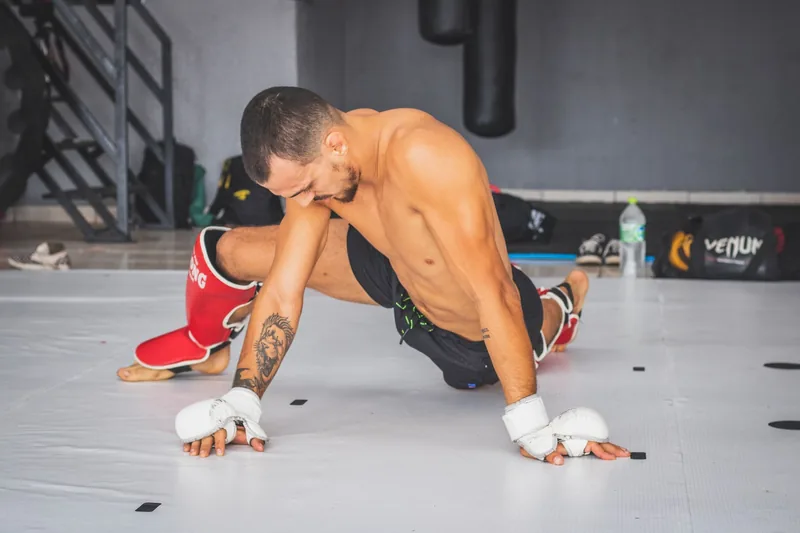
Never skip the warm-up. Cold muscles are tight muscles, and tight muscles tear. Spend five to ten minutes raising your body temperature and loosening the joints you’re about to use — hips, shoulders, ankles, and spine.
Start with two minutes of light movement: jogging in place, jumping jacks, or skipping rope if you have one. Then move into dynamic stretches — leg swings, arm circles, hip rotations, and slow, controlled high kicks against the air. The point is to take your joints through their full range of motion while they’re warm, not to hold long static stretches (save those for your cooldown). A proper warm-up also sharpens your focus, so you step into the workout ready to train with intent.
Step 2: Drill the Foundation — Stance, Footwork & Shadowboxing
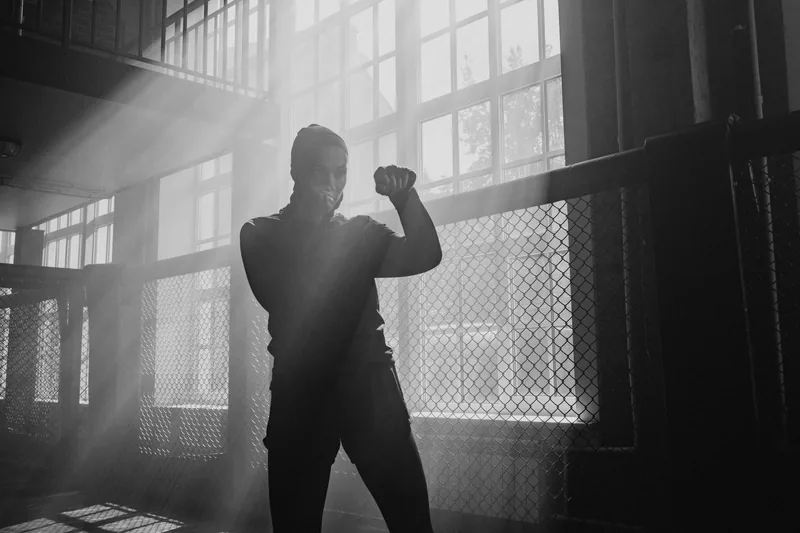
Every martial art starts with how you stand and how you move. Set your feet shoulder-width apart, lead foot forward, knees slightly bent, hands up to protect your face. This fighting stance is your home base — balanced enough to move in any direction and absorb contact without getting knocked over.
From there, practice simple footwork: step forward, step back, slide left, slide right, always returning to your stance. Stay on the balls of your feet and keep your movements small and quick. Once that feels natural, add shadowboxing — throwing punches and basic kicks at an imaginary opponent. Shadowboxing is the single best solo drill in any martial arts workout because it trains technique, speed, and cardio at the same time.
Begin with the basics: a jab, a cross, and a lead-leg front kick. Throw them slowly to groove the movement, then gradually speed up. Picture a real opponent in front of you and react to them — that mental engagement is what separates training from flailing. For more solo drills you can build into a full home program, see our guide to martial arts training at home.
Step 3: Conditioning Drills That Build a Fighter’s Body
Martial artists are some of the most well-rounded athletes on the planet because their conditioning targets strength, explosiveness, and endurance together. You can hit all three with bodyweight movements that require zero equipment.
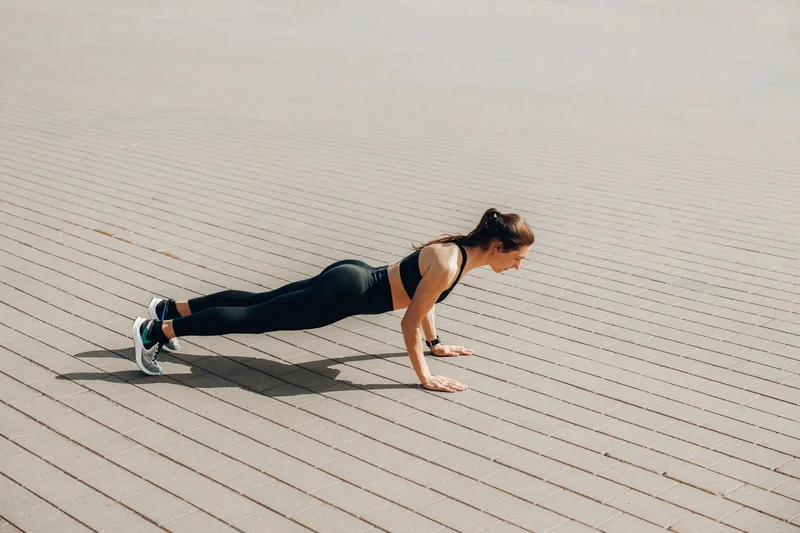
Push-ups build the pressing strength behind every punch. Squats and lunges develop the leg power and balance you need for strong kicks and a stable base. Planks and sit-ups forge the core that links your upper and lower body — and in martial arts, power comes from the core, not the arms. Burpees and mountain climbers spike your heart rate to mimic the explosive bursts of real sparring.
Try this circuit: 10 push-ups, 15 squats, 10 lunges per leg, a 30-second plank, and 10 burpees. Rest one minute, then repeat for three rounds. As you get stronger, add rounds or shorten the rest. This kind of conditioning is the backbone of any serious MMA workout and conditioning program, scaled down to a beginner-friendly starting point.
Putting It Together: A Simple 30-Minute Routine
Here’s how to combine everything into one beginner martial arts workout you can do three times a week:
Warm-up (5 minutes): light cardio plus dynamic stretches.
Technique rounds (10 minutes): two 3-minute rounds of footwork and shadowboxing, with a one-minute rest between. Throw jabs, crosses, and front kicks.
Conditioning circuit (10 minutes): three rounds of the bodyweight circuit above.
Cooldown (5 minutes): slow walking and static stretches for your hips, hamstrings, shoulders, and back.
Set a timer for the rounds so you train against the clock, just like a real class. Start at a pace you can sustain, and add intensity as your fitness improves over the weeks. If you ever feel sharp pain (not normal muscle fatigue), stop and rest. Training smart keeps you in the game long enough to actually get good.
Recovery, Nutrition, and Staying Consistent
The work you put in only pays off if you recover well. Sleep is where your body rebuilds, so prioritize seven to nine hours a night. Hydrate before, during, and after training, and give sore muscle groups a day to recover before hammering them again. Fueling your body properly matters too — lean protein, complex carbs, and plenty of water do far more for your progress than any supplement gimmick. If you want to dial in recovery and nutrition, fuel your training with GMA Warrior Supplements.
Most importantly, stay consistent. A home martial arts workout is a fantastic foundation, but training with experienced instructors and live partners is what takes your skills to the next level. You’ll get real-time feedback, learn to read an opponent, and push harder than you ever would alone. The benefits of martial arts training compound the longer you stick with it — in fitness, focus, and confidence. When you’re ready, explore our full class lineup and come train with us in Gallatin.
Ready to Get Started?
Your first class is free. Whether you’re a complete beginner or an experienced martial artist, we’d love to welcome you to the GMA family.
Call us at (731) 324-3847 or book your free trial online.
Frequently Asked Questions
Can I really learn a martial arts workout at home as a beginner?
Yes. The fundamentals — stance, footwork, shadowboxing, and bodyweight conditioning — can all be practiced safely at home with no equipment. A home routine builds the strength, coordination, and cardio that make learning techniques in class far easier. Just keep movements controlled, warm up properly, and progress gradually. To accelerate your skills, pair home training with classes where instructors can correct your form.
How often should I do a martial arts workout?
For beginners, three sessions a week of 20 to 40 minutes is ideal. That gives your body time to recover and adapt while building consistent progress in conditioning and technique. As your fitness improves, you can add sessions or increase intensity. Consistency over weeks and months matters far more than any single hard workout.
Do I need to be fit before starting martial arts?
Not at all. Martial arts training is one of the best ways to get fit in the first place — you build strength and endurance as you learn. At Global Martial Arts USA, we coach students of every fitness level and age, scaling the intensity to meet each person where they are. The only requirement is the willingness to start.