
Practicing tai chi at home is one of the simplest ways to bring more calm, balance, and gentle movement into your daily life — and you don’t need a studio, special equipment, or even much space to do it. A quiet corner of your living room, a few minutes each morning, and a willingness to slow down are all it takes to begin. At Global Martial Arts USA in Gallatin, TN, we’ve taught tai chi to students of every age for over 50 years, and we encourage everyone to keep practicing between classes. Home practice is where the real progress happens.
This guide covers how to set up a home practice, the foundational movements you can work on safely on your own, how to build a routine that sticks, and the honest limits of self-teaching. By the end, you’ll know exactly how to practice tai chi at home — and when it’s worth getting an instructor’s eyes on your form.
How to Set Up Your Tai Chi Home Practice
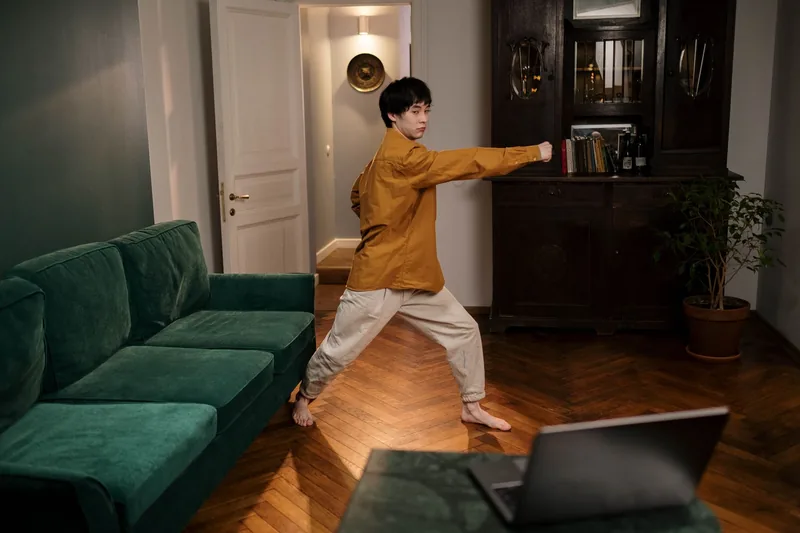
The beauty of tai chi is how little it asks of you. You need a flat, uncluttered area roughly the size of a yoga mat — enough room to step forward, back, and to the sides without bumping into furniture. A spot near an open window or in a quiet room works best, since tai chi is as much about settling your mind as moving your body. Many of our students practice tai chi at home first thing in the morning, when the house is still and the day hasn’t pulled them in ten directions yet.
Wear comfortable, loose clothing that lets you move freely, and flat-soled shoes or bare feet so you can feel your connection to the ground. You don’t need mirrors, mats, or any equipment. What matters far more than your setup is consistency — five focused minutes every day will build your skill faster than one long, distracted session once a week.
If you’ve never trained before, it helps to understand what tai chi actually is before you start moving. Our complete tai chi for beginners guide walks through the history, the styles, and what a first class looks like, giving you the context that makes home practice far more meaningful.
Foundational Movements You Can Practice Safely on Your Own
Not every part of tai chi requires a partner or an instructor standing beside you. Several foundational elements are safe, simple, and ideal for solo practice — and they build the exact body awareness that makes the full forms easier to learn later.
Standing posture (Wuji stance) — Stand with your feet shoulder-width apart, knees softly bent, spine tall but relaxed, and arms hanging naturally. Breathe slowly into your lower abdomen. Holding this stance for two or three minutes teaches you to relax muscles you didn’t know were tense and to find your center of gravity. It looks like doing nothing, but it’s the root of everything in tai chi.
Weight shifting — From a shoulder-width stance, slowly shift all your weight onto your right leg, then your left, keeping your upper body upright and your movements smooth. This single drill develops the balance and rooting that fall prevention depends on, and it’s something you can do safely while holding a counter or chair for support.
Wave Hands Like Clouds — A gentle side-to-side movement where your hands pass across your body in slow, alternating arcs as you step laterally. It’s one of the most meditative movements in the practice and a wonderful way to connect breath, balance, and motion at home.
These basics carry almost no injury risk because tai chi is low-impact by design — no jumping, no jarring, no strain. If you’d like to go deeper into a structured sequence, the world’s most popular routine is broken down step by step in our Tai Chi 24 Form guide, which is an excellent reference once you’ve found your footing with the basics.
Building a Tai Chi Routine That Sticks
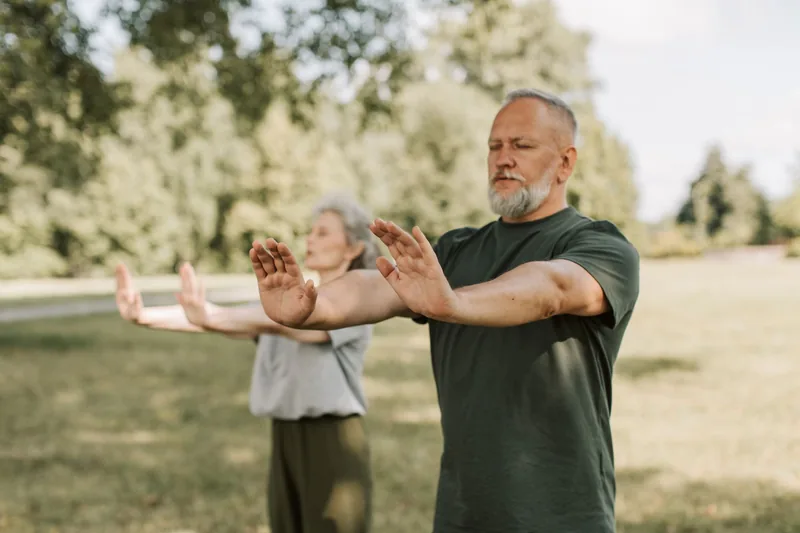
The hardest part of any home practice isn’t the movement — it’s the showing up. The students who succeed at practicing tai chi at home treat it like brushing their teeth: a small, automatic part of the day rather than a workout they have to psych themselves up for.
Start with just five to ten minutes a day and anchor it to something you already do. Practice right after you wake up, before your morning coffee, or in the evening to unwind before bed. Keeping the session short removes the excuse of “not having time,” and the calming, almost meditative quality of tai chi tends to make it self-reinforcing — once it becomes part of your day, you’ll miss it when you skip it.
A simple home session might look like this: two minutes of standing posture and breathing, three minutes of weight shifting and Wave Hands Like Clouds, and a minute or two of slow walking to close. As you grow more comfortable, you can layer in movements you’ve learned in class. Tai chi is one of many disciplines we teach in Gallatin alongside TaeKwonDo and HapKiDo, and the same principle applies across all of them: short, consistent practice beats occasional marathon sessions every time. You can view our class schedule to pair your home routine with regular in-person training.
The Limits of Learning Tai Chi at Home
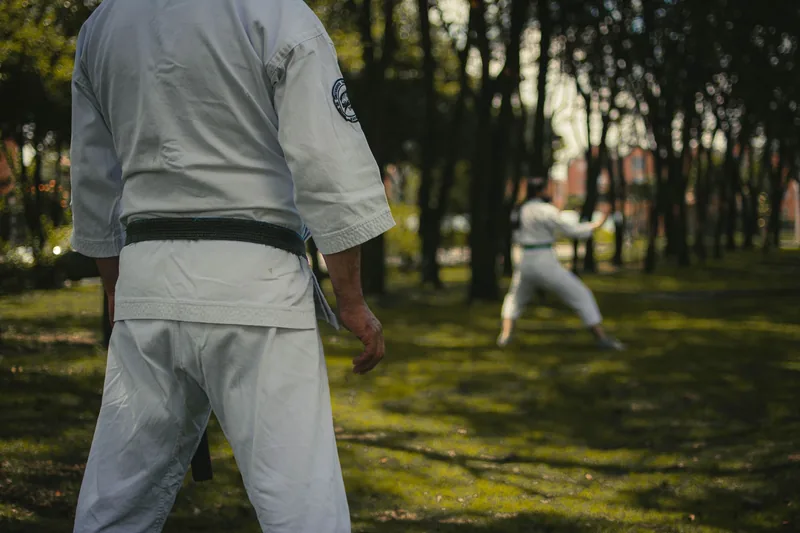
As much as we encourage home practice, honesty matters: you can’t learn tai chi entirely on your own. Tai chi looks simple, but the details that make it effective — the exact alignment of your spine, where your weight sits, how your breath coordinates with each shift — are nearly impossible to self-correct. A movement can look right in a video and still be subtly wrong in a way that limits its benefits or, over months, reinforces a bad habit that’s hard to undo.
This is why the most effective approach pairs home practice with regular instruction. Think of class as where you learn and correct, and home as where you reinforce and explore. An instructor watches how you actually move, makes the small adjustments a screen never can, and answers the questions that come up only when you’ve been practicing for a while. GMA’s tai chi program is rooted in authentic Yang Style and taught by instructors with decades of experience in both the health and martial sides of the art — depth you simply can’t get from a video alone.
If you’re recovering from an injury, managing a chronic condition, or have concerns about balance, check with your doctor before beginning, and lean toward learning the fundamentals in a supervised setting first. Tai chi is gentle, but practicing correctly from the start protects you and gets you results faster.
Ready to Get Started?
Your first class is free. Whether you’re a complete beginner or an experienced martial artist, we’d love to welcome you to the GMA family.
Call us at (731) 324-3847 or book your free trial online.
Frequently Asked Questions
Can you really learn tai chi at home by yourself?
You can learn the foundational stances, weight shifting, and basic movements safely at home, and these build genuine skill. But the subtle alignment and breathing details that make tai chi effective are very hard to self-correct. The best results come from pairing home practice with regular class instruction, where an experienced teacher can adjust your form in real time.
How much space do I need to practice tai chi at home?
Surprisingly little. An area about the size of a yoga mat — roughly six feet by six feet — is enough for most beginner movements. You need just enough room to step forward, back, and sideways without bumping into furniture. A quiet corner of a living room or bedroom works perfectly.
How often should I practice tai chi at home?
Daily, even if only for five to ten minutes. Tai chi rewards consistency over duration — a short session every morning will build balance, relaxation, and body awareness far more effectively than one long session once a week. Anchoring practice to an existing daily habit makes it much easier to stick with.