
Walk into any jiu jitsu school and you’ll find two versions of the same art running on alternating nights. One is fought in a heavy cotton kimono you can grab anywhere. The other is fought in a rash guard and shorts with nothing to hold onto but the human being in front of you. The gi vs no gi debate is really a question about what kind of grappler you want to become — and for most people, the honest answer is both.
Here’s what actually changes between the two: the grips, the pace, the submissions that are legal, the rulesets you’ll compete under, and what each one does to your game if you only ever train one. By the end you’ll know which to start with and when to add the other.
What Gi and No-Gi Actually Are
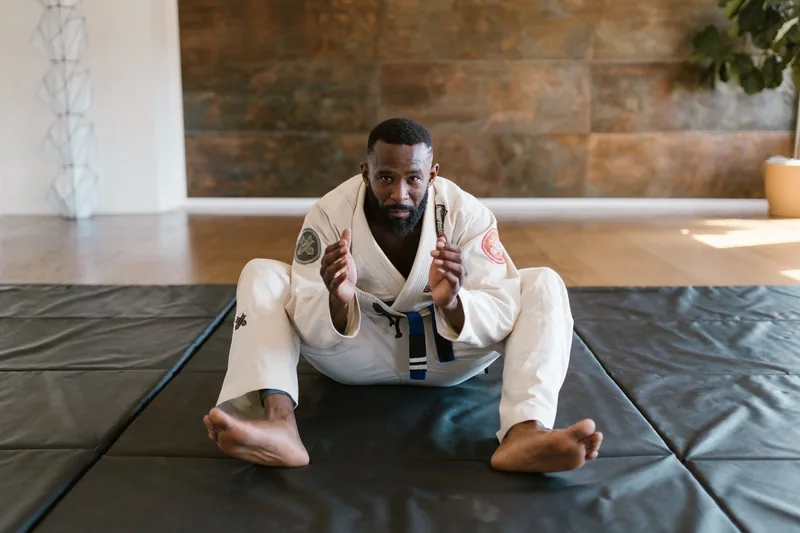
The gi is the traditional uniform Brazilian Jiu Jitsu inherited from judo — a reinforced cotton jacket, drawstring pants, and a belt marking rank. It’s not ceremonial. The jacket is equipment. Collars become chokes, sleeves become handles, the belt and pant cuffs become anchor points. Roughly half the technical vocabulary of gi jiu jitsu exists only because there’s fabric to grip.
No-gi strips all of that out. You train in a rash guard and board shorts or spats, and the only grips available are the ones anatomy gives you: wrists, necks, ankles, underhooks, overhooks, body locks. Nothing holds. Nothing stays where you put it.
That single equipment change cascades through everything. In the gi, a good grip is a brake — you can slow an opponent down, shut a scramble off, and think. In no-gi there is no brake, so positions flow faster, transitions are constant, and the person who reacts quicker usually wins the exchange. If you’re new to all of this, our guide to what Brazilian Jiu Jitsu is covers the foundation both versions are built on.
Gi vs No Gi: The Technical Differences That Matter
Grips. Gi grips are strong, specific, and slow to break — collar, sleeve, lapel, pant. No-gi grips are positional and temporary: you’re not holding an opponent, you’re holding a frame that they’re actively working to strip. Grip-fighting in the gi is a chess match; in no-gi it’s a scramble.
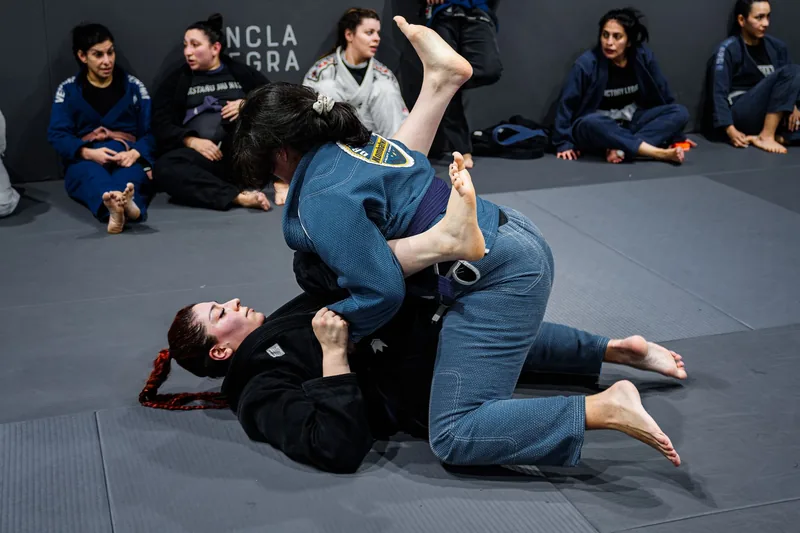
Pace. No-gi is faster, and the friction difference is the reason. Sweat on skin and slick synthetic fabric means people slip out of positions that a gi would have sealed. Gi rounds reward patience and pressure. No-gi rounds reward speed and relentless re-engagement.
Submissions. The gi adds an entire category of attacks: collar chokes, bow-and-arrow, loop chokes, ezekiel, lapel-based strangles. No-gi trades those for a heavier emphasis on leg entanglements, front headlocks, guillotines, darces, and anacondas. The overlap — armbars, triangles, kimuras, rear-naked chokes — is the core both styles share, and it’s where our guide to the BJJ submissions every beginner should know lives.
Guard. Gi guards like spider, lasso, and de la Riva with a sleeve grip simply cannot exist without fabric. No-gi guard work leans on butterfly, half guard, and leg-entanglement systems that hold through sweat.
Competition Rules: IBJJF and ADCC
The two dominant rulesets shape how each style is trained, and the differences are worth knowing before you enter anything.
The IBJJF runs both gi and no-gi divisions, and its submission rules are tiered by belt. Heel hooks are banned in the gi at every rank; in IBJJF no-gi they became legal for brown and black belts in 2021. Weight classes carry the same division names in both, but every no-gi limit sits a few pounds lighter — a standard gi weighs roughly four to six pounds and you weigh in wearing whatever you compete in, so the human being underneath ends up the same size either way.
ADCC is the premier no-gi standard and runs a very different match. There’s no uniform requirement, heel hooks are legal at the pro level, and matches run ten minutes with the first half scored at zero — points only count in the back half. That structure deliberately rewards finishing over stalling out a lead. There are five weight classes per gender instead of the IBJJF’s nine.
The practical takeaway: gi competition rewards positional control and grip strategy, no-gi competition rewards scrambling and submission hunting. Neither is more legitimate. They test different things.
Which Should You Train First?
Start in the gi. This is the recommendation from most schools with a long track record, including ours, and the reasoning is technical rather than traditional.
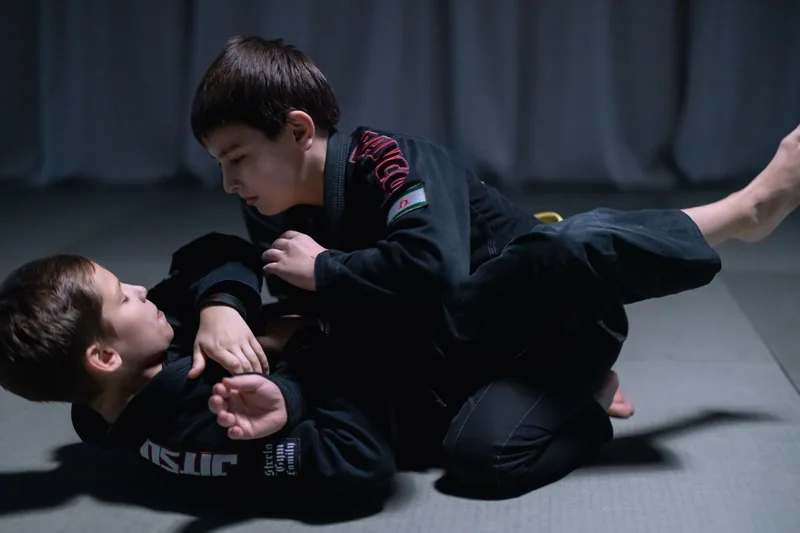
The gi slows everything down. When a beginner can be held in place, they have time to recognize the position, remember the escape, and execute it badly a few times until it works. Strip the gi away and a new white belt just squirts out of bad positions by being sweaty and athletic — which feels like progress and teaches nothing. The gi punishes bad technique immediately and visibly, which is exactly what you want while you’re building the base.
It also transfers in the right direction. Gi players moving to no-gi lose their grips but keep their structure, pressure, and positional understanding. No-gi players moving to the gi have to learn an entire grip game from scratch, and they get strangled by their own collars for a few months while they do it.
There’s one clear exception. If your goal is MMA or pure self-defense on a short timeline, no-gi is the closer simulation — nobody on the street is wearing a lapel, and the same logic explains a lot of how BJJ compares to wrestling. For everyone else, gi first, then add no-gi once you’re comfortable in the fundamental positions. The two styles reinforce each other; grapplers who train both develop faster than grapplers who pick a side.
Training Both at GMA in Gallatin, TN
Our Brazilian Jiu Jitsu program in Gallatin, TN runs gi and no-gi on separate nights so students can train one or both without choosing permanently. Beginners are pointed toward the gi fundamentals track first, then encouraged into no-gi once positional basics are solid.
Grandmaster K.O. Spillmann earned his black belt directly under Professor Rocian Gracie Jr. and holds IBJJF and USBJJF Level 3 certification — part of the 50+ years behind Global Martial Arts USA and one of the reasons we’ve been voted a top school in Sumner County. Competitors training toward IBJJF or ADCC rulesets can go deeper at GMA Team Brazilian Jiu Jitsu, our dedicated BJJ academy.
If you’re brand new, read the BJJ white belt survival guide before your first session, then check the class schedule for a beginner-friendly time. You don’t need to own a gi to start — we’ll sort that out on day one.
Ready to Get Started?
Your first class is free. Whether you’re a complete beginner or an experienced martial artist, we’d love to welcome you to the GMA family.
Call us at (731) 324-3847 or book your free trial online.
Frequently Asked Questions
Is no-gi harder than gi?
Neither is harder overall — they’re hard in different ways. No-gi is more physically demanding because the pace is faster and there’s nothing to slow an opponent down. Gi is more technically demanding because there are far more grips, guards, and chokes to learn. Most people find no-gi easier to survive as a beginner and the gi easier to actually improve in.
Can you train both gi and no-gi at the same time?
Yes, and most serious grapplers do. The shared foundation — position, pressure, timing, escapes — transfers completely, and each style exposes holes the other hides. A common split is two gi classes and one no-gi class per week once you’re past your first few months.
Do you need a gi for your first BJJ class?
No. Most schools loan or rent a gi for a trial class, and no-gi classes only require a rash guard and shorts without pockets or zippers. Train a few sessions before buying anything so you know which style you’re investing in.