
Ending up on your back is the worst thing that can happen in most fights. In Brazilian Jiu Jitsu, it’s where half the game is played. The guard is any position where you’re on the bottom and using your legs to control, block, and attack the person on top of you, and learning the main BJJ guard positions is what turns “stuck underneath” into “dangerous from underneath.”
Below you’ll find what the guard actually does, the five BJJ guard positions every beginner should know, which ones work in the gi versus no-gi, and how to start building a guard of your own.
What Is the Guard in BJJ?
The guard is any bottom position where your legs sit between you and your opponent. As long as your legs are in the way, they can’t settle into side control or mount, and you still have the tools to sweep them or submit them. When they get past your legs, they’ve “passed your guard.”
Every guard does three jobs. It blocks your opponent from advancing, it controls their posture and balance with your grips and hooks, and it attacks with sweeps and submissions. A guard that only blocks is a waiting game you’ll eventually lose. A guard that does all three is why a smaller person on the bottom can still win.
The scoring under IBJJF rules shows how much the guard matters. A sweep from guard to top position earns two points, and passing someone’s guard earns three. Most jiu jitsu matches are decided by those exchanges, which is why guard work makes up a big share of every Brazilian Jiu Jitsu class.
5 BJJ Guard Positions Every Beginner Should Know
There are dozens of named guards, and new variations show up at every major tournament. You don’t need them all. These five cover the foundation, and almost every advanced guard is built on top of one of them.
1. Closed Guard
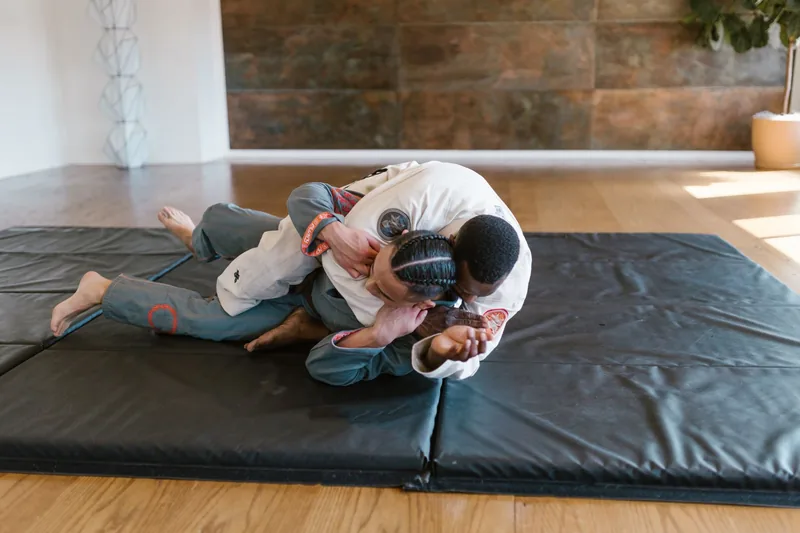
Your legs wrap around your opponent’s waist with your ankles crossed behind their back. This is the first guard most students learn and the most stable one to hold. By pulling your knees toward your chest you break their posture forward, and from there you can attack with collar chokes, armbars, triangles, the kimura, and sweeps like the scissor and hip bump. The main goal on the bottom is simple: keep their posture broken. A partner who sits up tall in your closed guard is starting to open it.
2. Half Guard
You trap one of your opponent’s legs between yours. Half guard is often where you land when someone is halfway through passing, so it’s a recovery position as much as an attacking one. The key detail is getting your bottom arm under their arm (the underhook) and staying on your side instead of flat on your back. Flat half guard gets crushed; half guard on your side, with the underhook, leads to sweeps and a path back to your feet.
3. Butterfly Guard
You sit up facing your opponent with both feet hooked inside their thighs. Butterfly guard is built for movement. With an underhook and a good grip, you can elevate your partner with your hooks and send them over for a sweep. It works especially well in no-gi and against opponents who kneel or stay low, and it’s one of the best guards for learning how to use your hips and balance from the bottom.
4. Open Guard
Open guard is the umbrella term for any guard where your legs aren’t locked around your opponent. You use your feet on their hips, knees, and biceps, and your grips on their sleeves, collar, or wrists, to keep distance and steer them. Two of the best-known open guards are spider guard (feet on the biceps with sleeve grips) and De La Riva guard (named after Brazilian black belt Ricardo De La Riva, with one leg hooked around the outside of the opponent’s lead leg). Open guards take longer to learn, but they’re essential once your opponents start standing up to pass.
5. X-Guard
From underneath a standing or kneeling opponent, you hook one of their legs with both of yours in an X shape while holding their other leg. X-guard puts them badly off balance and leads to some of the cleanest sweeps in jiu jitsu. Most students learn it a little later, usually as a follow-up from butterfly guard or single-leg X, but it’s worth knowing it exists early because it shows how much control your legs can have.
Guard Positions in the Gi vs No-Gi
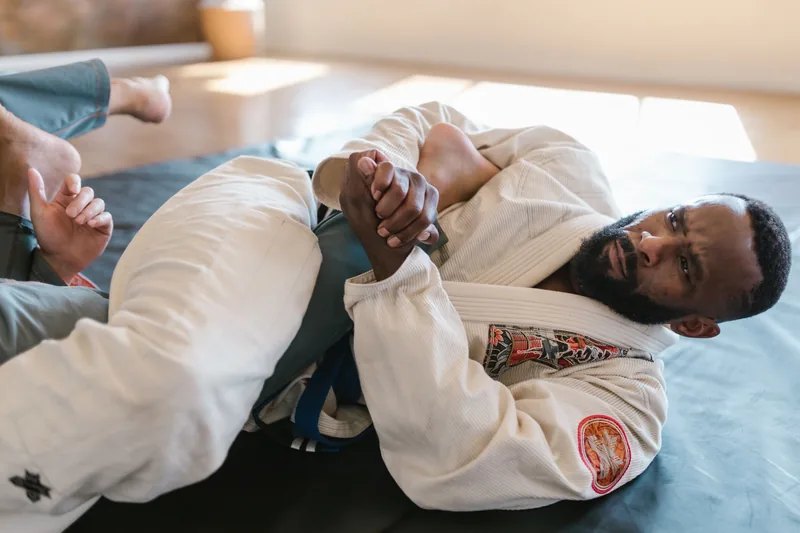
The gi changes which guards are practical. Spider guard, lasso guard, and many De La Riva variations depend on gripping the sleeves, collar, or pants, so they only exist in the gi. Without the gi, there’s nothing to hold, so those grips disappear.
No-gi grapplers lean more on closed guard, butterfly guard, half guard, and the single-leg X and X-guard family, using wrist control, underhooks, and overhooks instead of cloth grips. No-gi is also faster and more slippery, which makes holding a static guard harder. If you’re deciding where to focus, our breakdown of gi vs no-gi BJJ covers how the two styles shape your whole game.
How to Build Your Guard as a Beginner
Start with closed guard. It’s the easiest guard to hold and the best place to learn posture breaking, grips, and your first sweeps and submissions. Most of the basic BJJ techniques you’ll see in your first few months start here.
Learn guard retention before fancy guards. Hip escapes (shrimping), framing with your forearms, and pummeling your knees back between you and your partner are what keep any guard alive. A beginner with good retention is much harder to pass than one who knows ten guard names.
Always connect the guard to an attack. For every guard you practice, know at least one sweep and one submission from it. Closed guard to armbar and triangle, half guard to an underhook sweep, butterfly guard to a hook sweep. Our guide to BJJ submissions covers the finishes most of these set up.
Don’t live on your back. The guard is a powerful position, but in self defense you rarely want to stay underneath someone. Use your guard to sweep, get up, or get on top. That’s why we teach guard work alongside the stand-up game, including the best BJJ takedowns for beginners.
Tap early, tap often. Guard work involves a lot of chokes and joint locks in close quarters. Tap as soon as you’re caught, and let go the moment your partner taps.
Learn BJJ Guard Positions at GMA in Gallatin, TN
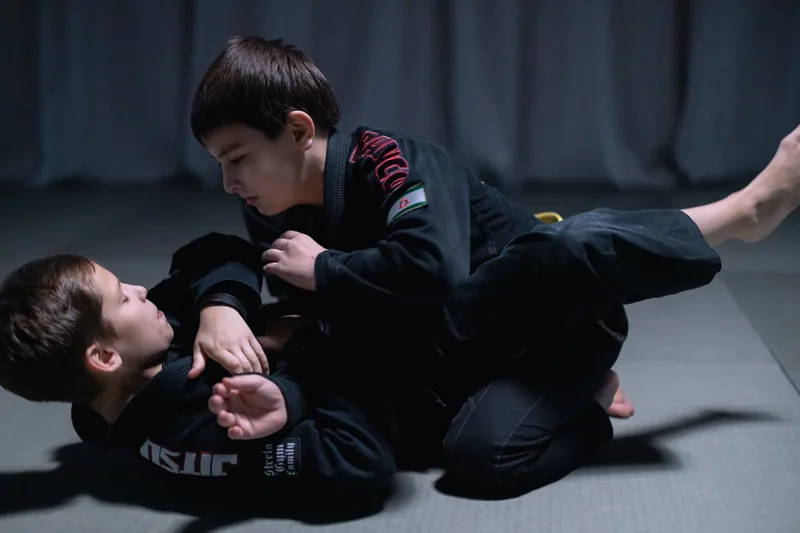
At Global Martial Arts USA, students learn to control and attack from their back using closed guard, open guard, half guard, and butterfly guard, then tie those positions into sweeps, submissions, and getting back to their feet. Our BJJ program in Gallatin, TN runs gi and no-gi classes for kids and adults, led by Grandmaster K.O. Spillmann, who earned his BJJ black belt under Professor Rocian Gracie Jr. With 50+ years of teaching in Sumner County, we help beginners build a guard that actually works under pressure.
For more grappling instruction, explore our dedicated BJJ program at GMA Team. When you’re ready, check the class schedule and come roll with us. If you’re brand new, start with our BJJ white belt tips for what to expect in your first year.
Ready to Get Started?
Your first class is free. Whether you’re a complete beginner or an experienced martial artist, we’d love to welcome you to the GMA family.
Call us at (731) 324-3847 or book your free trial online.
Frequently Asked Questions
What is the best BJJ guard for beginners?
Closed guard is the best place to start. It’s the most stable guard to hold, it teaches you how to break your opponent’s posture, and it sets up many of the first sweeps and submissions you’ll learn, like the scissor sweep, armbar, and triangle.
What does it mean to pass the guard?
Passing the guard means getting past your opponent’s legs and settling into a dominant top position such as side control or mount. Under IBJJF rules, a successful guard pass scores three points.
How many guard positions are there in BJJ?
There are dozens of named guards and new variations appear all the time. Most of them build on a handful of foundations: closed guard, half guard, butterfly guard, open guards like spider and De La Riva, and X-guard. Beginners should master a few of these before branching out.