
Every jiu jitsu match and almost every real confrontation starts standing up. Yet most beginners spend their first months learning to fight from their back and never think about how the fight got there. The best BJJ takedowns for beginners aren’t flashy throws. They’re a short list of simple, high-percentage entries that work in the gi, in no-gi, and in self defense, and that won’t get you or your partner hurt while you learn them.
Below you’ll find the foundation every takedown needs, five beginner-friendly takedowns worth drilling first, the guard pull alternative, and the safety rules that keep stand-up training productive.
Why Takedowns Matter in Jiu Jitsu
BJJ is famous for ground fighting, so it’s easy to treat the stand-up as an afterthought. That’s a mistake. If you can’t take someone down, you don’t get to choose where the fight goes. In competition, a clean takedown under IBJJF rules scores two points once you hold the top position for three seconds. In self defense, being the person on top is the difference between controlling the situation and being stuck under it.
Takedowns are also where BJJ borrows the most from other grappling arts. Most of what works comes from wrestling and judo, which is why so many good grapplers cross-train. If you’re curious how those arts approach the stand-up game differently, see how BJJ compares to wrestling and the breakdown of judo vs jiu jitsu.
The Foundation: Stance, Grips, and Breakfalls
Before any specific technique, three basics decide whether your takedowns work at all.
- Stance. Feet about shoulder-width apart, knees bent, hips low, and hands up in front of you. A tall, square stance gets you taken down. A low, balanced stance lets you shoot and defend.
- Grips. In the gi, you’ll fight for collar and sleeve grips. In no-gi, you’ll work with wrist control, collar ties, and underhooks. Whoever controls the grips usually controls the takedown.
- Breakfalls. Learning to fall safely comes before learning to throw. Tuck your chin, slap the mat with your arm, and spread the impact across your back and side. Every throw you drill means your partner hits the mat, so this is non-negotiable.
Spend real time on these early. A beginner with a good stance and solid breakfalls will learn every takedown below faster and with fewer injuries.
The Best BJJ Takedowns for Beginners
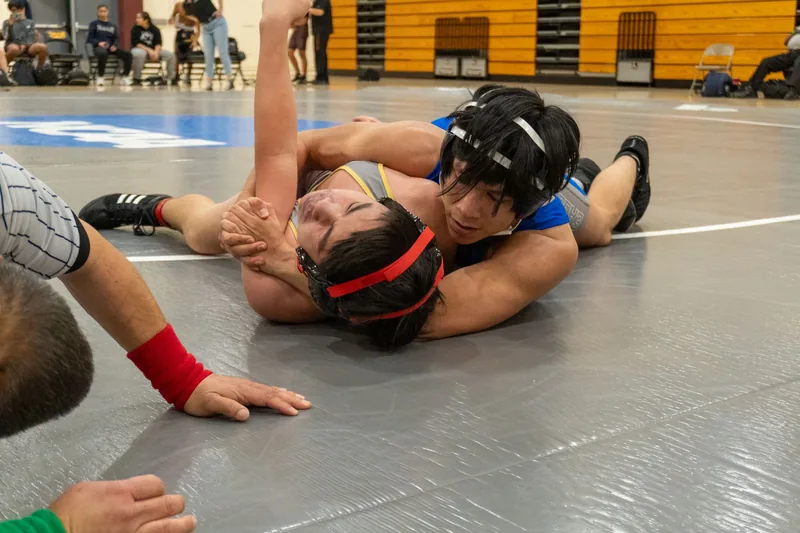
These five cover the main ways to bring someone down: shooting on the legs, reaching for the ankle, and tripping from the clinch. Pick one or two and drill them until they feel natural before adding more.
1. Double Leg Takedown
The double leg is the most common takedown in grappling for a reason. Change levels by bending your knees, step deep between your opponent’s feet, wrap both legs behind the knees, and drive your head and shoulder through their hip line as you turn the corner. Keep your back straight and your head up. The most common beginner mistake is bending at the waist and diving, which leaves you open to a guillotine. Level change first, then penetrate.
2. Single Leg Takedown
The single leg attacks one leg instead of two, which makes it easier to reach from a gi grip or a scramble. Grab one leg, pull it up tight to your chest or hip, and finish by running the pipe (driving at an angle), tripping the standing leg, or lifting and turning. It’s a forgiving takedown because you have several finishes from the same grip.
3. Ankle Pick
The ankle pick is low-risk and great for smaller grapplers. From a collar tie or a gi collar grip, pull your opponent’s weight forward onto one foot, then step in and scoop that heel while you push their head or upper body back. You barely leave your stance, so a missed ankle pick rarely costs you position.
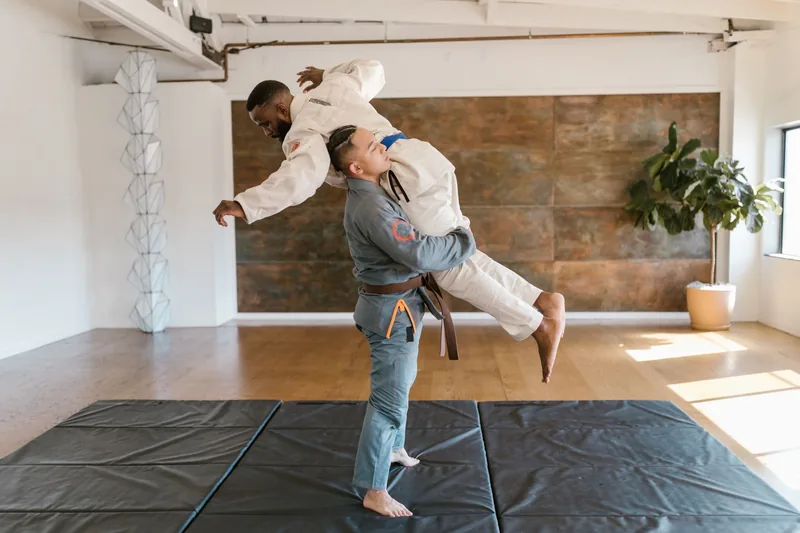
4. Osoto Gari (Major Outer Reap)
Osoto gari is a classic judo throw that translates well to BJJ, especially in the gi. Break your partner’s balance backward over their heel, step to the outside, and reap their leg out from under them with yours. Control the sleeve or wrist on the way down so they land on their back and you land on top. Drill it slowly — this one depends on good breakfalls from your partner.
5. Body Lock Trip
When you end up chest-to-chest in a clinch, lock your hands around your opponent’s back, pull their hips tight to yours, and trip their near leg with an inside or outside foot sweep as you turn your chest into them. The body lock is one of the safest finishes from the clinch because you keep tight control through the whole fall.
Pulling Guard: The Beginner’s Alternative
Pulling guard means taking a grip and sitting directly into your guard instead of trying to take your opponent down. It’s legal in IBJJF competition and scores no points, and many jiu jitsu players use it to take the fight to the ground on their terms.
Pulling guard is a useful tool, but it shouldn’t replace takedowns. Pull carelessly and you give your opponent an easy pass or top position. Outside of competition, deliberately sitting down in front of an attacker on concrete is a bad plan, which is why GMA teaches takedowns alongside guard work. If you’re still getting comfortable on the mat, our BJJ white belt tips cover how to approach your first year.
Takedown Safety Rules for Beginners
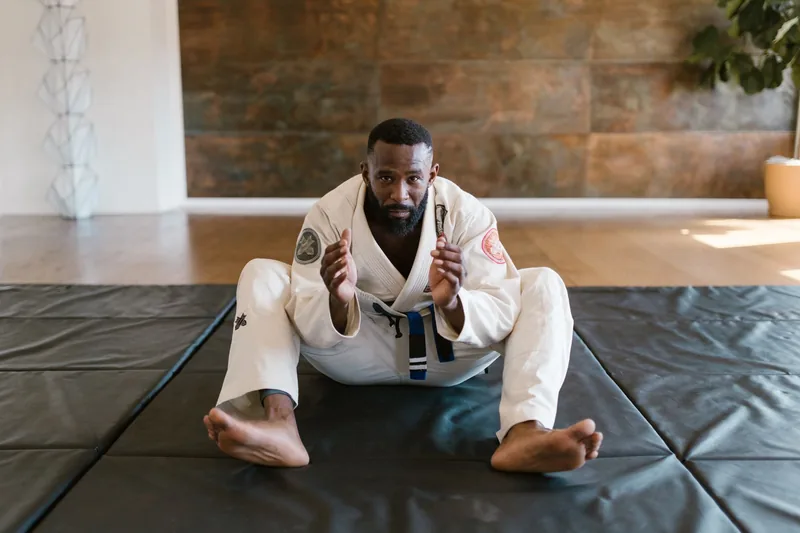
Learn to fall before you learn to throw. Breakfalls protect your head, neck, and shoulders. Practice them until they’re automatic.
Drill slowly and cooperatively. Your partner should know what’s coming. Add speed and resistance only after the technique is clean.
Never slam. Lifting and slamming an opponent is illegal under IBJJF rules and dangerous in training. Control your partner all the way to the mat.
Skip the banned techniques. The flying scissor takedown (kani basami) is illegal at every belt level in IBJJF competition because of the knee injuries it causes. Don’t experiment with it in the gym.
Speak up. If a takedown drill feels wrong or a landing hurts, stop and tell your partner and instructor.
Good takedowns also feed directly into BJJ self defense. Getting a dangerous person to the ground with control, and staying on top, is the core of why jiu jitsu works in a real confrontation.
Train Takedowns With Us at GMA in Gallatin, TN
Our Brazilian Jiu Jitsu program in Gallatin, TN covers single-legs, double-legs, trips, and hip throws adapted for both competition and self defense, in gi and no-gi classes for kids and adults. Classes are led by Grandmaster K.O. Spillmann, who earned his BJJ black belt under Professor Rocian Gracie Jr. With 50+ years of teaching in Sumner County, Global Martial Arts USA helps beginners build a complete game, standing and on the ground.
For more grappling instruction, explore our dedicated BJJ program at GMA Team. When you’re ready, check the class schedule and come drill with us.
Ready to Get Started?
Your first class is free. Whether you’re a complete beginner or an experienced martial artist, we’d love to welcome you to the GMA family.
Call us at (731) 324-3847 or book your free trial online.
Frequently Asked Questions
What is the easiest BJJ takedown for beginners?
The double leg and the ankle pick are two of the easiest to learn. The double leg is simple to understand and works in gi and no-gi, and the ankle pick is low-risk because you barely leave your stance if it misses.
Is pulling guard better than doing takedowns in BJJ?
Pulling guard is legal in IBJJF competition and scores no points, and it can be a smart choice if you’re stronger on the ground. But it shouldn’t replace takedowns. For self defense especially, you want to be able to bring someone down and stay on top.
Do I need wrestling experience to learn BJJ takedowns?
No. Most BJJ students start with no wrestling or judo background. Instructors teach stance, grips, and breakfalls first, then build up a small set of takedowns with cooperative drilling before any live stand-up training.