
A real mma workout trains every system a fighter needs — striking power, grappling endurance, explosive speed, and the aerobic capacity to sustain all of it for multiple rounds. You don’t have to be competing to benefit from that kind of training. At Global Martial Arts USA in Gallatin, TN, we build the same conditioning principles into every adult program we offer — from TaeKwonDo and HapKiDo to Brazilian Jiu Jitsu. And a meaningful portion of it can be done without setting foot in a gym.
This guide breaks down the building blocks of effective MMA conditioning, the specific exercises you can program at home, and how to structure a weekly training schedule that actually produces results.
What a Real MMA Workout Trains
Mixed martial arts is not one sport — it’s a combination of disciplines, and an effective MMA workout reflects that. Most fighters and serious practitioners train across four domains:
Striking: Punching, kicking, elbows, and knees. The foundation of stand-up combat. TaeKwonDo develops the kicking range and footwork; boxing-style punch combinations build hand speed and accuracy. At home, shadowboxing is the primary tool — no equipment needed, and done with intention it develops head movement, combination flow, and fight IQ simultaneously.
Grappling: Takedowns, clinch work, and ground control. Brazilian Jiu Jitsu is the dominant ground-fighting system in modern MMA for a reason — positional control and submission skills built through BJJ training transfer directly. Takedown drilling and wrestling-based movement patterns can be practiced solo at home.
Conditioning: The physical capacity to execute at full intensity across multiple rounds. This is where most people fall short. Technical skill means nothing if you’re gassing out in round two. Dedicated cardio work — sprints, circuits, plyometrics — builds the engine your technique depends on.
Mobility and recovery: Flexibility, joint stability, and active recovery between sessions. Fighters who skip this pay for it with injuries. Incorporate dynamic warm-ups, hip mobility work, and cool-down stretching into every session. The physical and mental benefits of martial arts training compound over time only when your body holds up.
At-Home MMA Conditioning You Can Do Today
No bag, no partner, no problem. These exercises address the conditioning demands of MMA training and require nothing but a small amount of floor space.
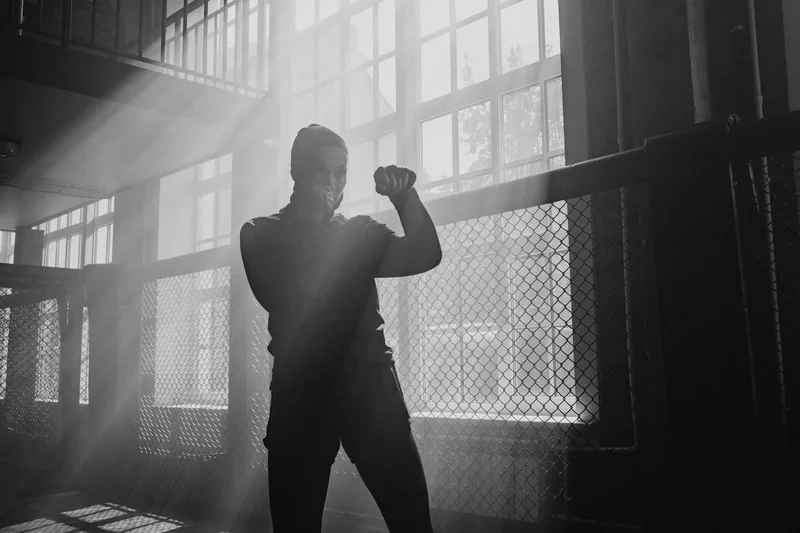
Shadowboxing (10–15 minutes): The most underrated tool in any fighter’s kit. Move around the space, change levels, throw combinations with intention. Focus on your guard position between combinations, your footwork angles, and breathing through your nose. Three three-minute rounds with one-minute rest mirrors real fight pacing.
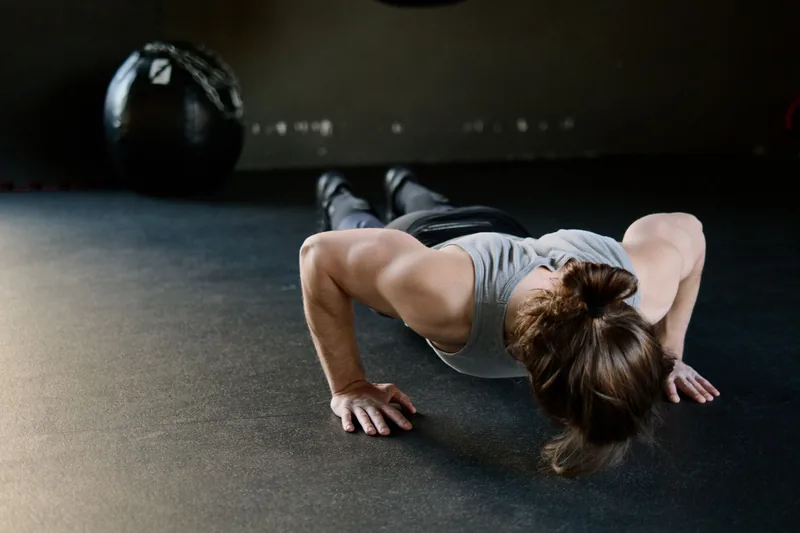
Burpees: Full-body explosive conditioning. Drop, push up, jump — repeat. Few exercises replicate the scramble demands of MMA more closely. Start with 5 sets of 10 at 30-second rest intervals. Build toward sets of 20.
Sprawl drills: From a standing position, explode your hips back and hips down as if defending a takedown, then return to standing quickly. This builds the hip flexor power and reactive speed needed on the mat. Do 10–15 reps, 3 sets.
Plyometric squats and lunges: Lower body explosiveness drives takedowns, kick power, and the ability to change levels quickly. Jump squats, alternating jump lunges, and lateral bounds all build the same athletic qualities you need in a live grappling match.
Core work: Hollow body holds, leg raises, and rotational medicine ball drills (or a substitute — a heavy book, a gallon jug of water) develop the hip-to-shoulder power transfer that sits behind every punch and kick. A weak core in MMA means a leaky technique foundation.
Jump rope (or shadowboxing footwork patterns): Footwork and rhythm are timing tools. Jump rope builds both while improving cardio efficiency. If you don’t have a rope, replicate the footwork patterns — lateral shuffles, forward-back bounces — with pure bodyweight movement.
How to Structure Your Weekly MMA Training Schedule
Random workouts produce random results. Structure your week around training sessions with specific purposes, and build in adequate recovery so your body actually adapts.
A practical home-based MMA conditioning week looks like this:
Monday — Striking conditioning: 3 rounds shadowboxing, 3 rounds burpees + jump squats superset, 10 minutes core work. Total: 45–50 minutes.
Tuesday — Active recovery: Mobility work, hip circles, dynamic stretching, light yoga or movement flow. This isn’t optional — it’s part of the training. Skipping recovery days accelerates overuse injuries.
Wednesday — Grappling conditioning: Sprawl drills, bear crawls, guard movements, hip escapes on the floor, and solo takedown penetration steps. Focus on movement quality, not speed. 40–45 minutes.
Thursday — High-intensity circuit: 5 rounds, 45 seconds on / 15 seconds rest per exercise. Exercises: shadowboxing, burpees, sprawls, plyometric squats, hollow body hold. Brutal, effective, and done in under 30 minutes.
Friday — Skill emphasis: Back to shadowboxing with technique focus — head movement, combination variety, level changes. Slow it down, work the details. Add 15 minutes of active stretching at the end.
Saturday and Sunday: Rest or light activity. If you’re training at GMA on these days, let the class be your workout — don’t stack gym sessions on top of a hard training week without reason.
Stick to a program for at least four weeks before increasing volume or intensity. Adaptation takes time, and the biggest mistake beginning trainees make is changing things up before they’ve actually given a program a chance to work.
What Home Training Can’t Replace
Home conditioning builds your engine. It doesn’t build your fight game. There’s a ceiling to what you can develop without live training partners, qualified instruction, and the pressure of real resistance.
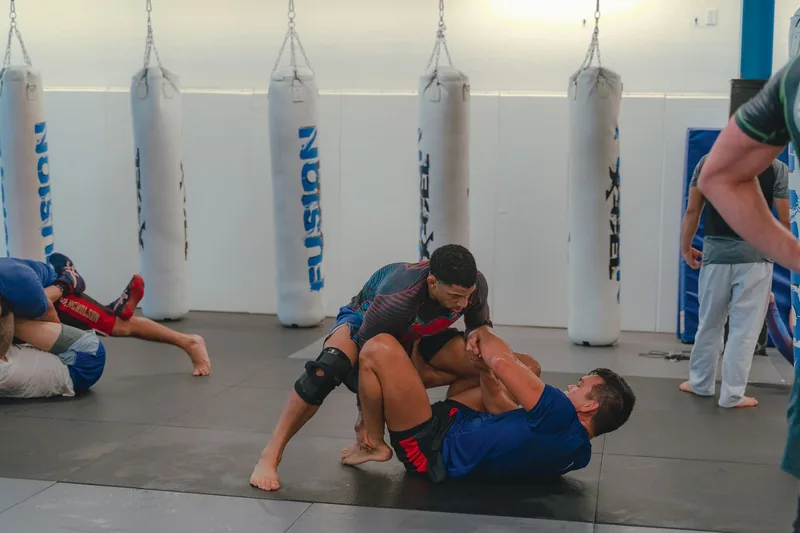
Sparring and drilling with a resisting partner — even at controlled intensity — develops timing, distance management, and the ability to apply technique under stress. None of that transfers from shadowboxing alone. You’re practicing movement; you’re not practicing the chaos.
GMA’s multi-discipline program gives you the training environment that home sessions can’t. TaeKwonDo develops your kicking range and competition sparring instincts. HapKiDo builds joint lock and takedown defense. BJJ sharpens your ground game with live rolling. These are the skills that hold up when the pressure is real — and they require partners, mats, and instruction to develop correctly.
If you’re serious about MMA conditioning, use home training as a supplement to gym time — not a replacement for it. The fighters who improve fastest are the ones training smart in the gym and staying active at home between sessions. Fuel your performance and recovery with the right nutrition too; GMA Warrior Supplements offers options designed specifically for martial artists.
Ready to Get Started?
Your first class is free. Whether you’re a complete beginner or an experienced martial artist, we’d love to welcome you to the GMA family.
Call us at (731) 324-3847 or book your free trial online.
Frequently Asked Questions
Can I get good at MMA by training at home?
Home training can build solid conditioning, reinforce movement patterns, and maintain your fitness between gym sessions. But developing real MMA skills — timing, distance management, live grappling — requires training with partners under qualified instruction. Use home workouts to supplement your gym training, not replace it.
How many days a week should I do MMA conditioning workouts?
Three to four dedicated conditioning sessions per week is appropriate for most people, with at least one or two active recovery days built in. Overtraining is a real problem in combat sports — more sessions don’t automatically mean faster progress. Quality, consistency, and recovery matter more than raw volume.
What equipment do I need for an MMA workout at home?
None, to start. Shadowboxing, bodyweight circuits, sprawl drills, and mobility work require only floor space and comfortable clothes. A jump rope adds rope work for cardio. A heavy bag is the next useful upgrade if you want to develop striking power. Resistance bands and a pull-up bar round out most home setups well beyond that.