
When people ask about the difference between tai chi vs yoga, the short answer is: both are excellent, and the better choice depends entirely on what you’re after. Both practices are low-impact, mind-body disciplines with deep roots in Eastern tradition. Both improve flexibility, reduce stress, and suit people of all ages and fitness levels. But they come from different martial foundations — and they develop different physical and mental qualities.
This guide breaks down the real differences so you can make an informed choice — or decide, like many practitioners in Gallatin and across Sumner County, that you don’t have to choose at all.
Origins and Philosophy: Where Tai Chi and Yoga Differ
Yoga originated in ancient India, with roots in Vedic texts dating back more than 5,000 years. The physical practice most Westerners recognize — hatha yoga, vinyasa, yin — is derived from the broader philosophy of yoga, which encompasses breathwork, meditation, and ethical living. Physical postures (asanas) are one branch of a much wider spiritual system.
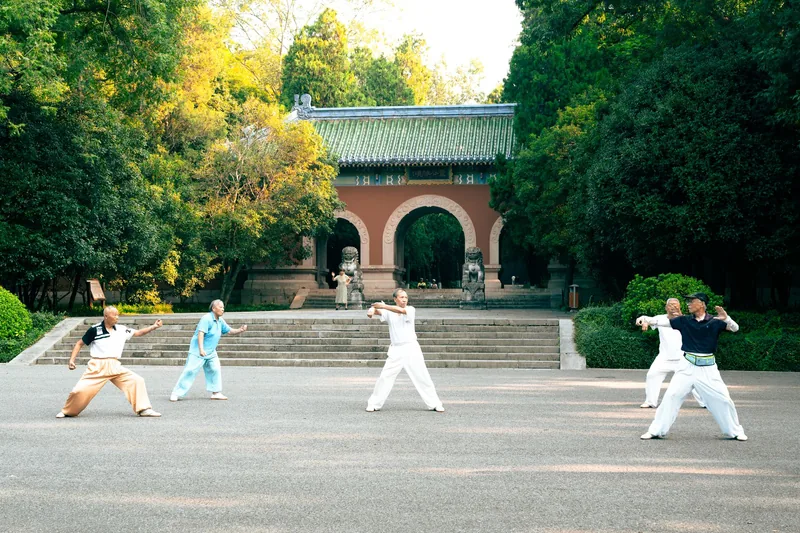
Tai chi evolved from Chinese martial arts, specifically from qigong and Taoist philosophy. The name translates roughly as “supreme ultimate fist” — it was developed as a combat system before its health benefits became its primary appeal. The flowing, circular movements of tai chi are derived from actual self-defense techniques, each transition deliberately designed to redirect and neutralize an opponent’s force.
At Global Martial Arts USA, our Tai Chi program teaches Yang Style — the most widely practiced form, developed for its accessible entry point and deep health benefits. Our instructors carry 50+ years of combined martial arts experience, which means students learn authentic technique, not a stripped-down wellness routine.
Physical Benefits: How the Two Practices Compare
Both practices are gentle enough for beginners and challenging enough for advanced practitioners. But their physical emphases differ significantly.
Yoga prioritizes static and dynamic stretching, core strength, and flexibility. Poses held for extended periods build strength in stabilizer muscles and develop range of motion across the entire body. Hot yoga adds a cardiovascular element. Yin yoga targets deep connective tissue with long passive holds.
Tai chi emphasizes continuous movement, balance, and coordination. Rather than holding positions, tai chi flows through them — training the body to maintain stability and control through constant transition. This emphasis on dynamic balance makes tai chi particularly effective for fall prevention, a quality supported by decades of clinical research. It also builds meaningful leg strength and hip flexibility through its wide, grounded stances.
For older adults, tai chi’s emphasis on balance and low-impact movement often makes it the more practical choice. Our tai chi for seniors guide covers the specific benefits in detail — from fall risk reduction to joint health to cardiovascular support.
Mental and Stress-Relief Benefits
Both tai chi and yoga have strong evidence behind their mental health benefits — reduced anxiety, improved sleep, lower cortisol, greater sense of calm. The mechanisms are similar: controlled breathing, intentional movement, and sustained focus that pulls the mind away from external stress.
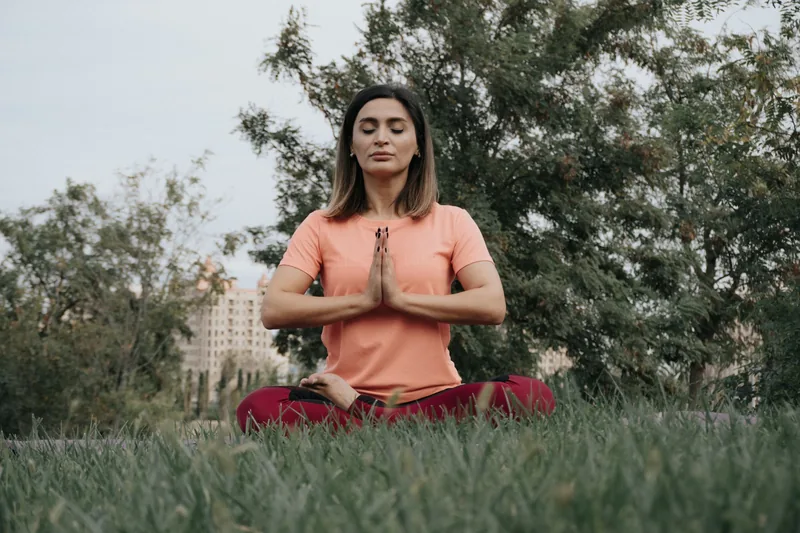
The difference is texture. Yoga’s mental training often comes through holding difficult poses and breathing through physical discomfort — building equanimity under challenge. The mind learns stillness by sitting with the body’s effort.
Tai chi’s mental training comes through continuous movement — maintaining form and intention through every transition, never fully “arriving” at rest. Practitioners describe it as active meditation. The mind must stay present to keep the sequence flowing. This quality makes the documented benefits of tai chi especially relevant for people whose stress manifests as restlessness rather than tension. You can’t think about your email inbox while trying to remember the next movement in a 24-form sequence.
Clinical studies have found tai chi effective for reducing symptoms of depression and anxiety, improving cognitive function in older adults, and reducing perceived stress — outcomes that hold up across multiple meta-analyses.
Tai Chi vs Yoga: Which Practice Is Right for You?
There’s no wrong answer here — both practices deliver real benefits. But a few factors can point you in the right direction.
Tai chi tends to be the better fit if:
- Your primary goals are balance, fall prevention, or joint health
- You want movement — not stillness
- You’re interested in the martial foundation beneath the movements
- You’re recovering from an injury or managing a chronic condition like arthritis or high blood pressure
- You prefer learning in a structured class environment with qualified instruction
Yoga tends to be the better fit if:
- Your primary goals are flexibility, core strength, and static stability
- You want variety in intensity — from restorative to vigorous
- You’re drawn to the philosophical and spiritual dimensions of the practice
- You prefer home practice or self-guided sessions
If you’re genuinely unsure, try both. Most practitioners find they complement each other well — yoga’s flexibility work improves tai chi’s depth of stance, while tai chi’s balance training adds a functional dimension to yoga’s body awareness.
Why Many Students Practice Both
The overlap between tai chi and yoga is larger than most people expect. Both emphasize breath-movement coordination. Both use slow, deliberate pace to develop body awareness. Both reward consistent practice over years, not weeks. And both trace their philosophy to the same broad tradition of Eastern contemplative thought.
Practitioners who add tai chi to an existing yoga practice often report better balance in standing poses, improved proprioception (awareness of the body in space), and a more grounded sense of movement. Practitioners who add yoga to tai chi often develop the hip and shoulder flexibility that allows deeper, more accurate postures in the tai chi form.
The philosophical overlap makes the transition between them easier than it sounds. Present-moment awareness, coordinated breathing, mind-body connection — these qualities transfer directly. The learning curves are different (yoga’s entry point is often a single pose; tai chi’s is the sequence itself) but neither requires an athletic background to start.
If you’re ready to explore tai chi with qualified instruction, our tai chi for beginners guide covers everything you need to know before your first class — what to expect, how the sessions are structured, and how beginners should approach the learning process. Classes at GMA in Gallatin are open to all levels, and voted the top school in Sumner County for a reason.
Ready to Get Started?
Your first class is free. Whether you’re a complete beginner or an experienced martial artist, we’d love to welcome you to the GMA family.
Call us at (731) 324-3847 or book your free trial online.
Frequently Asked Questions
Is tai chi easier than yoga?
Neither is objectively easier — they challenge different things. Yoga tests your flexibility and static strength in held poses. Tai chi tests your balance, coordination, and ability to maintain form through continuous movement. Most beginners find the early stages of both accessible, and both become significantly more demanding as you advance. The one that feels “easier” is typically the one that aligns better with your natural strengths.
Can seniors practice both tai chi and yoga?
Both are appropriate for most seniors, with modifications where needed. Tai chi is often recommended first for older adults because of its emphasis on balance and fall prevention, its lower joint demands compared to many yoga styles, and its standing format — no getting up and down from the floor. Chair yoga and restorative yoga are also senior-friendly options. A qualified instructor in either discipline can adapt the practice to your specific needs and limitations.
Does tai chi count as real exercise?
Yes — tai chi provides cardiovascular, muscular, and flexibility benefits, though at lower intensity than most conventional workouts. Research shows it improves VO2 max (a measure of aerobic capacity), builds leg strength, and reduces blood pressure. For older adults or those managing chronic conditions, tai chi’s gentle demand makes it sustainable in ways that higher-intensity exercise simply isn’t. It counts as exercise. It just doesn’t feel like punishment.