

Most people who want to train for MMA or martial arts hit the same obstacle: they can’t get to the gym every day. Work schedules, family commitments, and travel all create gaps in training. The good news is that a meaningful portion of your martial arts development can happen at home — if you know what to work on and how to structure it. At Global Martial Arts USA in Gallatin, TN, we teach students to think of home training not as a substitute for class, but as a multiplier of it.
This guide covers what martial arts training at home can actually build, the most effective drills by discipline, how to structure your week, and the honest limits of solo training that no home workout can cross.
What At-Home Martial Arts Training Actually Develops
The temptation when training alone is to replicate sparring or drilling — to simulate the gym experience with a partner-shaped gap in the room. That approach misses the point. Home training has specific strengths that class time can’t replicate as efficiently, and specific limitations that no amount of equipment solves.
At home, you can develop:
Conditioning and athletic foundation: Cardio endurance, explosive power, core stability, and hip mobility all improve through solo work. A well-conditioned athlete shows up to class already ahead — and tires out less during drilling and sparring.
Movement patterns and motor grooves: Technical repetition without a partner — shadowboxing, form practice, footwork drills — burns the mechanics of correct movement into muscle memory. The more automatically you move, the more mental bandwidth you have for reading opponents and making decisions.
Flexibility and injury prevention: Dynamic warm-ups, hip openers, shoulder mobility work, and cool-down stretching are dramatically easier to do consistently at home than in a class environment. Students who do this work show up more mobile and stay healthy longer. The physical benefits of consistent martial arts training compound over years — but only if your body holds up.
Effective Home Drills for Key Martial Arts Disciplines
Different disciplines have different home-training value. Here’s how to work each one without a partner.
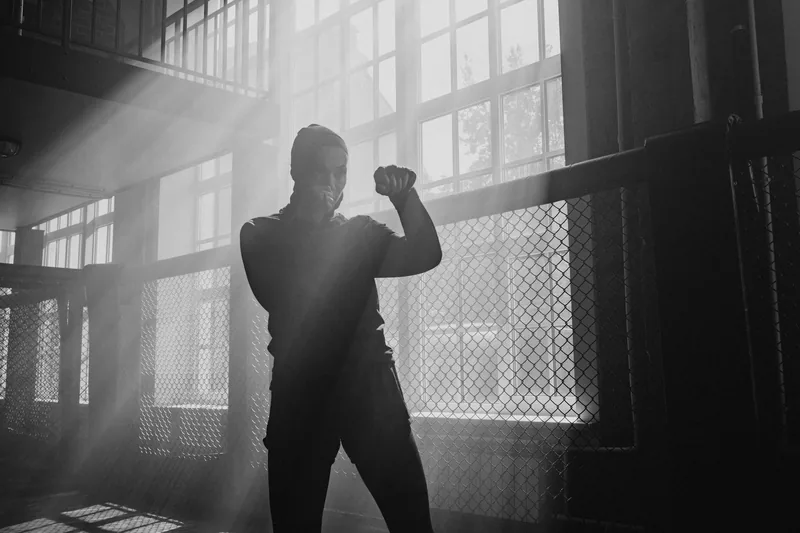
TaeKwonDo and striking: Shadowboxing is the primary tool. Move around your space, change levels, throw kick and punch combinations with intention — not speed. Slow, deliberate movement with correct mechanics is more productive than fast, sloppy reps. Use a mirror if you have one. Visualize an opponent at three distances: long range (kicks), mid range (combinations), and close range (knee clinch). Our TaeKwonDo program develops the exact kicking mechanics and footwork that shadowboxing reinforces.
Grappling and BJJ: Solo BJJ drilling is underutilized by most beginners. Hip escapes (shrimping), technical stand-ups, forward rolls, backward rolls, sprawl reactions, and guard movements can all be drilled without a partner. These aren’t glamorous — but they build the movement vocabulary that gets applied immediately in live class. The BJJ program at GMA is built on authentic Gracie Jiu Jitsu, and the fundamentals that make rolling effective are the same ones you’re reinforcing on your living room floor.
Conditioning circuits: Burpees, plyometric lunges, jump squats, hollow body holds, and push-up variations address the athletic demands of martial arts training directly. Pair them in HIIT-style circuits — 40 seconds on, 20 seconds off, six to eight exercises — and you get a 20-minute session that rivals anything you’d do in a gym warm-up.
How to Train for MMA at Home: A Weekly Schedule
Random sessions produce random results. A home training week with a clear purpose at each session is dramatically more effective than squeezing in whatever you can, whenever.
Here’s a practical template for three to four days of home work alongside two or three class sessions at GMA:
Day 1 — Striking and footwork: 3 rounds of shadowboxing with intentional focus — round one for footwork only, round two for combinations, round three for mixing it together. Then 10 minutes of solo kicks on both legs: front kick, roundhouse, side kick, back kick. Total: 35–40 minutes.
Day 2 — Grappling movement: Shrimping, technical stand-ups, and sprawl drills (15 reps each, 3 sets), followed by guard movement exercises on the floor. This is the one session that feels the most awkward to do alone — and the one that pays back most directly when you return to rolling class. Total: 30–35 minutes.
Day 3 — Conditioning circuit: 6 exercises, 40 seconds work / 20 seconds rest, 4 rounds. Choose from: burpees, plyometric squats, sprawl-to-standup, hollow body hold, plank shoulder taps, push-ups. This session builds the engine everything else depends on. Total: 25–30 minutes plus warm-up.
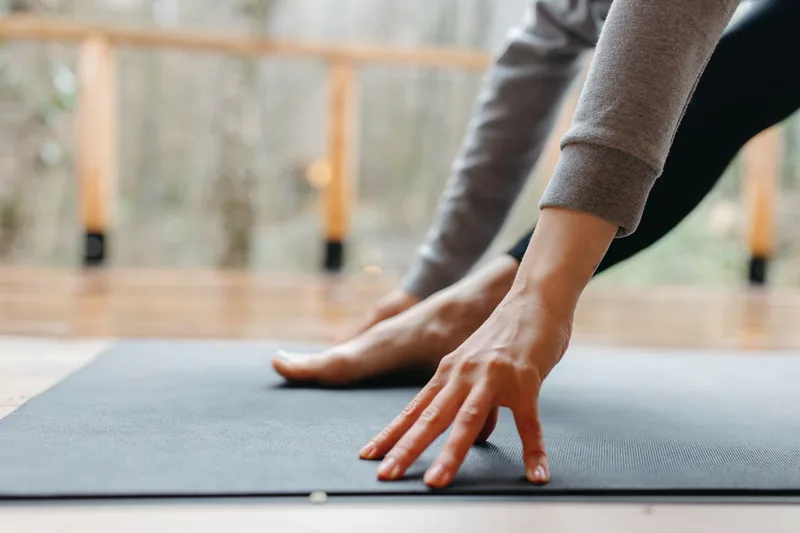
Day 4 — Mobility and recovery: Hip circles, deep lunges, spine rotations, shoulder openers, pigeon pose variations, ankle mobility work. This isn’t optional — it’s maintenance. The students who last longest in martial arts are the ones who recover deliberately. Fuel this process right: GMA Warrior Supplements offers recovery and performance nutrition designed for exactly this kind of training load.
The Ceiling on Solo Training — And How to Break Through It
Home training has a hard limit. You can build conditioning, groove movement patterns, and maintain what you’ve learned between classes. What you cannot develop alone is timing, distance management, or the ability to apply technique under real pressure.
Sparring and drilling with a resisting partner introduces variables that shadowboxing simply can’t simulate — someone who moves, counters, and closes distance differently than you expect. That chaos is where real skill lives. It’s also where your conditioning gets tested in ways a solo circuit can’t replicate.
GMA’s full class lineup across TaeKwonDo, BJJ, HapKiDo, and Self Defense — built on 50+ years of martial arts instruction and voted the top school in Sumner County — gives you that training environment. Use your home sessions to build the physical and technical foundation that shows up in class — then let the class work convert that foundation into actual skill. The students who improve fastest train smart at home and stay consistent at the gym. Neither alone is as effective as both together.
Ready to Get Started?
Your first class is free. Whether you’re a complete beginner or an experienced martial artist, we’d love to welcome you to the GMA family.
Call us at (731) 324-3847 or book your free trial online.
Frequently Asked Questions
Can I train for MMA at home without equipment?
Yes — the most important home training tools require nothing but floor space. Shadowboxing, solo grappling drills (shrimping, sprawls, technical stand-ups), and bodyweight conditioning circuits all work without equipment. A jump rope adds useful cardio. A heavy bag is the most valuable upgrade after that, but it’s not required to start building real conditioning and technical foundation at home.
How much home training should I do between classes?
Two to three focused sessions of 30–40 minutes each is a realistic and effective target for most people. The goal isn’t to replicate class — it’s to maintain conditioning, reinforce movement, and stay mobile. More than four home sessions per week without increasing class time tends to outpace your technical development, which leads to deeply grooved bad habits. Quality over volume, always.
What’s the difference between home martial arts training and just working out?
The intention and the movements. A generic home workout builds general fitness. Martial arts-focused home training targets the specific athletic qualities your art demands — hip explosiveness for kicks and takedowns, shoulder mobility for grappling, rotational power for strikes — and reinforces the technical patterns you’re learning in class. The more specifically you train, the more directly it transfers. Random fitness training helps. Targeted martial arts conditioning helps more.