
Chen style tai chi is where all of it began. Every other branch of the art — Yang, Wu, Wu Hao, Sun — traces back through a single family in a single village in Henan Province, China. Unlike the slow, uniformly gentle tai chi most people picture, the original looks like what it is: a fighting system. Low stances. Spiraling, coiling movement. And then, without warning, a crack of explosive power that snaps out and disappears back into stillness.
This guide covers where Chen style came from, the two qualities that define it, the forms practitioners learn, and how it compares to the Yang style taught at Global Martial Arts USA in Gallatin, TN — so you can tell which one fits what you’re after.
The Origins of Chen Style Tai Chi in Chen Village
Chen style tai chi was created in Chenjiagou — Chen Family Village — in Wen County, Henan Province. Its founder was Chen Wangting (1580–1660), a Ming dynasty military officer who retired there after the dynasty fell and spent his remaining years organizing what he knew into a system.
He drew on battlefield combat experience, existing Chinese boxing methods, and classical theory about breath and internal energy. What emerged was a martial art that trained power through relaxation and spiraling motion rather than muscular tension. For 200 years it stayed inside the family, taught to no outsiders.
The turning point came with Chen Changxing (1771–1853), a 14th-generation practitioner who consolidated the family’s routines into two forms known as Laojia — Old Frame. He also made the decision that changed martial arts history: he accepted an outsider, Yang Luchan, who softened what he learned into what the world now calls Yang style. Every tai chi class taught anywhere today descends from that one exception.
Silk Reeling and Fa Jin: What Makes Chen Style Different
Two concepts separate Chen style tai chi from everything that came after it.
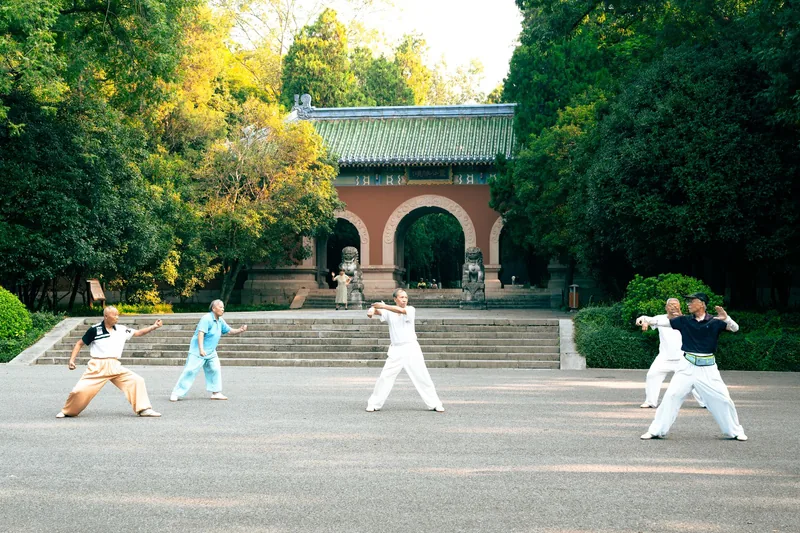
Silk reeling (chan si jin). The name comes from drawing silk off a cocoon — too abrupt and the thread snaps, too slack and nothing moves. Chen practitioners train continuous spiral movement through the whole body: feet into legs, legs into waist, waist into arms, arms into hands. Nothing moves in a straight line and nothing moves alone. Silk reeling is drilled on its own alongside form work, because that coiling quality is the engine the whole system runs on.
Fa jin (explosive power release). This is what surprises people watching Chen style for the first time. Long stretches of slow, deliberate movement are punctuated by sudden bursts — a strike, a stomp, a whipping shake — that discharge in a fraction of a second, then settle back into calm. Fa jin isn’t muscular effort. It’s stored spiral energy released through a relaxed, connected body, which is why it takes years of silk reeling work before it becomes real.
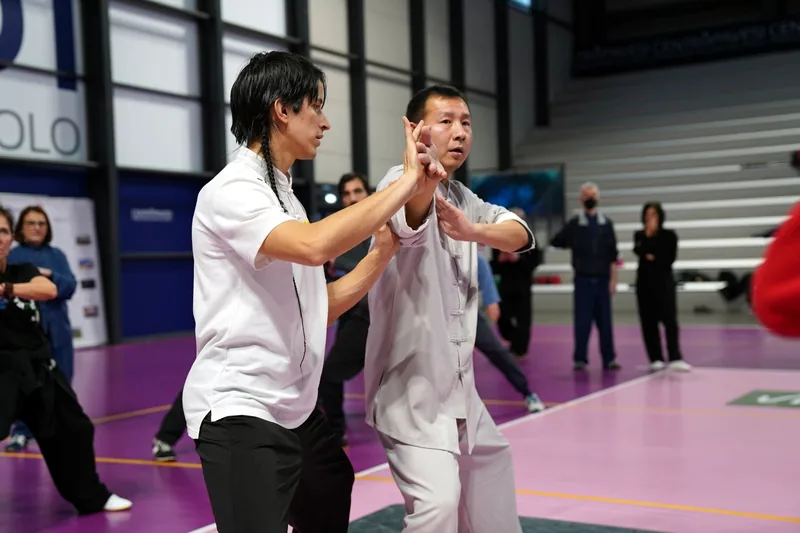
Chen style also keeps a heavier partner-training component than most tai chi lineages. Push hands, joint locks, sweeps, and takedowns stay explicit in the curriculum rather than becoming historical footnotes — closer to practical self defense training than to tai chi’s gentle public reputation.
The Chen Style Forms: Laojia, Cannon Fist, and Xinjia
Chen style is organized around a few long forms, each with a distinct job.
Laojia Yilu (Old Frame, First Form). The foundation, and where every Chen student begins. Yilu is the longer and slower of the two Old Frame routines, built around large, extended movements that teach correct body mechanics and silk reeling. It contains fa jin, but sparingly — most of the work is learning to move the whole body as one unit.
Laojia Erlu (Cannon Fist). The second Old Frame routine, and a different animal. Cannon Fist is fast, aggressive, and dense with explosive releases, jumps, and stamping strikes. It’s taught only after Yilu is solid — explosive power on an unstable foundation produces injury, not skill.
Xinjia (New Frame). Developed by Chen Fake (1887–1957) and passed to the public largely through his son Chen Zhaokui, it uses tighter, more intricate spiraling than Old Frame. Chen Fake’s 1928 move from Chen Village to Beijing finally put the style in front of the wider public — until then, most of China associated tai chi with the Yang and Wu families.
Chen style also carries weapons forms — straight sword, broadsword, spear, and guandao. The weapon extends the spiral rather than replacing it — the same principle behind the butterfly swords and long pole of Wing Chun.
Chen Style vs Yang Style: Which One Should You Learn?
It depends on what you want from the practice and what your body can absorb.
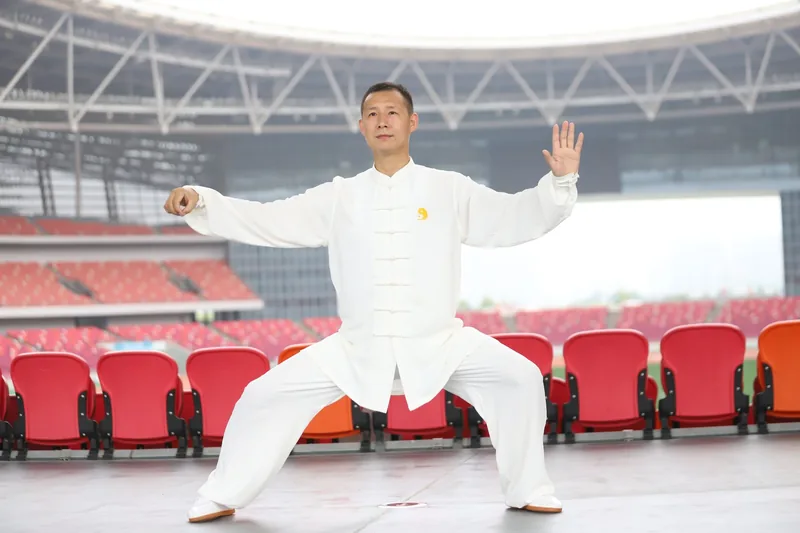
Chen style demands more physically. Stances sit lower, sessions include explosive movement, and the routines ask more of the knees, hips, and cardiovascular system. Students drawn to it want the combat lineage intact and are ready for training that feels like a martial art from day one. If you’re managing joint pain or starting from a low fitness base, it’s a hard entry point.
Yang style keeps the depth and removes the barrier. Yang Luchan’s revision stripped out the stomps, jumps, and low squats, then evened the tempo into one continuous slow flow. What survived is the same structure and martial content — disguised inside movements a 70-year-old with arthritis can perform safely. That’s why Yang became the most practiced tai chi in the world, and why nearly all the clinical research on tai chi’s documented health benefits used Yang style protocols.
The two aren’t rivals. Chen is the source; Yang is the version built to be trained for life. Most people after balance, stress relief, and a practice they can sustain into their eighties are better served by Yang — our breakdown of Yang style tai chi covers that lineage in practice.
One practical note for the Chen side: low stances and repeated explosive releases load connective tissue hard, and recovery matters more than beginners expect. Some students pair it with joint-support nutrition — you can fuel your training with GMA Warrior Supplements.
Training Tai Chi at GMA in Gallatin, TN
Global Martial Arts USA teaches Yang style tai chi, and we’re direct about why. Yang is the branch that made a 400-year-old combat art trainable by anyone who walks through the door — teenagers, working adults, and students well into their seventies, in the same room, at the level their body allows. Chen style tai chi is a magnificent system, but it’s a specialist’s road.
What you get here is the depth without the gatekeeping. Our instructors have taught in Gallatin for over 50 years and understand the martial reasoning behind each movement — knowing why a posture exists changes how you practice it. GMA has been voted the top martial arts school in Sumner County.
If you’re brand new, our tai chi for beginners guide walks through what a first class involves. And if the martial side pulled you toward Chen style, GMA teaches that too — our full class lineup includes TaeKwonDo, Brazilian Jiu Jitsu, HapKiDo, and Wing Chun under one roof. Check the class schedule to find a time that works.
Ready to Get Started?
Your first class is free. Whether you’re a complete beginner or an experienced martial artist, we’d love to welcome you to the GMA family.
Call us at (731) 324-3847 or book your free trial online.
Frequently Asked Questions
Is Chen style tai chi good for beginners?
It can be, but it’s the most physically demanding of the five major tai chi styles. Low stances, fast transitions, and explosive fa jin releases ask a lot of the knees, hips, and cardiovascular system. Beginners who are already reasonably fit and specifically want the martial side often do well starting with Laojia Yilu, the Old Frame first form. Anyone managing joint pain or limited mobility will get further starting with Yang style, which teaches the same principles at a gentler load.
What is silk reeling in Chen style tai chi?
Silk reeling, or chan si jin, is the continuous spiraling movement that runs through the whole body in Chen style practice. Rotation starts in the feet, travels up through the legs and waist, and finishes in the hands, so no part moves independently. The name refers to drawing silk from a cocoon — too abrupt and the thread breaks, too slack and it stops. It’s the mechanism that generates power in the style.
How is Chen style tai chi different from Yang style?
Chen style is the original, created in Chen Village in the 17th century, and it alternates slow spiraling movement with sudden explosive bursts of power. It uses low stances, stomps, and jumps, and keeps overt martial training in the curriculum. Yang style was derived from Chen in the 19th century by Yang Luchan, who removed the high-impact elements and evened everything into one continuous slow tempo. Yang is far more accessible and is the style used in most tai chi health research.